rapid prototyping 3d printing丨 cnc rapid prototyping丨Rollyu

Get Rapid Prototyping Services within 3 days

Rapid Prototyping Services

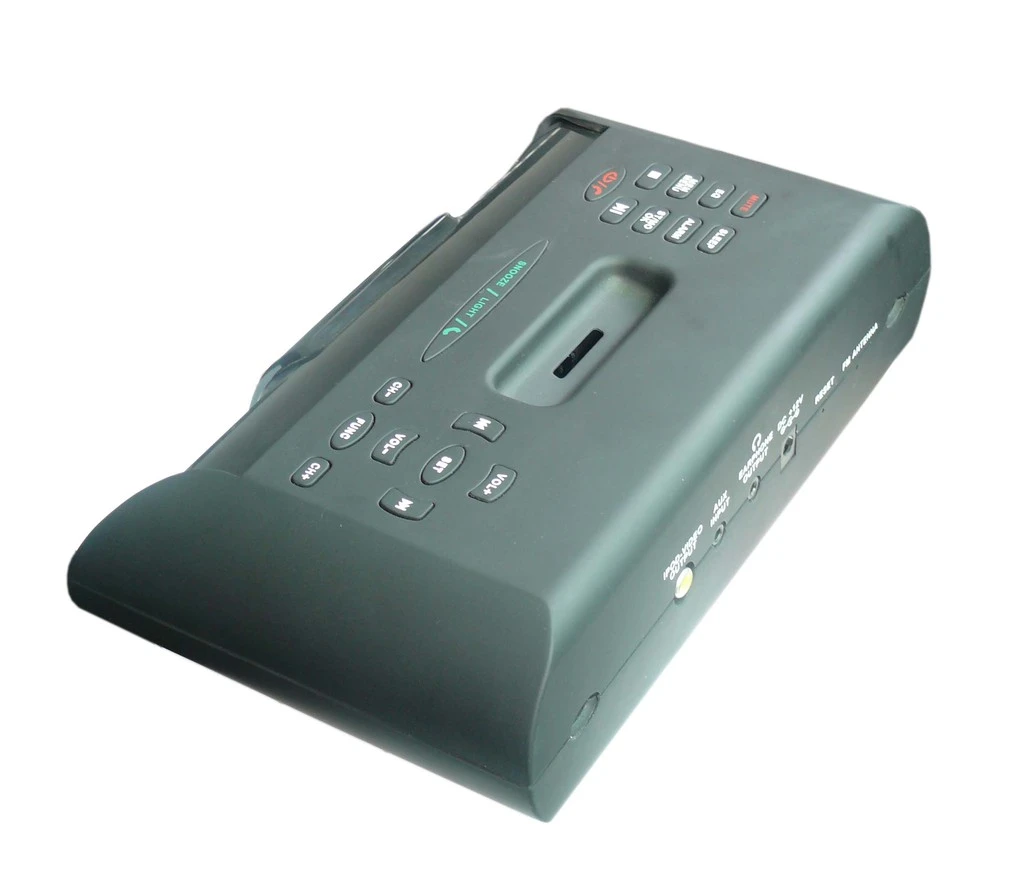
Custom Rapid Prototyping Solutions for High-Performance Applications Speed up your product development with Rollyu Precision’s full-spectrum prototyping services—CNC prototyping, 3D printing services, vacuum casting (urethane casting), sheet metal prototyping, and low-volume production. We deliver tight-tolerance prototypes for robotics, aerospace, medical devices, and industrial systems—ready for functional testing, design validation, and short-run manufacturing.

Wide Range of Rapid Prototyping

We offer a complete range of rapid prototyping technologies—3D Printing Services, Vacuum Casting ((Urethane Casting)), Sheet metal Prototyping, and CNC prototyping—to turn your concepts into test-ready parts quickly and cost-effectively. Ideal for robotics, medical devices, consumer products, and industrial applications.

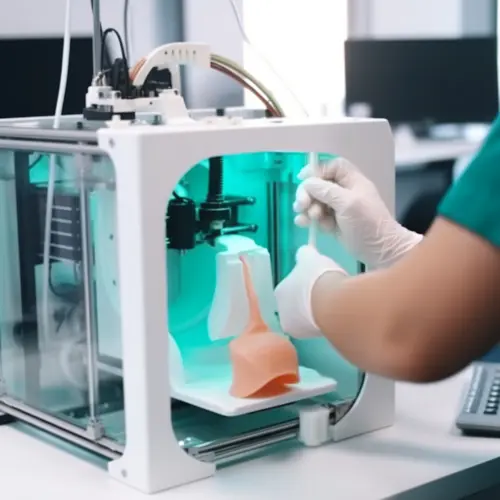
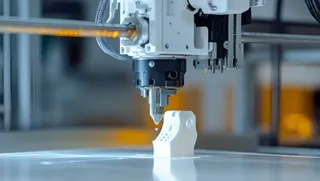
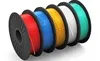
3D Printing Services

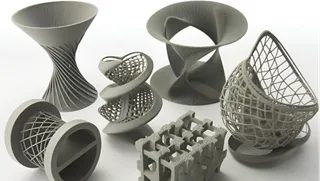
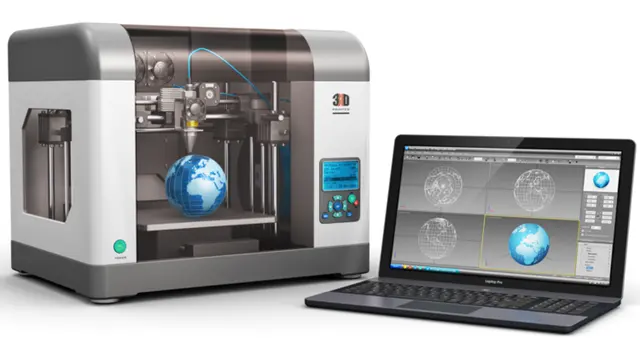
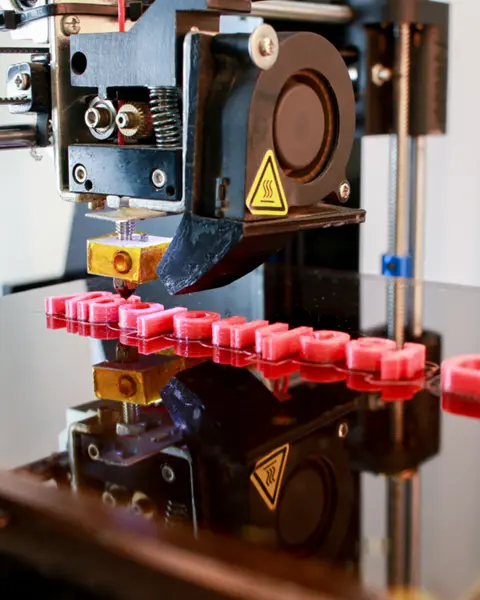
Rollyu Precision offers high-accuracy 3D printing services for both plastic and metal parts—ideal for rapid prototyping, engineering validation, and low-volume production. We support tight tolerances, complex geometries, and quick turnarounds to meet your development and manufacturing needs. Whether you’re iterating on a prototype or scaling to functional end-use parts, our 3D printing ensures precision, speed, and consistent quality.

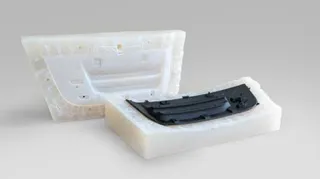
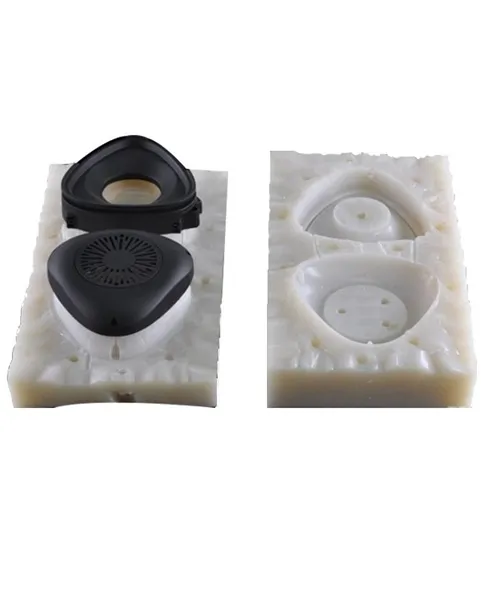
Vacuum Casting (Urethane Casting)

Rollyu Precision provides vacuum casting services using silicone molds to produce high-quality plastic parts with smooth, production-like finishes. Ideal for prototypes, pre-production validation, and short-run manufacturing, vacuum casting offers excellent surface detail, material flexibility, and durability. This process is perfect for low-volume applications that require speed, cost-efficiency, and the look and feel of injection-molded parts—without the tooling investment.

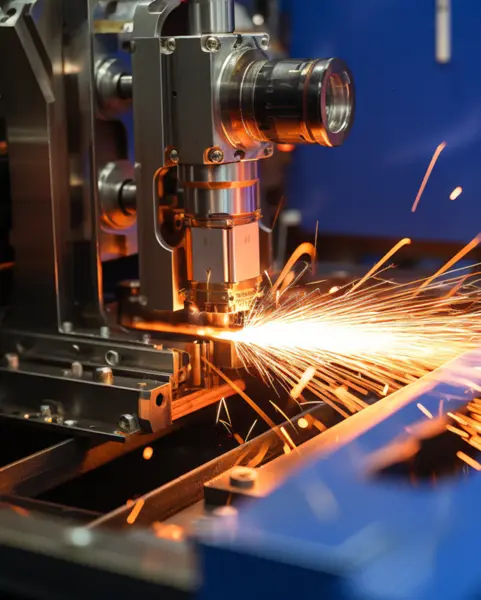
Sheet Metal Prototyping

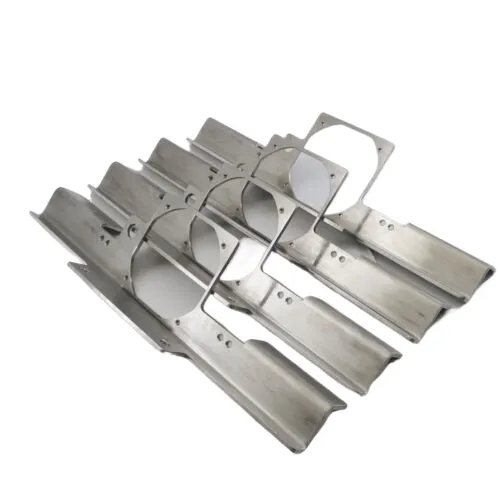
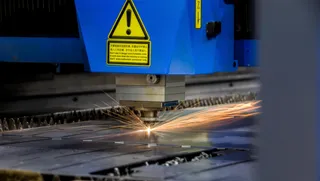
Rollyu Precision offers rapid sheet metal prototyping with in-house capabilities including laser cutting, CNC bending, welding, and surface finishing. We deliver aluminum brackets, stainless steel housings, and low-volume enclosures with tight tolerances and fast lead times. Ideal for functional prototypes and small-batch production, our sheet metal services ensure production-grade quality and reliable performance across medical, industrial, and electronics applications.

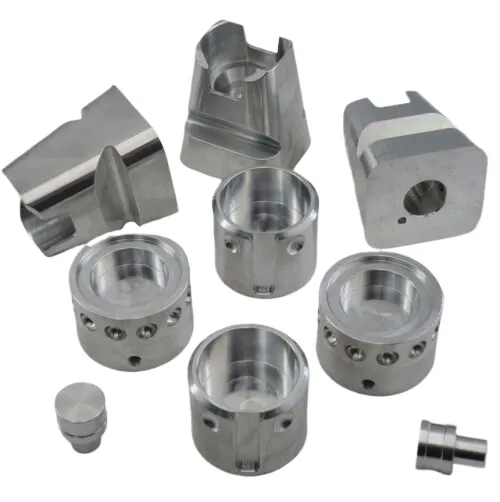
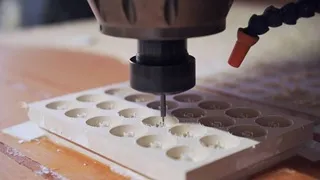
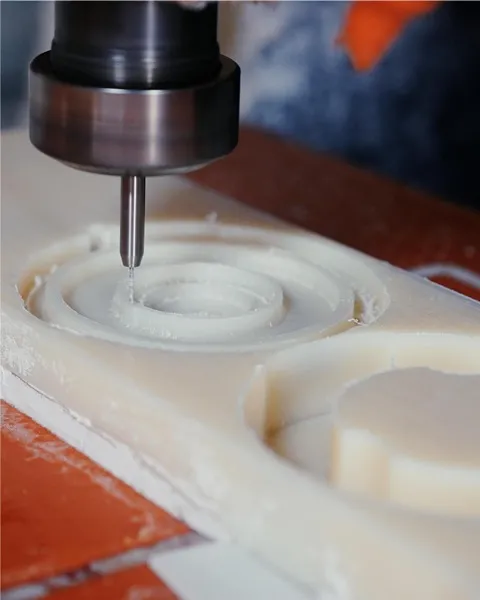
CNC Prototyping

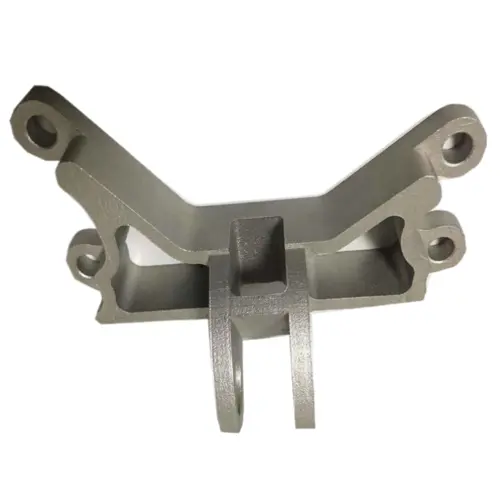
Rollyu Precision specializes in high-accuracy CNC prototyping for both metal and plastic parts. With 3-axis, 4-axis, and 5-axis machining capabilities, we deliver tight tolerances, intricate geometries, and excellent surface finishes. Ideal for functional prototypes and end-use parts such as brackets, housings, and custom mechanical components in aluminum, stainless steel, and engineering-grade plastics.

Rollyu Advantages in Rapid Prototyping Services

Rollyu Precision specializes

Multi-Process In-House Capability

Fast Turnaround

Tight Tolerances & High Precision

Wide Material Selection

Production-Grade Prototypes

ISO 9001 & ISO 13485 Certified

Materials & Finishes

There are a wide variety of materials that can be machined using technology, Rollyu provides machining quotes for more than 30 engineering-grade plastic and metal materials.

Materials for CNC Metal Parts

Characteristics & Machining Performance

PLA (Polylactic Acid)

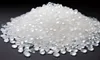
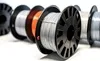
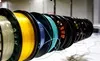
Polylactic acid (PLA) is a biodegradable, plant-based thermoplastic made from corn starch or sugarcane, ideal for 3D printing, food packaging, and medical uses—offering a sustainable alternative to petroleum-based plastics. Easy to print, biodegradable, good for models.

ABS (Acrylonitrile Butadiene Styrene)
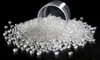
ABS (Acrylonitrile Butadiene Styrene) is a tough, impact-resistant thermoplastic used in 3D printing, automotive parts, and electronics. It offers strength, heat resistance, and easy machining—ideal for durable, functional components.

PETG (Polyethylene Terephthalate Glycol)
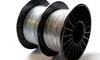
PETG (Polyethylene Terephthalate Glycol) is a tough, food-safe thermoplastic with excellent impact and chemical resistance. It’s easy to print, low-warping, and ideal for packaging, medical parts, and functional 3D prints.

Nylon (PA12, PA6)

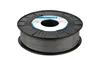
Nylon (PA6, PA12) is a tough, abrasion-resistant thermoplastic ideal for mechanical parts. Known for strength, flexibility, and chemical resistance, it’s widely used in gears, bushings, and industrial 3D printing. Moisture-absorbent but highly durable.

TPU (Thermoplastic Polyurethane)

TPU (Thermoplastic Polyurethane) is a flexible, impact-resistant plastic known for elasticity, toughness, and chemical resistance. Commonly used in phone cases, seals, wearables, and 3D printing, TPU offers rubber-like properties with excellent durability.

PC(Polycarbonate)

Polycarbonate (PC) is a strong, heat-resistant thermoplastic with excellent impact strength and clarity. Used in safety gear, lighting, electronics, and 3D printing, PC offers durability, dimensional stability, and high-temperature performance for demanding applications.

Resins (Standard, Tough, Flexible, Dental, Castable)
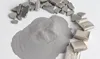
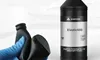
3D printing resins come in various types—standard, tough, flexible, dental, and castable—each engineered for specific needs like durability, precision, or elasticity. Ideal for prototyping, dental models, jewelry casting, and engineering-grade applications.

Materials for CNC Metal Parts

Characteristics & Machining Performance

Aluminum (e.g., AlSi10Mg)

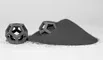
Aluminum (AlSi10Mg) is a lightweight, high-strength alloy used in 3D printing and precision manufacturing. Known for excellent thermal conductivity, corrosion resistance, and good machinability—ideal for aerospace, automotive, and industrial-grade functional parts.

Stainless Steel (316L, 17-4PH)

Stainless steel 316L and 17-4PH offer excellent durability for demanding parts—316L for corrosion-resistant uses like marine and food equipment, 17-4PH for high-strength aerospace, tooling, and industrial applications in CNC and 3D printing.

Titanium (Ti6Al4V)

Titanium (Ti6Al4V) is a lightweight, high-strength alloy with excellent corrosion resistance and biocompatibility. Commonly used in aerospace, medical implants, and high-performance engineering parts—ideal for CNC machining and metal 3D printing applications.

Tool Steels (H13, A2)

Tool steels like H13 and A2 offer high hardness, wear resistance, and dimensional stability—ideal for dies, molds, and precision tools requiring toughness under heat and repeated stress in machining or forming operations.

Cobalt Chrome

Cobalt Chrome is a strong, wear-resistant, biocompatible alloy ideal for medical implants, dental prosthetics, aerospace components, and high-temperature industrial parts needing corrosion, fatigue, and oxidation resistance.

Inconel

Inconel is a high-performance nickel-based superalloy engineered for extreme heat, pressure, and corrosion—ideal for aerospace, energy, and chemical industries where strength, stability, and long-term durability are critical.

Materials for CNC Metal Parts

Characteristics & Machining Performance

Ceramic

Ceramic 3D printing enables complex, high-precision parts with excellent heat resistance, hardness, and corrosion stability—ideal for aerospace, medical, and electronics industries needing strong, lightweight, and chemically stable components with intricate geometries.

Composites

Composites combine lightweight strength, corrosion resistance, and design flexibility—ideal for aerospace, automotive, and medical parts that demand durability, performance, and precision without adding weight. Carbon, glass, and aramid fibers offer tailored solutions.

Silicone-Like Resins

Silicone-like resins are a class of flexible, rubber-like photopolymer materials used in 3D printing, especially in SLA, DLP, and LCD technologies. They mimic the mechanical feel and elasticity of real silicone but are easier to print and cure under UV light.

Materials for CNC Metal Parts

Characteristics & Machining Performance

As-Printed / Raw Finish

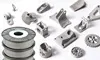
The as-printed finish features a slightly rough or layered surface, typical of parts made directly from 3D printing without post-processing. Ideal for internal components, fit checks, or early-stage prototypes, this finish reflects the native texture and layer lines produced by FDM, SLA, SLS, or other additive manufacturing methods.

Sanding & Polishing

Sanding and polishing are manual or mechanical post-processing techniques that reduce visible layer lines and surface imperfections in 3D printed parts. Ideal for consumer products, display models, and presentation prototypes, this finish improves surface smoothness and enhances the overall appearance—perfect for painting or final use.

Bead Blasting / Media Tumbling

Bead blasting is a post-processing method used for SLS, MJF, and metal 3D printed parts. It removes powder residue and minor surface roughness, leaving a uniform matte or satin finish. Ideal for improving surface quality and preparing parts for coating or assembly.

Painting / Coating

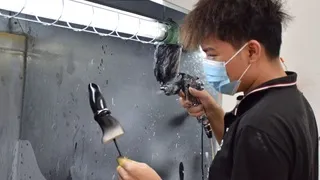
Wet painting, airbrushing, or spray coating are common finishing methods used to enhance the color, texture, and appearance of 3D printed parts. Options include clear coatings for protection or textured paints for custom finishes—ideal for display models, enclosures, and end-use prototypes.

Dyeing (for Nylon parts like SLS/MJF)
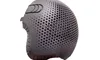
Dyeing is a surface treatment used to add vibrant, long-lasting color to porous nylon parts produced by SLS or MJF printing. The dye penetrates the material, ensuring even coloration without affecting part dimensions—ideal for functional prototypes, enclosures, or cosmetic end-use parts.

Vapor Smoothing (FDM/FFF)

"Vapor smoothing is a chemical post-processing technique that melts and smooths the surface of FDM/FFF printed parts using controlled solvent vapors (like acetone for ABS). It produces a glossy, sealed finish with improved strength and an injection-molded look—ideal for consumer products and functional prototypes. "

Electroplating (for plastics or metals)
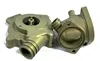
Electroplating enhances 3D printed metal or plastic parts by adding a thin metallic layer for improved surface hardness, conductivity, and a polished metal-like appearance. Plastic parts require a conductive primer before plating. Commonly used for prototypes, wear-resistant components, and decorative finishes.

Anodizing (for aluminum DMLS parts)

Anodizing is a surface treatment used on aluminum DMLS parts to enhance corrosion resistance, increase surface hardness, and add color. It creates a durable, non-conductive oxide layer ideal for functional or aesthetic applications. Suitable only for specific metal 3D printed materials like aluminum alloys.

Powder Coating (for metal parts)

Powder coating provides a tough, uniform, and protective finish for metal 3D printed components. Ideal for functional end-use parts, it enhances durability, impact resistance, and corrosion protection. This dry finishing process is widely used in industrial, automotive, and consumer-grade metal applications.

As-Cast / Mold Finish

This finish replicates the exact surface of the master model—whether matte, satin, or semi-gloss. It offers high detail accuracy and a smooth surface with minimal layer lines when using a polished master. Ideal for low-volume production and appearance prototypes that require clean, professional aesthetics without secondary finishing.

Glossy Finish

A glossy finish is achieved by using a highly polished master model and mold, resulting in a smooth, reflective surface with a near-injection-molded appearance. This finish is ideal for consumer product enclosures, display models, and presentation-ready prototypes that require a premium, high-shine look.

Textured / Matte Finish

A textured or matte finish is created using a sandblasted or matte-treated master model, resulting in a non-reflective surface that hides fingerprints and reduces glare. This finish is commonly used for prototypes, handheld devices, and functional parts requiring a clean, low-gloss appearance.

Custom Surface Coating

Custom coatings such as wet painting, soft-touch finishes, and metallic plating can be applied to vacuum cast parts to enhance appearance, texture, and user experience. Chrome-like or brushed metallic effects are ideal for presentation models and cosmetic prototypes where visual appeal matters.

Color Options

Vacuum cast parts can be tinted directly with pigmented polyurethane resins or painted after molding for specific color requirements. This allows for custom color-matching, transparent or opaque finishes, and visual consistency—ideal for prototypes, housings, and branding-sensitive applications.

Silk screen printing

Silk screen printing adds custom logos, text, and symbols onto vacuum cast parts with precise, durable ink application. Ideal for branding, labeling, or functional markings, this process works well on painted, textured, or smooth surfaces. It's commonly used for control panels, enclosures, and consumer product prototypes that require sharp visual detail.

We can source any other materials upon request! If you don’t see the material you need please contact us

Examples of Our Work

Here are some examples of CNC machined components that we have made from different materials.
Click on an image to find out more about the component.

Responsible for Quality

There are a wide variety of materials that can be machined using technology, Rollyu provides machining quotes for more than 30 engineering-grade plastic and metal materials.

Responsible for Quality

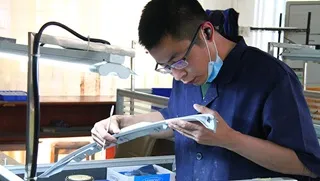
At Rollyu Precision, we take full ownership of quality across every prototyping process—including CNC machining, sheet metal fabrication, vacuum casting, and 3D printing. From material verification and master model preparation to finishing and final inspection, each step is tightly monitored for consistency.

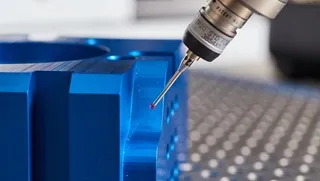
We employ calibrated tools such as CMMs, calipers, and surface testers to ensure tight tolerances, proper finishes, and accurate fit.

Backed by ISO 9001:2015 and ISO 13485:2016 certifications, we guarantee full traceability and repeatable performance—for prototypes, low-volume runs, and functional production parts. Quality is not a step—it’s built into everything we do.

Rapid Prototyping Services FAQs

What materials are available for rapid prototyping?

We offer a wide range of materials including aluminum, stainless steel, ABS, PC, PA, PMMA, and polyurethane. Material selection depends on your prototype’s mechanical, thermal, and cosmetic requirements.

How fast can you deliver a prototype?

Lead times typically range from 7 to 15 days, depending on the complexity, material, and process (CNC, 3D printing, vacuum casting, or sheet metal).

What’s the difference between CNC prototyping and 3D printing?

CNC machining uses subtractive processes for high-strength, precise parts. 3D printing uses additive methods, ideal for complex shapes, faster iteration, and lower cost on small runs.

Can you produce functional prototypes for testing?

Yes. Our prototypes are made with production-grade tolerances and materials, suitable for mechanical testing, fit validation, and even limited end-use functionality.

Are your prototyping services certified?

Yes. Rollyu Precision is certified to ISO 9001:2015 and ISO 13485:2016, ensuring full traceability and consistent quality for medical, industrial, and electronic prototypes.

Outstanding Achievements and Partnerships

We take pride in our outstanding achievements and strong partnerships. Our commitment to great communication, service, and integrity has led to excellent results.
Join us as a valued partner, and together, we can make a positive impact on CNC.

Contact Us