Metal Rapid Prototyping for Rehabilitation Devices - Rollyu

Metal Rapid Prototyping for Rehabilitation Devices

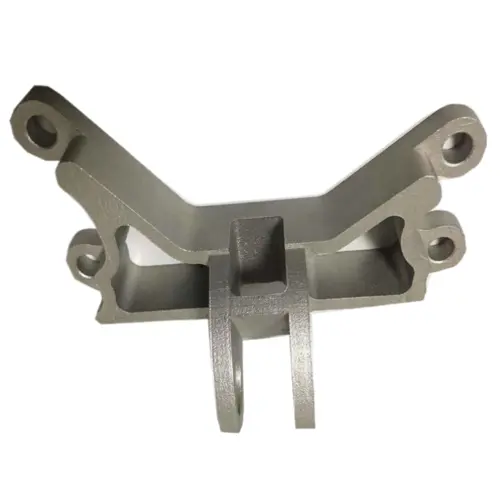
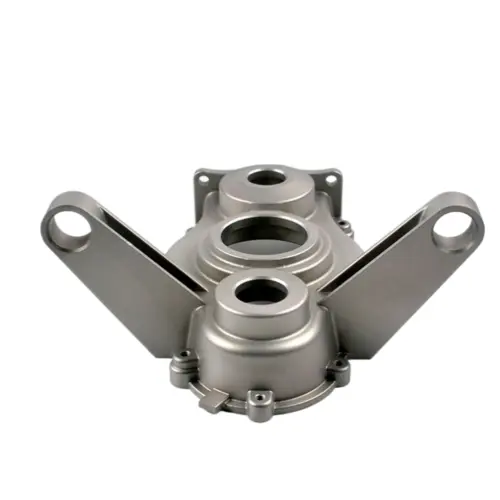
Material:Aluminum

Finish:As-Printed / Raw Finish

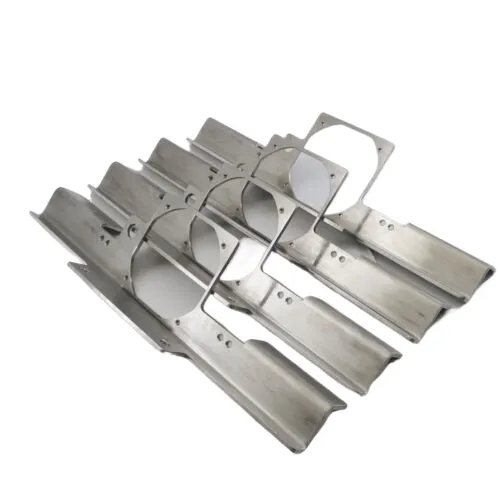
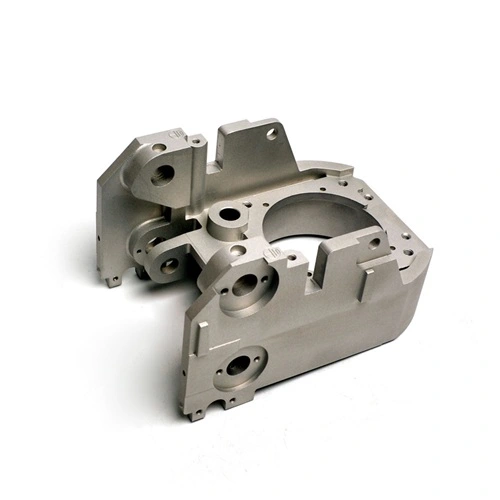
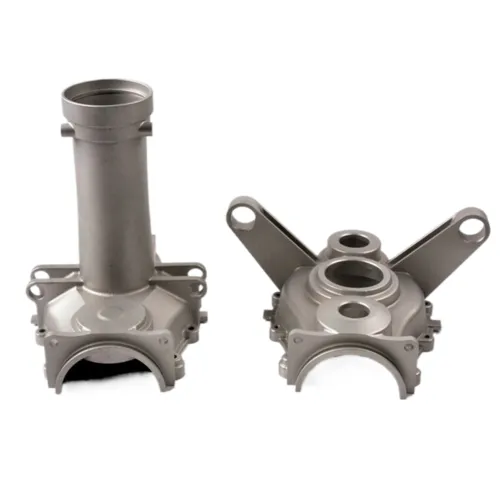
This lightweight metal bracket is produced using precision DMLS/SLM 3D printing technology and engineered for use in exoskeletons and rehabilitation devices. Built for strength, accuracy, and ergonomic performance, it enables complex geometries that traditional machining cannot replicate. Ideal for wearable assistive systems, it delivers an exceptional strength-to-weight ratio, a custom anatomical fit, and integrated mounting features for sensors and actuators.

Manufactured under ISO 9001:2015 and ISO 13485:2016 quality systems, this component meets the high standards required for medical and industrial rehabilitation equipment.

Looking for a custom bracket solution for your wearable or rehab device? Contact us to discuss your project or request a quote today.
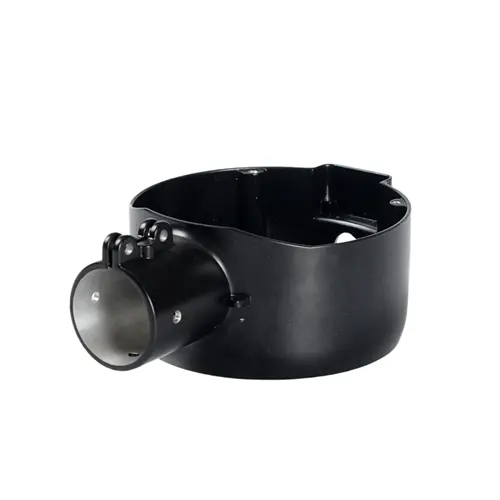
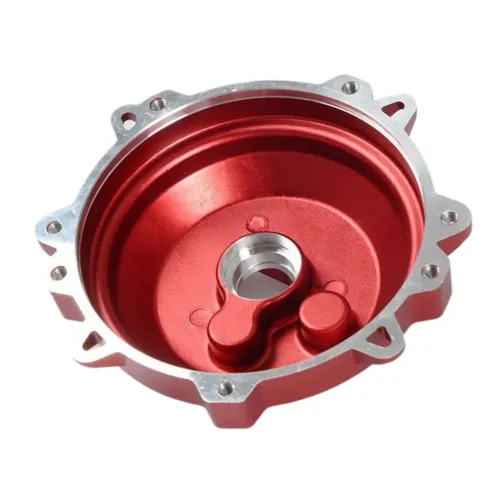
DMLS (Direct Metal Laser Sintering) and SLM (Selective Laser Melting) are advanced metal 3D printing processes used to produce complex, high-performance parts directly from CAD data—without traditional tooling. These technologies are ideal for lightweight brackets in wearable exoskeletonsrehab robotics, and orthopedic assistive devices, where strength, weight reduction, and custom geometry are critical.


Material Selection & Design Optimization Common alloys:
Titanium (Ti6Al4V) – biocompatible, lightweight, corrosion-resistant
Aluminum (AlSi10Mg) – excellent strength-to-weight ratio
Stainless Steel (316L) – wear-resistant, sterilization-ready
Design is tailored for lightweighting using lattice structures, internal channels, or topology optimization
File Preparation & Build Setup CAD files (STEP, STL) are validated and sliced into ultra-thin layers (20–60 microns)
Build orientation, support strategy, and heat stress simulation are finalized to optimize structural integrity and material use
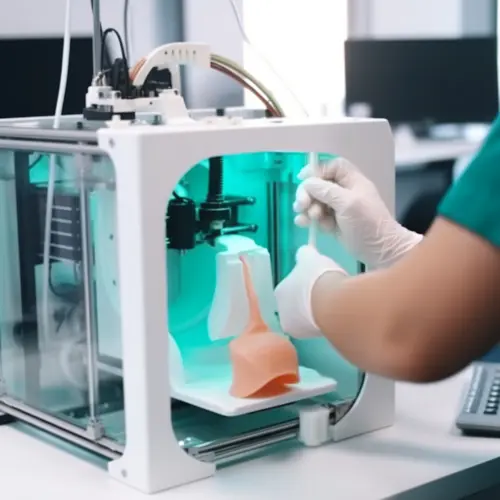
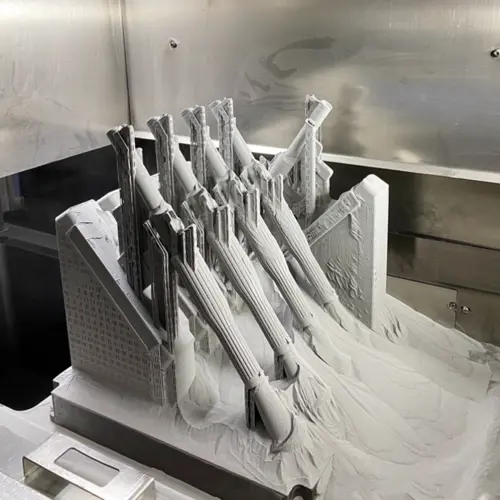
DMLS / SLM 3D Printing A high-power fiber laser selectively fuses metal powder layer by layer inside a nitrogen- or argon-filled chamber
Printing is done on a metal build plate, with real-time monitoring for temperature, energy input, and melt pool stability
Cooling & Powder Recovery After printing, the part cools in the chamber to minimize warping
Unfused powder is removed and recycled for future builds
Support Removal & Post-Processing Supports are removed manually or via CNC machining
Part undergoes finishing operations, such as:
Heat treatment (stress relieving or HIP—hot isostatic pressing)
Surface polishing, blasting, or shot peening
Precision CNC machining of mating surfaces, threads, or bores
Inspection & Quality Control Dimensional inspection via CMM or 3D scanning
Mechanical testing if required (tensile, fatigue)
Surface roughness and porosity analysis
Documentation for ISO 13485

For Exoskeletons & Rehabilitation Devices

Direct Metal Laser Sintering (DMLS) and Selective Laser Melting (SLM) are ideal for producing custom, high-strength, and lightweight metal brackets used in next-generation wearable assistive technologies. These parts offer superior mechanical properties, complex geometry support, and biocompatibility—making them a perfect fit for advanced rehabilitation and mobility systems.

Industry Application Examples
Structural Connectors in Wearable Exoskeleton Frames Load-bearing brackets that connect hip, knee, or spine modules
Designed to support dynamic motion while remaining lightweight for all-day wear
Motor and Sensor Mounting Brackets Precision mounts for electric actuators, torque sensors, and rotary encoders
Integrated cable routing channels and mounting bosses
Adjustable Joint Housings and Pivot Supports Custom articulating joints for ankle, knee, or shoulder modules
Designed for high-cycle fatigue and ergonomic motion paths
Patient-Specific Fitting Fixtures Brackets contoured to fit individual anatomy (e.g., thigh, calf, or torso)
Lightweight titanium frames with smooth contours for comfort and safety
Rehabilitation Robotics Subframes Load-distribution brackets for seated rehab exoskeletons and physiotherapy machines
Internal voids or channels for airflow, weight savings, or sensor wiring
Gait Training and Lower-Limb Assist Devices Structural links and mounting blocks for powered orthoses and robotic gait trainers
Designed to sustain real-world motion forces during therapy or mobility assistance
Upper-Limb Assist Systems Compact brackets for shoulder, elbow, or wrist actuated support systems
Includes joints, cable guide mounts, and end-effector support frames

Part number: RY-H0202

Materials Available: Plastic, Stainless Steel, Steel, Aluminum, etc.

Tolerance: ±0.05mm

Material Certificates: Available

MOQ:1 piece

Drawing Accepted: PRO/E, Auto CAD, SolidWorks, UG, CAD / CAM / CAE, PDF

RoHS/REACH Report: Available

Certificate: ISO9001:2015, ISO13485:2016

Non-disclosure agreement: Strictly sign a confidentiality agreement NDA to give you peace of mind.

Other CNC Parts

FAQ

Outstanding Achievements and Partnerships

We take pride in our outstanding achievements and strong partnerships. Our commitment to great communication, service, and integrity has led to excellent results.
Join us as a valued partner, and together, we can make a positive impact on CNC.

Contact Us