
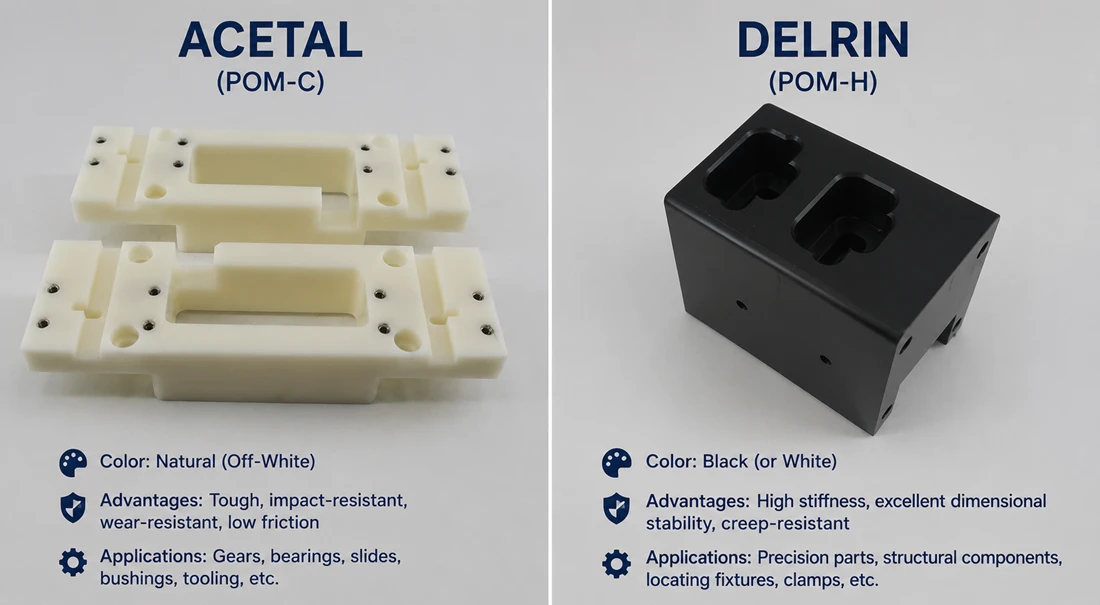

According to a 2025 market analysis by DataM Intelligence, the global Polyoxymethylene (POM) market is projected to reach $6.1 billion by 2031. This growth is fueled by the automotive and electronics sectors, where high-performance plastics continue to replace metal components. Consequently, choosing between standard Acetal (Copolymer) and Delrin (Homopolymer) has become a critical engineering decision affecting both budget and part performance.
With this rising demand, material selection dictates project success. Engineers balance Delrin’s raw strength against Acetal’s chemical stability. A wrong choice leads to structural failure or unnecessary costs. This guide compares both materials to clarify the best option for specific CNC applications.
What Is Acetal
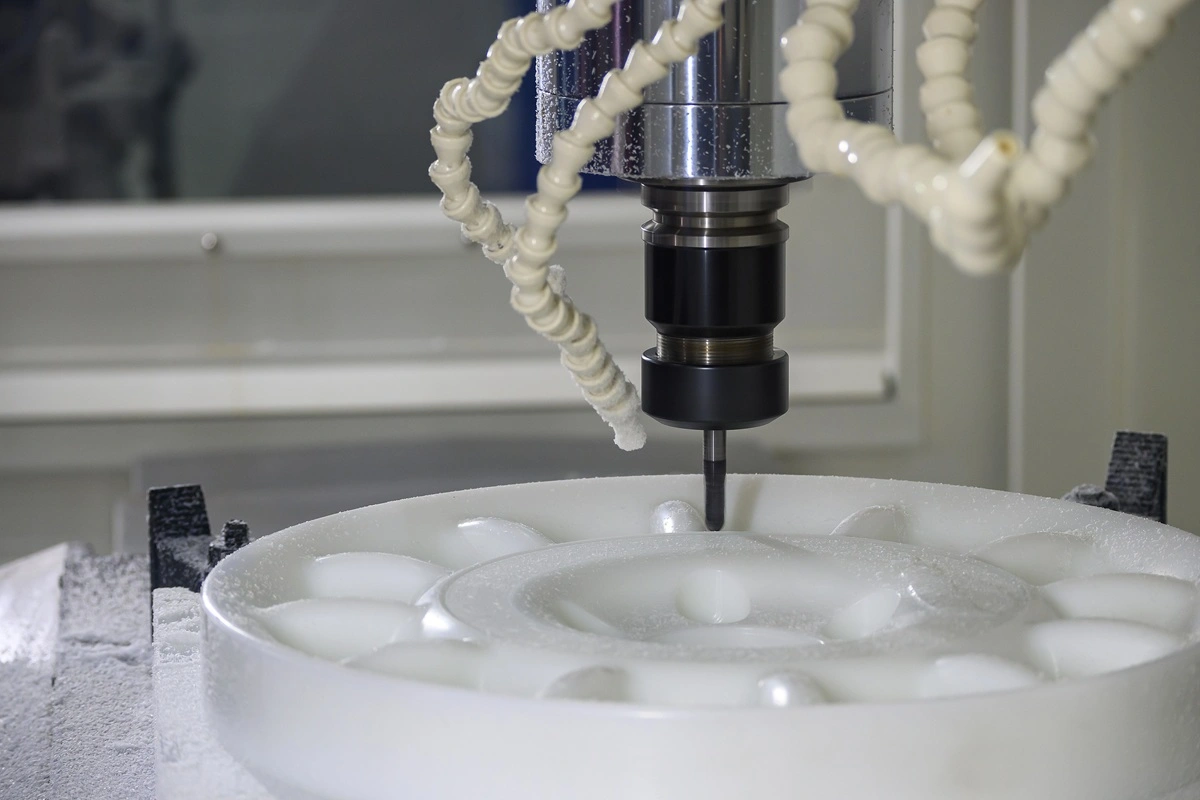
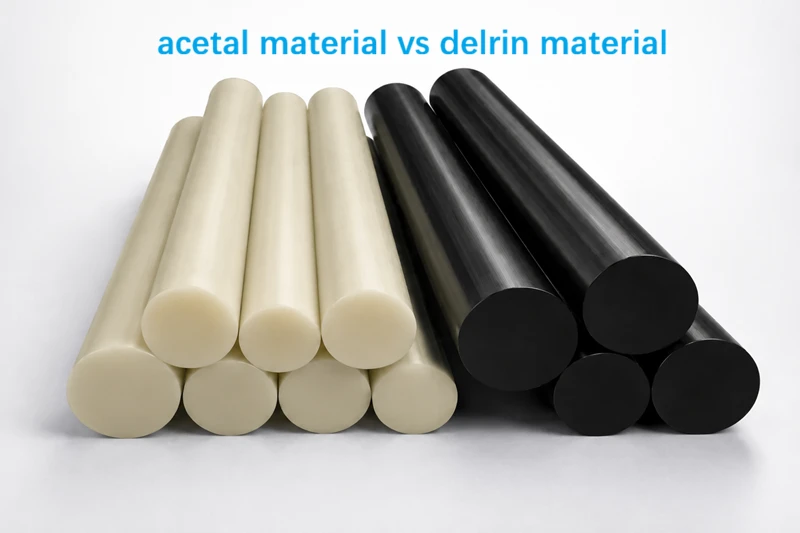
Acetal (POM) is a high-performance engineering thermoplastic. In the machining industry, “Acetal” usually refers to the Copolymer (POM-C), while the Homopolymer variant is called Delrin. It is stiff, low-friction, and replaces metal in precision parts requiring tight tolerances.
Key Features of Acetal
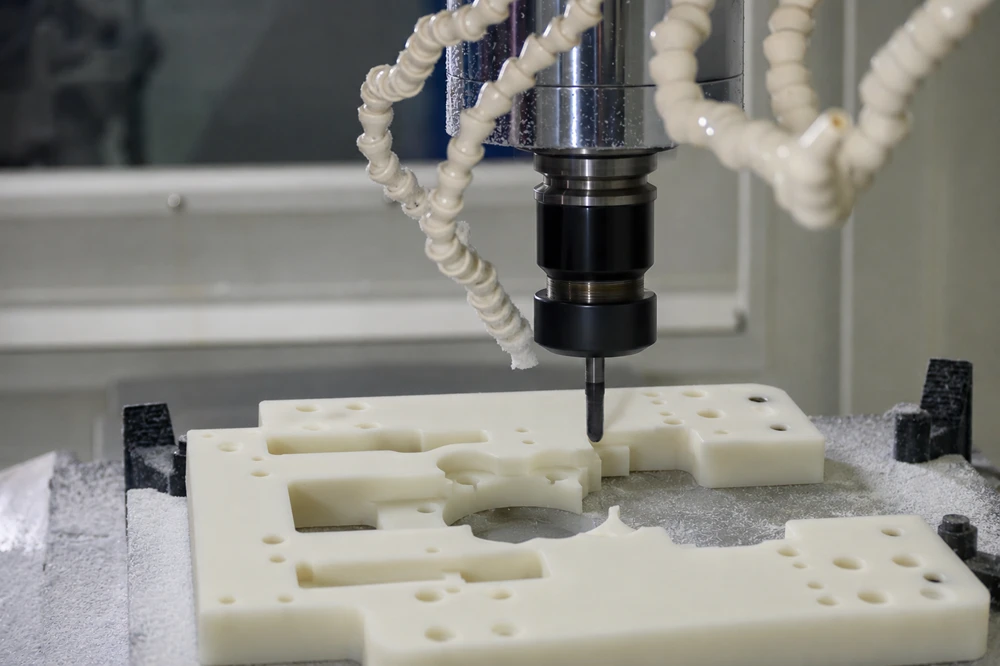
- Excellent Machinability: Acetal cuts like free-machining brass. It produces clean, consistent chips rather than long, stringy nests. This prevents tool wrapping and allows for faster machine speeds.
- Dimensional Stability: Unlike Nylon, acetal absorbs almost no moisture. Parts stay true to size even in humid environments or submerged applications.
- Low Friction: The material is naturally slippery. It requires no external lubrication for dynamic applications.
Types of Acetal
While chemically similar, the two types serve different engineering needs:
- Acetal Copolymer (POM-C): The industry standard. It is chemically stable, free of internal voids (centerline porosity), and generally more resistant to hydrolysis (hot water) than homopolymer.
- Acetal Homopolymer (Delrin/POM-H): A premium variant offering roughly 10-15% higher mechanical strength and stiffness. However, due to its manufacturing process, it carries specific risks regarding internal density which we will discuss below.
Common Uses of Acetal
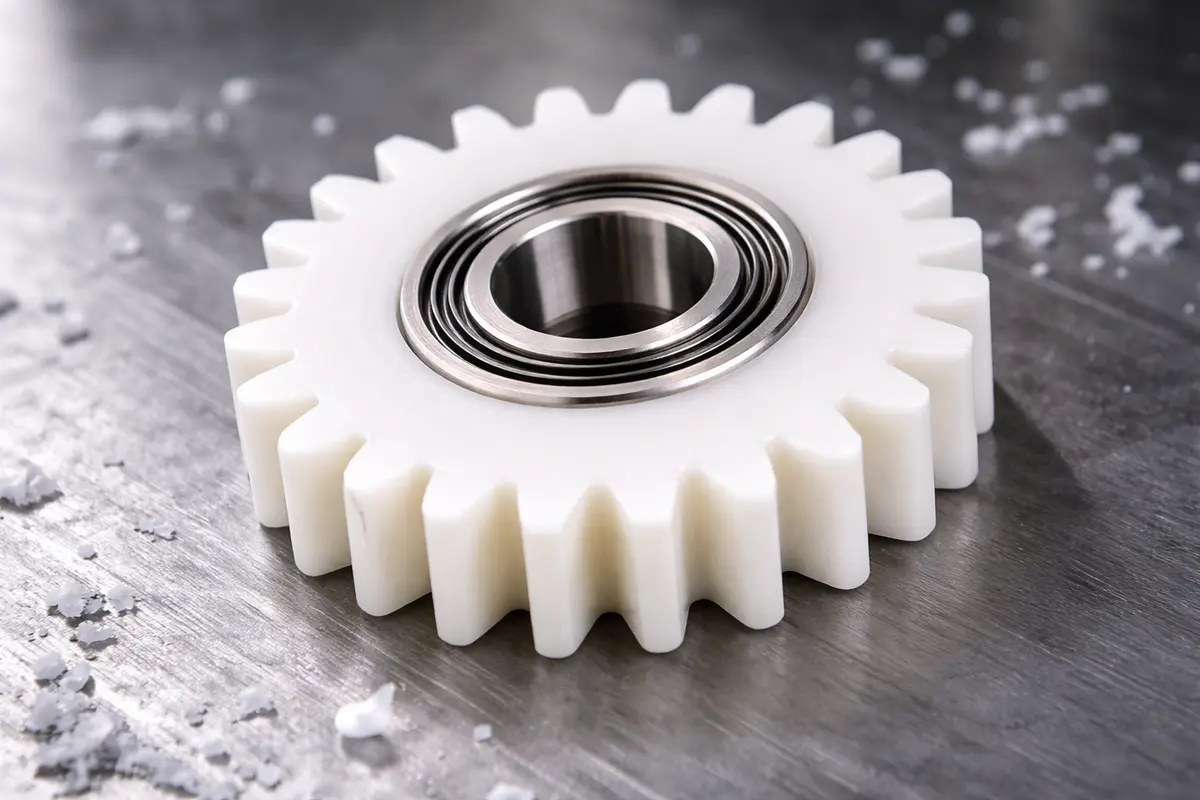
Acetal is the default choice for high-wear components. Engineers use it for gears, bushings, bearings, and rollers to reduce noise and friction. Its chemical resistance also makes it ideal for fluid handling parts, such as valve bodies and pump impellers, where metal might corrode.
What Is Delrin?
Delrin is the trade name for Acetal Homopolymer (POM-H). While chemically similar to standard acetal, it has a uniform crystalline structure. This makes Delrin stiffer and stronger, but it introduces specific manufacturing risks.
Key features of Delrin
- Superior Chip Formation: Delrin is distinctively “crunchy” to machine. It breaks into small, clean chips more easily than Copolymer, often resulting in a superior surface finish and sharper threads.
- Machining Risk (Centerline Porosity): Despite its easy cutting, Delrin carries a manufacturing risk. Thick rods often contain internal voids along the center. Machinists must skillfully plan toolpaths to avoid this “rotten core,” especially for parts that require drilling deep into the center of the stock.
- High Strength and Stiffness: It has a harder surface than copolymer. This creates lower friction and better wear resistance in dry environments.
Grades of Delrin
Most machine shops stock three primary types:
- Delrin 150: The standard grade. It provides the best balance of toughness and machining consistency.
- Delrin AF: A low-friction blend containing PTFE (Teflon) fibers. It eliminates “stick-slip” issues in moving parts and requires no external lubrication.
- Glass-Filled Delrin: Used for extreme stiffness. Glass fibers are added to prevent warping, though this grade is abrasive to cutting tools.
Common Uses of Delrin
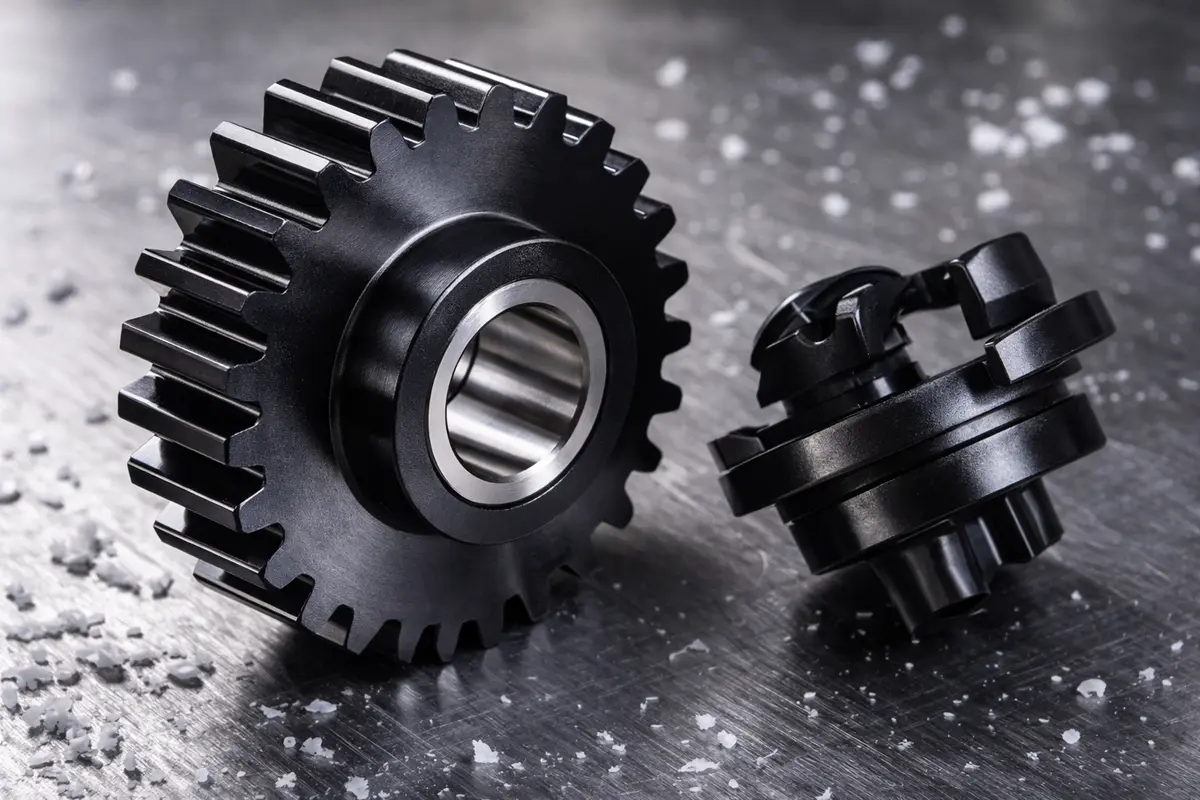
Engineers specify Delrin when standard acetal fails mechanically. It is standard for high-load gears, safety restraints, and snap-fit connectors.
Because of the porosity risk, Delrin is not recommended for pressurized valve bodies. Instead, it excels in dry, high-stress structural applications where stiffness is the priority.
What is the Difference Between Acetal and Delrin
The main difference is reliable stability versus raw strength. While they appear identical, their internal chemistry changes how they behave during machining and in final use.
Material Structure
Internal structure dictates both part strength and machinability.
Composition: Acetal is a copolymer (POM-C) made of two monomers. Delrin is a homopolymer (POM-H) made of one. This makes Delrin more crystalline and dense.
Porosity: Acetal is solid to the core. Delrin often has “centerline porosity,” which is a cluster of tiny voids in the center. These voids can cause leaks or structural failure in deep-machined parts.
Environmental Resistance
Acetal is more durable in harsh or wet conditions.
- Chemical Resistance: Acetal handles high-pH cleaners and strong bases much better. Delrin becomes brittle and cracks when exposed to bleach or strong alkalis.
- Temperature and Water: Both handle heat, but Acetal excels in hot water and steam (hydrolysis resistance). Delrin is better suited for dry heat but degrades faster in hot, humid environments.
Mechanical Performance
Delrin is stronger, but Acetal is more consistent.
- Strength and Hardness: Delrin is 10% to 15% stronger than Acetal. It offers higher tensile strength and superior material hardness, making it better for heavy-load applications where surface wear is a concern.
- Flexural Modulus: Delrin is stiffer. If a part needs to snap into place and hold high tension without deformation, Delrin is the better choice.
Applications
Use Acetal for: Food processing gear, underwater parts, and complex manifolds where internal voids would cause leaks.
Use Delrin for: High-load gears, safety buckles, thin-walled bushings, and mechanical clips requiring maximum stiffness.
Cost Considerations
Acetal is generally cheaper. It is a commodity engineering plastic produced by many suppliers. Delrin is a premium brand name. You will pay more for Delrin due to its higher mechanical specifications and brand reputation.
Acetal vs Delrin Comparison Table
Beyond price, the physical behavior of the material during machining is the deciding factor. Here is a quick comparison of their manufacturing features.
| Feature | Acetal (Copolymer) | Delrin (Homopolymer) |
| Machinability (Chip Control) | Excellent | Superior (Crisper Chips) |
| Material Consistency | Solid / Void-Free | Risk of Porosity |
| Surface Finish Potential | Very Good | Best |
How to Choose Between Acetal and Delrin
Environment and load determine the best choice. Use Acetal for chemical or wet exposure. Use Delrin for high strength in dry settings.
When to Choose Acetal
Choose Acetal (Copolymer) for stability in harsh environments.
Wet or Chemical-Heavy Environments
Choose Acetal for liquid contact or industrial cleaning. It resists high-pH chemicals and strong alkalis better than Delrin. It absorbs almost zero moisture. Parts will not swell or warp when submerged.
Heat-Exposed Parts with Compliance Needs
Acetal is the validated material of choice for precision medical CNC machining solutions. It handles hot water washdowns and repeated steam exposure. Most grades carry FDA and USDA compliance for food processing.
Sliding Components Needing Stable Fits
Select Acetal for bushings and slides requiring tight fits. The material does not expand in humid air. Machined tolerances stay consistent from the shop to the field, preventing part jams.
When to Choose Delrin
Specify Delrin (Homopolymer) for maximum mechanical performance.
Precision Parts in Controlled Environments
Delrin excels at intricate parts in dry settings. Its harder surface allows for cleaner fine threads and thinner walls. It produces superior surface finishes with fewer burrs than standard Acetal.
High-Load Structural Components
Pick Delrin for parts under constant physical stress. It is roughly 15% stiffer and offers higher tensile strength. It is ideal for structural brackets that must not bend under weight.
Smooth-Motion Wear Parts with Heat Considerations
Delrin is best for high-speed gears and snap-fit connectors. It has superior fatigue resistance and handles “snap” cycles without cracking. It also manages heat from dry friction better than Acetal.
Rollyu’s CNC Machining Services for Acetal and Delrin Parts
Rollyu offers specialized CNC machining for both Acetal and Delrin. We produce high-precision components for the automotive, medical, and industrial sectors with a focus on fast turnaround times.
Tight Tolerances and Part Inspection
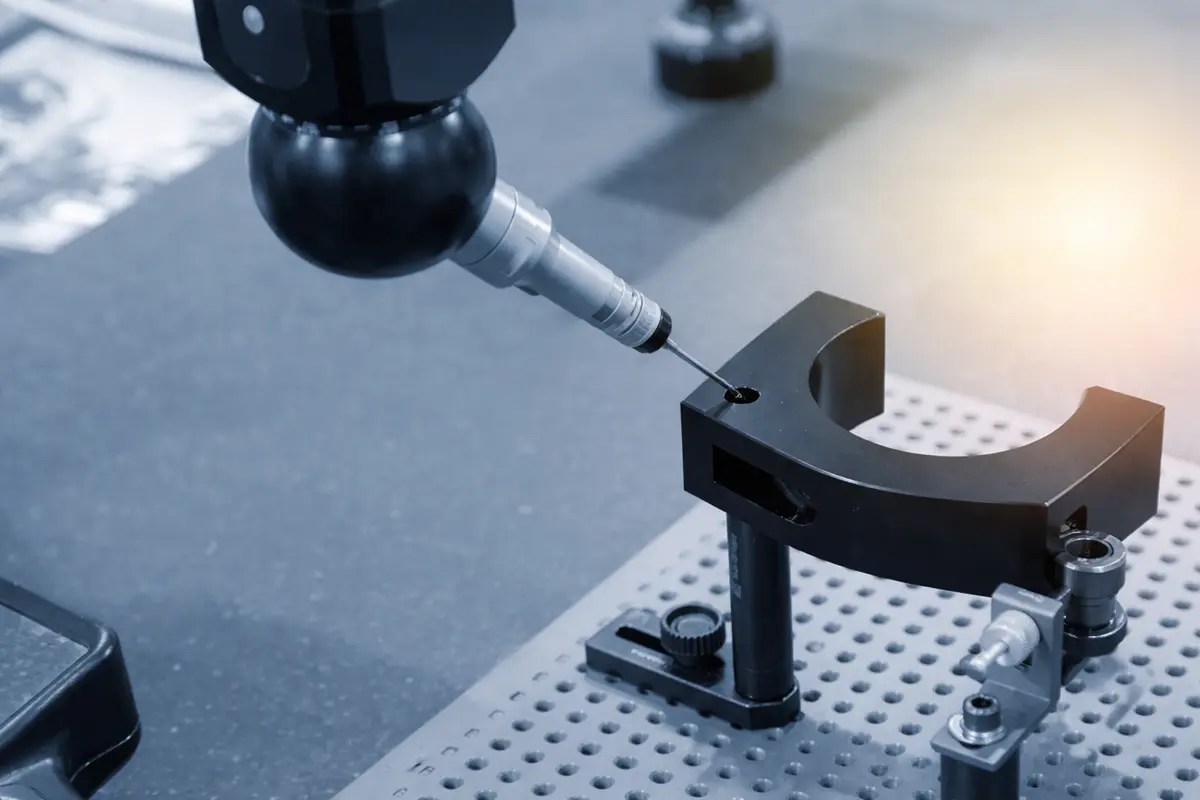
We maintain tight tolerances to ensure every plastic part fits your assembly perfectly. Our shop uses advanced inspection tools to verify dimensions and surface finishes. We confirm every design specification before shipping to guarantee part accuracy and reduce your assembly scrap rates.
Prototype to Production Support
We support your project from the first prototype to final mass production. We recommend validating your Acetal or Delrin designs through CNC machining prototyping to ensure part accuracy before scaling up.
FAQ
What Is Acetal Density and Why Does It Matter for Parts?
Acetal density is 1.41 g/cm³. Use this value to calculate part weight and material costs. If a finished part weighs less than this specification, it may be a lower-quality material substitution.
Are Acetal vs Ketal the Same Material for Engineering Applications?
No, they are different. While engineers often search for Acetal vs. Ketal, “Ketal” is actually a chemical term, not a material grade. Always specify “Acetal” or “POM” on your drawings to ensure you receive the correct industrial plastic.
What Is Acetal Copolymer and When Should You Specify It?
Acetal Copolymer is a void-free plastic for harsh environments. Specify it for components touching hot water, steam, or chemicals. Since it lacks “centerline porosity,” it is the safest choice for pressurized manifolds that must not leak.
How Do Delrin 100 vs Delrin 150 Differ for Machining and Performance?
Delrin 150 is for machining; Delrin 100 is for injection molding. 150 is easier to cut and holds tighter tolerances. While 100 is tougher, it often warps or develops internal stress during the CNC process.
Conclusion
Select Acetal for chemical resistance in wet environments, or Delrin for superior strength in dry applications. Whether you need complex manifolds or durable gears, Rollyu provides precision CNC machining parts tailored to your project’s success.