
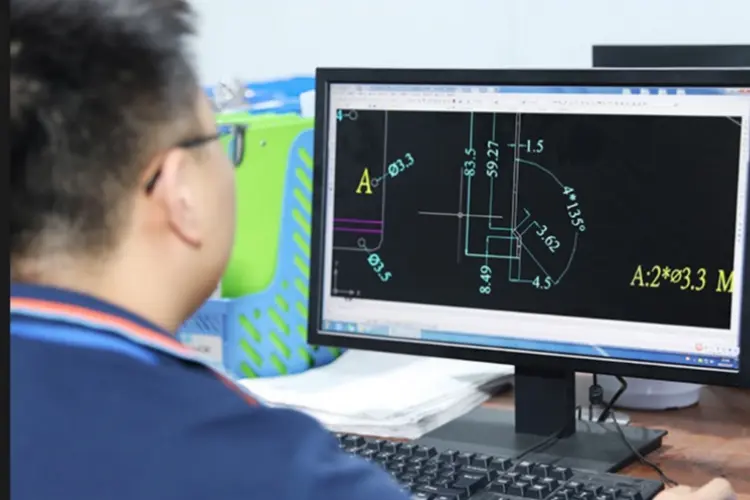

In today’s manufacturing world, CNC machining has become essential for producing high-precision, complex machining parts with unmatched consistency.
Our multi-axis CNC machines, guided by advanced CAD/CAM software, deliver repeatable tolerances within microns, ensuring every machined part meets your exact specifications.
With increasing needs for complex geometries, low-volume production, and rapid prototyping, businesses nationwide rely on our CNC machining services for quick lead times, online quoting, best online cnc service, and dependable shipping anywhere in the world.
Choosing the right CNC machining service provider can directly impact the quality, speed, and cost of your project.
In this article, we outline a practical checklist — from identifying your exact project requirements to reviewing a supplier’s capabilities and confirming compliance with strict quality standards.
We’ll also spotlight Rollyu, an emerging leader in online CNC machining, known for delivering top‑tier results for everything from fast prototype runs to large‑scale precision manufacturing.
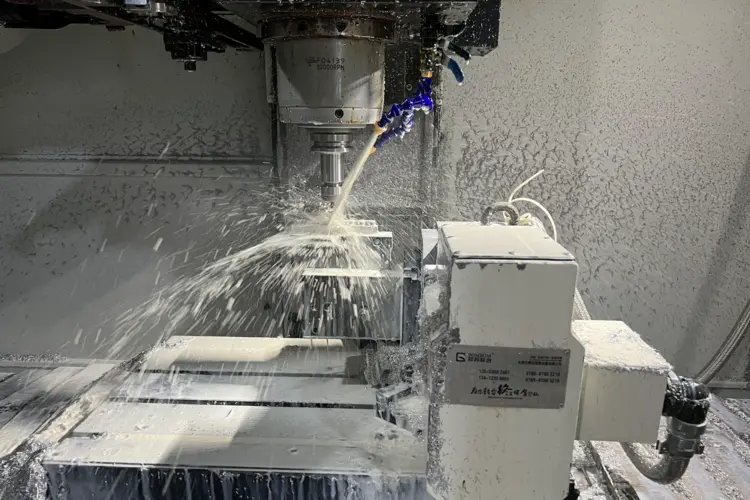
The Importance of Choosing the Right CNC Service Provider
It is important to choose a top CNC (Computer Numerical Control) service provider. Reasons are listed below:
Most CNC parts, especially those utilized in robotics, medical, aerospace, and even instrumentation, have to conform to extremely tight dimensional tolerances, Unless otherwise specified, all metal parts are machined to ±0.005″ (±0.127 mm) tolerances per ISO 2768 standards.
For plastics and composite materials, our standard machining tolerance is ±0.010″(±0.254 mm), with even tighter tolerances available for precision features.
Looking for tight tolerance machining in China? Rollyu Precision offers ultra-precise manufacturing and inspection services, achieving tolerances under ±0.001″(±0.025 mm) according to your CAD drawings and GD&T callouts. Every component is verified with state-of-the-art measuring equipment to ensure accuracy and quality.
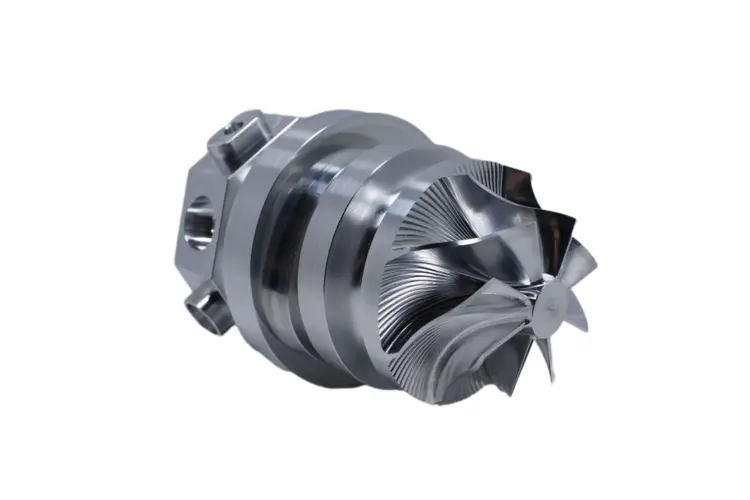
Material knowledge is critical in CNC machining because each material offers unique properties — from machinability and brittleness to traceability, hardness, and thermal expansion.
An experienced CNC machining supplier understands the right fastening methods, feed rates, cutting speeds, and tooling configurations for each material to prevent part chatter, distortion, and premature tool wear.
Creating parts with intricate holes, fine threads, smooth curved profiles, and exact datum planes requires more than standard milling — it takes advanced CNC machining for both tight tolerance and superior surface finish.
At Rollyu Precision, we achieve exceptional surface roughness control and feature accuracy for even the most complex geometries.
In precision CNC machining, complex geometries, hard-to-machine materials, and tight tolerance requirements often lead to higher manufacturing costs and longer lead times.
At Rollyu Precision, we help minimize these costs through design optimization and DFM (design for manufacturing) best practices, ensuring your parts are efficient to produce while meeting all engineering requirements.
Lead time is managed through strategic scheduling, ready-stock materials, optimized tooling setups, thorough inspections, and streamlined finishing workflows.
Quality standards are critical in precision manufacturing, especially in regulated industries like medical device production and aerospace.
Suppliers must comply with strict quality management systems such as ISO 9001 and ISO 13485 to ensure full traceability, process validation, and consistent part quality.
Reliability and repeatability are non‑negotiable for CNC batch manufacturing. Whether you’re producing hundreds or thousands of parts, your machining partner must meet the exact same specifications every time.
At Rollyu Precision, we eliminate performance drift caused by equipment wear, thermal changes, or fixturing errors—issues that often plague lower‑tier vendors—so you get consistent quality from the first part to the last.
Understanding Your CNC Machining Project Requirements
When it comes to selecting the right CNC machining partner, everything starts with a solid project specification.
The clearer and more specific you are — from tolerances to material selection — the more efficient the process and the higher the quality of your finished parts. Here are the critical details you should lock in first:
Determine the Specific Requirements
Geometry: Dimensions, profile, position, angles, internal corner fillets chamfers, shape, as well as features like drilled holes, slots, pockets, threads, undercuts, curves, tapped/threaded hole depth, and raised/recessed surfaces, directly impacts CNC machining complexity.
Producing complex geometries like tight internal angles often requires advanced tooling and multiaxis CNC machining capabilities.
Production and Quantity Volume: At Rollyu Precision, we handle everything from one-off CNC prototypes to small custom runs and high-volume production orders.
Production quantity affects every stage of the process — from fixture design and tooling selection to setup time and per-unit cost.
By aligning CNC machining strategies with your specific volume requirements, we deliver maximum efficiency, consistent quality, and competitive pricing for every order size.
Provide accurate CAD models: Such as PDF, STEP, STL, or IGES files — along with complete engineering drawings that clearly state all dimensions, feature locations, surface finish requirements, and GD&T callouts.
This ensures your CNC machining supplier can meet your exact specifications without costly revisions.You can upload the CAD files for online CNC machining quote.
Inspection and Quality Acceptance: Clearly define critical part features, acceptable tolerances, and inspection methods such as CMM or optical measurement.
Specify any required documentation, including certificates of conformity (CoC), dimensions report, and determine the batch sampling strategy to ensure consistent quality in CNC machined parts.
Choosing the Right Material for CNC Machining Supplier
The type of material you choose directly impacts machining efficiency, cost, and part performance.
Metals like titanium, stainless steel, aluminum 6061/7075, mild steel, and tool steels each offer unique advantages in hardness, strength, and thermal stability.
Engineering plastics such as nylon, POM (acetal), PEEK, PTFE (Teflon) and ABS differ in melting point, dimensional stability, and machinability.
Why material selection matters:
- Harder materials increase tool wear and may require slower cutting speeds.
- Poor thermal conductivity can cause heat buildup and part distortion.
- Thermal expansion must be controlled for tighttolerance or long components.
- Cast and forged materials may have internal stresses that shift during machining.
- Rare alloys and specialty polymers may raise material costs or extend lead times.
By working with a CNC supplier who understands both metals and plastics, you can balance cost, lead time, and performance from the start.
Tolerances and Project Complexity:
Foundational or standard tolerance, several services have baseline tolerances in place if no specific tolerance is put forward.
For example, the company offers more restrictive tolerances (±0.002 in / 0.051 mm) for exact features and traditional prototypes tolerances of ±0.0005 inches (0.0127 mm).
The shape, position, orientation, as well as additional geometric properties (such as actual position,perpendicularity, flatness, parallelism, and cylindricity) may be more precisely defined through the use of Geometric Dimensioning and Tolerancing (GD&T).
It renders clear what modifications are allowed and which are not. When components need to move or pair up, this is extremely important.
Standards for Surface Roughness, Coating, and Plating Finishes
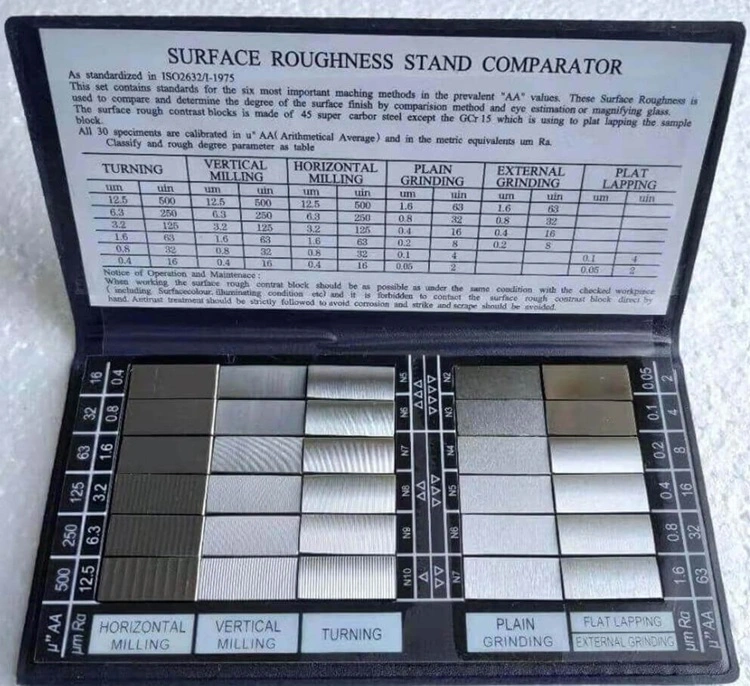
Surface finish requirements — including surface roughness (Ra) in micrometers (µm) or microinches (µin) — play a critical role in product performance and manufacturing cost.
For example, certain specifications may require the average roughness (Ra) to be no less than a defined value, depending on the application.
- Dynamic or Interfacing Surfaces: Components that are in motion, interact with other parts, or require precise fit typically demand finer surface finishes to reduce friction, wear, and operational noise.
- Decorative Surfaces: Visible or aesthetically important areas often require smooth finishes, sometimes in combination with coating or plating for enhanced appearance and corrosion resistance.
- Low-Stress or Hidden Areas: In non-critical, low-stress, or inconspicuous locations, coarser finishes may be acceptable — allowing cost savings and faster machining.
Surface finish specifications directly affect manufacturing cost, production speed, tooling requirements, and coating or plating adhesion.
Selecting the correct Ra value and finish standard ensures an optimal balance between performance, durability, and production efficiency.
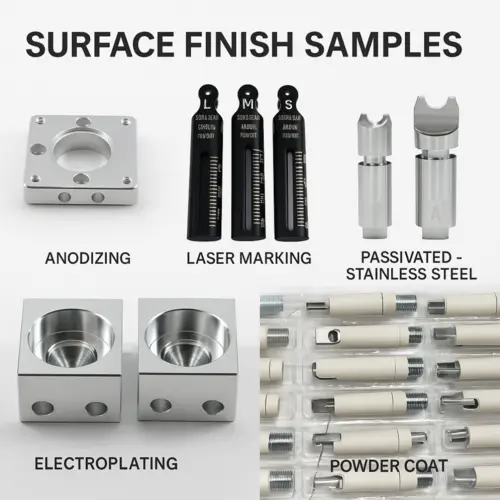
CNC Machined Parts Surface Finishes: Coating, Plating, and Treatment Standards
CNC machined parts surface finishes — including coating, plating, and surface treatments — are a key to part performance, appearance, and corrosion resistance.
Specify finish requirements to recognized standards (ISO 4287, ASME B46.1) and include Ra (surface roughness) targets in µm/µin to ensure repeatable quality.
Powder coating offers durable, uniform color and excellent corrosion protection for structural and cosmetic parts;
Anodizing (for aluminum) creates a hard, wear-resistant oxide layer that accepts dyes and topcoats;
Stainless steel passivation removes surface iron and restores passive corrosion resistance after machining or welding.
Plating options — electroless nickel, hard chrome, or decorative chrome — add wear resistance, hardness, and functional conductivity where needed.
Finish selections directly affect manufacturability, tooling, cost, and lead time: tighter Ra values and multi-step treatments increase processing and inspection.
For best results, specify finish type, target Ra (µm/µin), measurement method, and pretreatment on drawings and purchase specs.
Rollyu Precision pairs industry standards with in-house finishing capabilities and rigorous QA to deliver consistent, traceable CNC surface finishes.
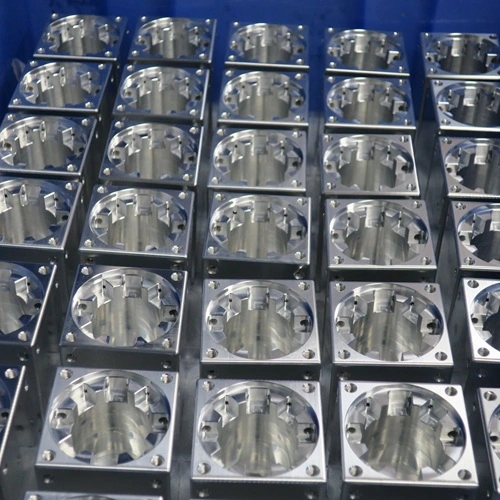
Machine type and axis count — simple 3-axis versus 4- or 5-axis machining — directly determine what features you can manufacture reliably.
Multi-axis machining is often required for complex surfaces, deep recesses, and tight internal radii where tool accessibility, spindle speed, and machine stiffness/rigidity are critical.
Rollyu Precision leverages advanced 4- and 5-axis centers, optimized toolpaths, and experienced process engineers to handle hard-to-reach geometries while minimizing fixture setups, cycle time, and tool wear.
For parts with tight tolerances or intricate contours, specify multi-axis capability up front to ensure cost-effective manufacturability and consistent quality.
Fixture and positioning constraints—how a part is held during CNC machining (clamps, soft jaws, custom fixtures, modular workholding)—directly determine accuracy, repeatability, and surface finish.
Poor fixturing causes vibration, part deflection, chatter, and tolerance loss; thin-walled parts or designs with ultra-tight tolerances require engineered supports, tailored cutting strategies, and fixture-specific tooling to control distortion.
Rollyu combines advanced fixture design, in-house soft-jaw machining, vibration analysis, and proven workholding best practices to minimize setups, cut cycle time, and deliver repeatable tolerance control for complex and thin-wall components. For DFM reviews, custom fixture solutions, or workholding recommendations.
Temperature and environmental control changes in the temperature of the air around you might trigger some precision parts to both grow or shrink.
Providers of high precision CNC regularly maintain their environments stable and may incorporate heat adjustment.
Key Points for Selecting a CNC Service Provider
The following step is to evaluate possible CNC Service when your project requirements have been precisely defined. It makes sense to assess a number of operational and technical aspects while choosing a supplier.
Check Experience as well as Expertise:
Check supplier experience and technical expertise—these directly impact cost, accuracy, and service quality.
Look for CNC Machining vendors with proven work in robotics, aerospace, or medical sectors, as they’re familiar with tighter tolerances and stricter quality systems.
Verify specialized capabilities such as hard-material machining, micro-machining, chemical machining, machined metal parts, machined plastic components, ceramic CNC machining, Swiss turning for intricate components, and multi-axis or 5-axis machining, and confirm they offer engineering support and DFM (design for manufacturability) recommendations to cut cost and improve producibility.
Quick checklist:
Use these criteria when evaluating suppliers to ensure you get costeffective, repeatable, and manufacturable results.
- Industry experience: semiconductor, photonics, aerospace, medical device manufacturing
- Material Certifications: the raw material compliance certificates.
Material control & traceability
Material Test Reports (MTR) and lot traceability for raw material certification.
Heat/lot control, batch records, and serialized part tracking when required by industry specs.
- Precision machining: tight tolerances, highaccuracy CNC, inspection protocols
- Specialized processes: hard-material machining, ceramic machining, Kovar machining, micromachining, 4/5axis machining, precision plastic parts, and screw-machining of metal parts
- Engineering support: DFM reviews, tooling optimization, fixture design
- Quality systems: ISO certification, PPAP/DFMEA capability, firstarticle inspection, certificates of conformity
For healthcare supplies and parts, ISO 13485. ISO 9001, is required in a large number of sectors.
- Inspection, testing & measurement:
First Article Inspection (FAI) / PPAP — formal verification of initial production parts.
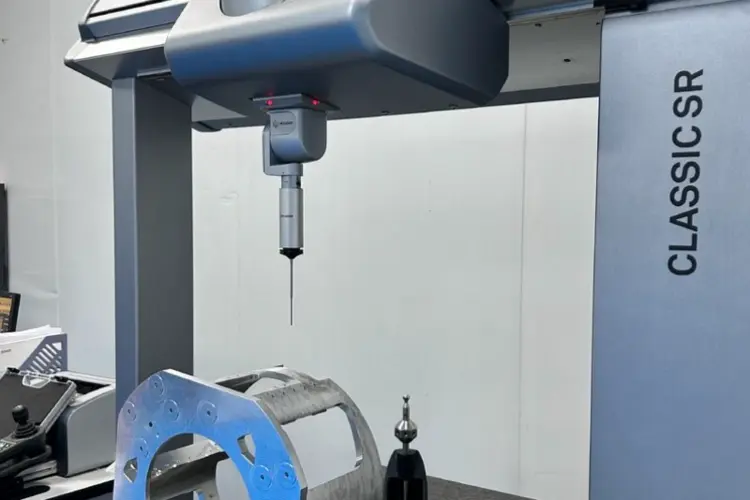
CMM inspection — 3D dimensional verification and reporting.
Surface finish & roughness (Ra), hardness testing, flatness, concentricity checks.
Non-destructive testing (NDT) — dye penetrant, ultrasonic, X-ray as required.
Calibration program — accredited calibration of gauges, CMMs, and inspection tools.
Accessibility of optical scanners, statistical process management, plus CMMs (Coordinate Measuring Machines) are all instances of inspection systems.

- Nonconformance, corrective actions & continuous improvement:
Documented NCR process, root cause analysis (5 Why / 8D), and CAPA tracking.
Ongoing training, internal audits, and management review to drive improvements.
Has documented NCR/CAPA and continuous improvement program
- Packaging, cleanliness & final delivery:
Protective packaging, corrosion prevention, and cleanliness requirements for finished parts.
Shipping labels and traceable documentation included with each lot
Evaluate Communication and Customer Support
These directly affect CNC project success, especially when CAD cleanup, tolerance harmonization, and finish transitions between machines are required.
Look for responsiveness to questions, proactive engineering feedback, and clear change-management practices. Key capabilities to evaluate:
- Responsiveness: fast, documented replies to RFQs, technical queries, and revision requests.
- Engineering support: DFM suggestions, alternate tooling or process proposals, and practical tolerance/finish recommendations.
- Change control: formal ECOs/Revision Control and clear approval workflows to prevent mistakes.
- Project documentation: centralized quoting, CAD/CAM revision history, inspection records, and material traceability.
- Communication channels: dedicated account managers, project portals or ERP access, and scheduled status updates.
- SLA & escalation: defined lead times, response SLAs, and escalation paths for urgent issues.
Strong supplier communication reduces cycle time, minimizes rework and cost, and ensures on-time delivery for complex CNC parts.
Include these criteria in your supplier evaluation checklist and RFQs to find partners who actively manage technical details and project risks.
Check Turnaround Time and Reliability
Turnaround time and delivery reliability are crucial for minimizing supply-chain disruption. Verify prototype lead times vs.
full production cycles, and confirm the supplier’s documented on-time delivery (OTD) or OTIF (On-Time In-Full) performance. Ask about capacity planning: can they scale to your peak volumes without bottlenecks?
Review their contingency plans for machine downtime, staff shortages, and material delays, and whether they offer expedited or AOG services (Aircraft On Ground) for urgent orders.
Reliable suppliers provide transparent production schedules, real-time updates, and clear escalation paths when timelines slip.
Quick verification checklist (use in RFQs):
- Prototype lead time vs. production lead time (days/weeks)
- Historical OTD/OTIF rates and recent performance data
- Available capacity, shift patterns, and maximum daily/weekly throughput
- Contingency plans: backup machines, secondary suppliers, safety stock
- Expedite options & premium costs for rush orders
- Communication: project portal, weekly status reports, and escalation contacts
Include these items in your supplier evaluation to protect project timelines and keep production on schedule.
Request Samples or Prototypes
Request samples and prototypes to validate precision, quality, and finish claims — it’s the fastest way to reduce risk and speed up production. Ask suppliers for:
- Prototype parts and test pieces from similar projects to verify fit, tolerance, and surface quality.
- Batch-run First Article Inspections (FAI) or PPAP packages with CMM reports to confirm dimensional accuracy.
- Surface finish samples with stated Ra values (µm/µin) plus measurement method (ISO 4287 / ASME B46.1).
- Material certificates (MTRs), hardness tests, and traceability documentation for the sample lot.
- Photos, inspection data, and signed sample approval forms to lock down final specs before full production.
- Turnaround time and cost estimates for prototype-to-production scaling.
Verifying these items upfront — prototypes, FAI reports, CMM data, and Ra-specified finish samples — helps you catch manufacturability issues, align expectations, and reduce costly rework.
Include “prototype samples,” “first article inspection,” “CMM reports,” and “surface finish Ra” in RFQs and supplier assessments.
Rollyu Precision — Best Online CNC Service for Rapid Prototypes and Precision Parts
Rollyu is an online CNC machining manufacturing service provider specializing in rapid prototyping, sheet metal fabrication, CNC machining, and 3D printing.
We focus on fast, transparent quotes, rapid turnaround, and industry-grade quality controls tailored to aerospace, automotive, and medical applications.
Choose Rollyu when you need reliable online CNC service that combine quick lead times, tight tolerances, and end-to-end production support — from DFM reviews to finishing and inspection.
Essential Products
How to Choose the Best Online CNC Service — Essential Capabilities to Look For
When vetting online CNC shops, prioritize core services, material expertise, and fast turnaround to match your design and production needs:
- CNC machining services: CNC Turning, CNC milling, CNC grinding, CNC Drilling, electric discharge machining, micro machining, tapping, rotary drilling and advanced 4-/5-axis machining for complex contours and tight tolerances.
- Materials & alloys: Proven work with aluminum, stainless steel, mid steel, titanium, brass, ceramic, Kovar, copper, and engineering plastics (PEEK, Delrin) for application-specific performance.
- Rapid prototyping: Quick turn prototypes and bridge production to validate designs and shorten product development cycles.
- Sheet metal fabrication: Cutting, bending, forming, welding, and secondary operations for enclosures, brackets, covers, junction box, cabinets, carts, and stamped parts.
- 3D printing & additive: Low-volume production, custom fixtures, and prototype parts in plastics and metal.
Technical Proficiency
When selecting a CNC machining online provider, prioritize measurable technical capability and digital workflows that speed time to market.
Rollyu Precision stands out by combining advanced machining with a digital-first experience.
Key criteria:
- Tolerance capability: standard industrial tolerances with the ability to deliver tighter, high-precision tolerances on request.
- Surface finish options: bead blasting, anodizing, powder coating, black oxide, electropolishing, passivation of stainless steel, laser marking, plating and common machining finishes for production-ready parts.
- Batch flexibility: single prototypes, quickturn runs, and scalable production volumes.
- Design & quoting: CAD-compatible online quoting, fast uploads, and DFM feedback to improve manufacturability.
- Digital reliability: transparent lead times, inspection reporting, and end-to-end traceability.
Choose a partner like Rollyu Precision that publishes capabilities, offers engineering support, and provides a CAD-driven quoting portal to ensure consistent, production-ready CNC parts.
Advantages of Choosing Rollyu Precision
Why Choose Rollyu Precision — Best Online CNC Service
- Materials & surface finishes: Wide selection of metals and engineering plastics plus anodizing, powder coat, bead blasting, and plating for functional and cosmetic needs.
- Precision CNC machining: Consistent high accuracy and tight tolerances for robotics, aerospace, medical, and other critical applications.
- Digital workflow: CAD-compatible online quoting, fast uploads, and clear project tracking to reduce errors and speed approvals.
- Scalable production: From one prototype to full production runs — fast turn prototypes and repeatable volume manufacturing.
- Cost & lead-time efficiency: Optimized scheduling, global material sourcing, and lean processes for competitive pricing and faster lead times.
- Engineering & DFM support: Practical manufacturability feedback, tooling suggestions, and design tweaks to cut cost and improve yield.
Choose Rollyu when you want a reliable online CNC service that combines precision, fast quoting, and end-to-end production support.
Conclusion
Identifying an outstanding online CNC service provider requires a methodical process that involves defining your project’s needs, evaluating suppliers based on their expertise, communication, turnaround, and manufacturing systems, and verifying their abilities using prototypes or samples.
Every step of an item’s lifecycle, reliability, dependability, and affordability are guaranteed by making the right choice.
Rollyu offers a potent blend of scalability, digital-first ease, an extensive range of materials and finishes, and technical accuracy.
They’re a desirable partner for businesses where lead time and accuracy matter most because of their capacity to facilitate both full-scale production and quick prototyping.
Regarding online CNC service providers, Rollyu is an effective option for companies trying to enhance their manufacturing processes without compromising quality.