
316 Stainless Steel Machined Parts for Medical Devices - Rollyu

  • Home >>
  • 316 Stainless Steel Machined Parts for Medical Devices

316 Stainless Steel Machined Parts for Medical Devices

Material:316 Stainless Steel

Finish:As Machined

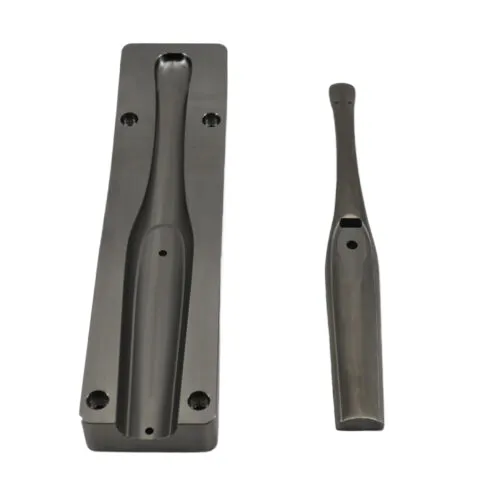
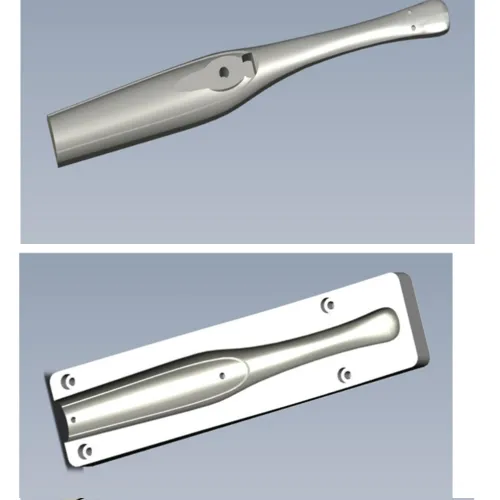
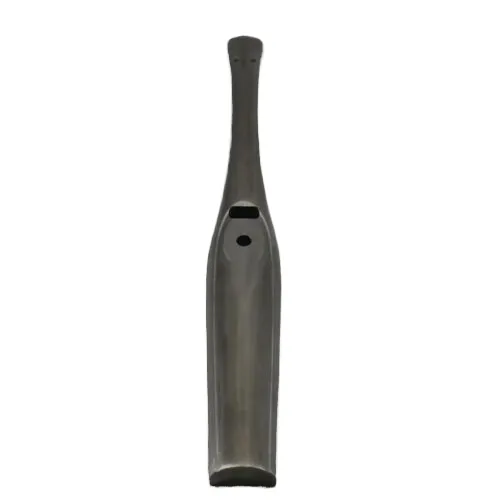
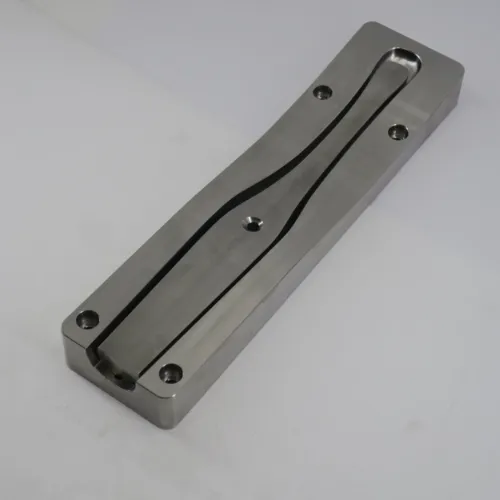
Custom Machined Solutions for Dental and Surgical Tools, a custom CNC machined medical instrument handle—engineered for ergonomic use, consistent performance, and compatibility with high-precision procedures. Paired with a purpose-built holding fixture or assembly block.

Rollyu Precision offers high-precision CNC machined 316 stainless steel guide supports, widely used in dental equipment such as gutta percha cuttersintraoral scanners, and CAD/CAM systems. Manufactured through processes including CNC milling, cutting, grinding, and wire EDM, these components provide excellent dimensional accuracycorrosion resistance, and structural stability, making them ideal for use in dental robotics and diagnostic instruments.

The guide support (Part No. RY-H0001) features a tolerance of ±0.01mm and an as-machined surface finish, allowing for easy integration into dental handpiecesheating devices, and other precision assemblies. In addition to 316 stainless steel, we offer a variety of material options including aluminum alloysbrass, and engineering plastics, to meet diverse needs in custom dental applications.

Rollyu Precision is certified to ISO 9001:2015 and ISO 13485:2016, and we provide RoHS/REACH reportsmaterial certificates, and full NDA protection to ensure confidentiality of customer designs. Whether you require rapid prototyping or small-batch production, we deliver consistent and efficient support, accepting drawings in SolidWorks, AutoCAD, PRO/E, UG, and PDF formats.

If you’re looking for a reliable CNC machining partner for dental components, feel free to contact us for a quote. MOQ starts at just 1 piece, and custom designs are welcome!
Raw Material Preparation Medical-grade AISI 304 stainless steel
Selected in bar, rod, or billet form based on part geometry
Cut to size using bandsaw or automatic saw with tight length tolerances
Material is inspected for mill certification and surface defects
CNC Machining Operations Turning (if cylindrical features exist)
CNC lathe used for turning shafts, grooves, or chamfers
Precision facing, OD profiling, internal boring, and thread cutting (if required)
Milling
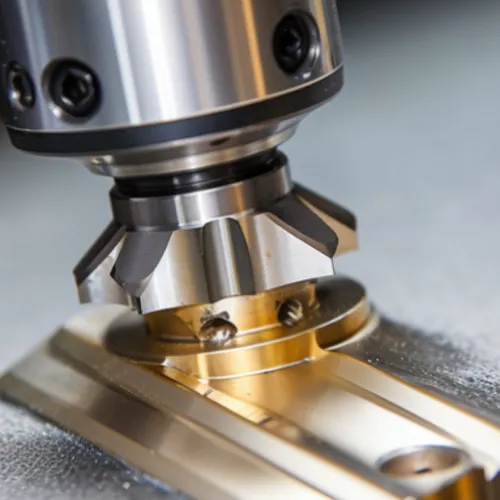
High-speed 3-axis or 5-axis CNC milling for:
Mounting holes, slots, precision flats, and alignment surfaces
Tapped holes for assembly or fastening within handle assemblies
Drilling & Reaming
Holes for guide pins, screws, or dowels
Reamed for tight tolerance and concentricity in high-precision applications
Surface Machining & Deburring
All sharp edges are deburred or chamfered for safe handling and smooth fit
Critical surfaces are milled with fine finish tooling or polished as needed
Surface Finishing Options based on application:
Passivation to enhance corrosion resistance and remove free iron
Electropolishing for a high-purity, ultra-clean surface
Glass bead blasting for matte finish (non-glare, easy to clean)
Polishing for ergonomic grip surfaces in handles
Quality Inspection Dimensional inspection using micrometers, CMM, and pin gauges
Thread verification, alignment checks, and surface roughness measurement
If used in medical equipment: inspection under ISO13485 or FDA-compliant procedures
Assembly & Packaging (Optional) Integrated into medical handle units or precision fixture assemblies
Sterile packaging or cleanroom-compatible wrapping available
Ensures the part is ready for immediate assembly in medical production lines.

In Medical Handles & Precision Fixturing Systems

Engineered for durability, hygiene, and tight tolerance control, CNC machined 304 stainless steel guide supports are widely used across a range of high-precision medical device and healthcare technology applications. These components offer biocompatibility, sterilization resistance, and mechanical reliability in critical surgical and diagnostic environments.


Industry Application Examples
Surgical & Orthopedic Tool Handles with Integrated Support Guides Structural inserts for surgeon-held tools, orthopedic drills, or reamers
Provide precise guidance for cutting tools, ensuring accuracy during procedures
Integrated into ergonomic stainless steel or polymer-overmolded handles
Precision Alignment Fixturing for Medical Robotics and Imaging Systems Mechanical interface components for robotic surgical arms, imaging tables, or navigation platforms
Used to ensure positional accuracy and repeatability in motion-controlled systems
Often embedded into modular fixturing used in robotic-assisted surgeries or radiology setups
Guide Pins, Rail Supports, and Alignment Blocks in Sterilizable Assemblies Used as structural elements in instrument trays, positioning frames, or surgical jigs
CNC machined to tight tolerances for compatibility with precision locking mechanisms
Fully compatible with steam autoclave, ethylene oxide (EtO), or plasma sterilization protocols
Dental and Endoscopic Device Subcomponents Core alignment or structural parts for dental drills, scalers, and endoscopic tool guides
Offers dimensional stability and corrosion resistance in high-humidity or chemically exposed environments
Supports smooth articulation and guidance for flexible tools and optical probes

Part number: RY-H0001

Materials Available: Stainless Steel, Steel, Aluminum, Brass, Plastic, etc.

Tolerance: ±0.01mm

Material Certificates: Available

MOQ:1 piece

Drawing Accepted: PRO/E, Auto CAD, SolidWorks, UG, CAD / CAM / CAE, PDF

RoHS/REACH Report: Available ,

Certificate: ISO9001:2015, ISO13485:2016,

Non-disclosure agreement: Strictly sign a confidentiality agreement NDA to give you peace of mind

Other CNC Parts

FAQ

Why is 304 stainless steel commonly used for medical guide supports and fixturing?

Type 304 stainless steel offers excellent corrosion resistancebiocompatibility, and mechanical strength, making it ideal for medical environments. It’s suitable for repeated sterilization cycles (autoclave and chemical), ensuring durability in surgical and diagnostic applications.

What tolerances can be achieved for precision fixturing and medical handle components?

Using high-precision CNC machining, we routinely achieve tolerances as tight as ±0.01 mm, depending on part geometry and customer specifications. This level of accuracy ensures proper alignment and functionality in surgical instruments and modular fixturing systems.

Are the machined guide supports compatible with standard medical sterilization processes?

Yes. All 304 stainless steel parts are designed to withstand high-temperature autoclavingchemical disinfection, and repeated cleaning cycles without degrading surface finish or dimensional accuracy. Optional surface treatments (passivation, electropolishing) can further enhance corrosion resistance and hygiene.

Do you provide documentation for traceability and quality assurance?

Absolutely. We provide:

  • Full material certification (MTC)
  • Inspection reports (FAI, CMM data)
  • ISO 13485 compliance for medical device components
  • Lot tracking and serialization upon request
Can these components be customized for unique handle geometries or modular fixture designs?

Yes. We support customized geometriesthreaded features, and multi-axis contours based on your design requirements. With in-house 3D modeling, DFM support, and rapid prototyping, we help medical OEMs and device integrators bring precise, application-ready components to market faster.

Outstanding Achievements and Partnerships

We take pride in our outstanding achievements and strong partnerships. Our commitment to great communication, service, and integrity has led to excellent results.
Join us as a valued partner, and together, we can make a positive impact on CNC.

Contact Us