

Recent manufacturing data indicates that raw material selection alone dictates up to 50% of a project’s final cost. In a market where supply chains are volatile, choosing between Zinc Alloy and Stainless Steel isn’t just an engineering decision, it’s a financial one.
Zinc Alloy prioritizes efficiency and low unit costs for high-volume production. Stainless Steel prioritizes strength and resilience for harsh environments. This guide compares the technical and financial trade-offs to help you choose the right material for your budget.
What are Zinc Alloy and Stainless Steel?
Material properties dictate manufacturing viability. The fundamental difference lies in thermal characteristics: one is designed to flow, the other to resist. Understanding this chemical distinction is the first step to optimizing your production budget.
What is Zinc Alloy
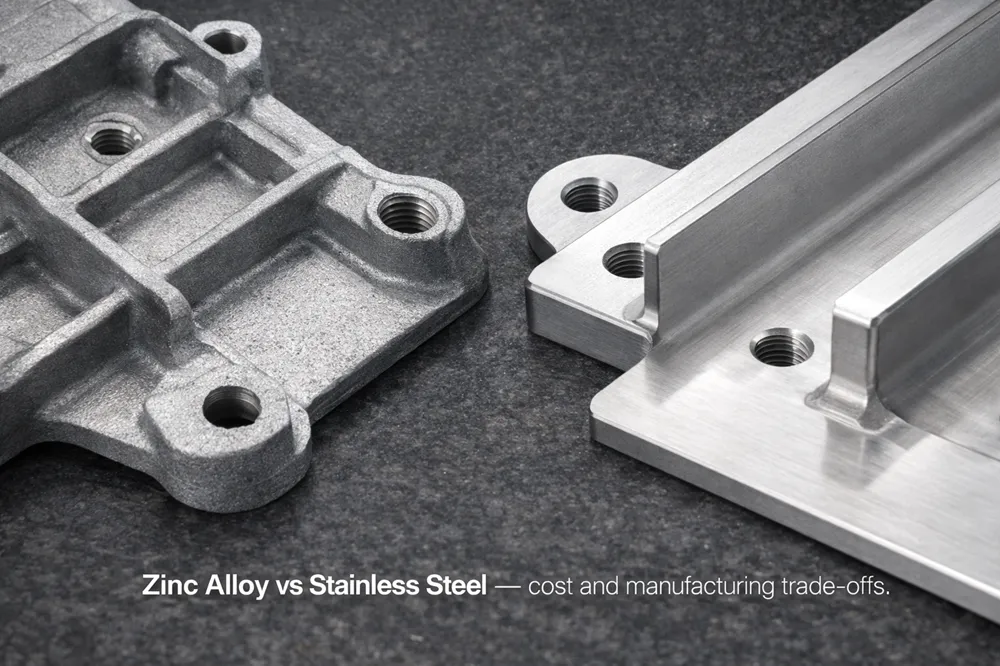
Zinc alloys are high-density, non-ferrous materials mixed with Aluminum, Magnesium, and Copper. They are defined by their low melting point (~725°F / 385°C) and high fluidity. This makes the material rigid and heavy (similar feel to steel) but extremely easy to melt and mold into complex shapes without degrading tooling.
What is Stainless Steel
Stainless Steel is an iron-carbon alloy containing at least 10.5% Chromium. The Chromium creates a thin, invisible “passive layer” on the surface that prevents rust and self-heals if scratched. It is physically harder than zinc, has a high melting point (~2550°F / 1400°C), and offers superior tensile strength.
Zinc Alloy vs Stainless Steel: Physical Properties Comparison
Material composition dictates performance. Before quoting tooling costs, procurement teams must evaluate how these properties affect durability. These are the technical differences that determine your material selection.
Tensile Strength and Hardness
Stainless Steel is the definitive choice for load-bearing applications. It offers high yield strength and impact resistance, making it essential for structural components.
Zinc alloys are rigid but prone to “creep” (deformation) under sustained loads. They function best in protective housings or decorative parts rather than primary structural supports.
Corrosion Resistance
Stainless Steel is engineered for harsh environments. Its chromium content forms a passive oxide layer that prevents oxidation, making it the standard for food processing and medical industries.
Zinc is naturally reactive. Without a secondary coating, it corrodes and forms “white rust” in humid conditions. For outdoor use, zinc always requires plating or passivation.
Weight and Density
Both materials provide a heavy, premium feel compared to aluminum or plastic.
Zinc is slightly denser than stainless steel, adding substantial heft to smaller components. If weight reduction is a priority, neither material is ideal. However, for tactile quality in consumer electronics or automotive interiors, this high density is a distinct advantage.
Surface Finishing and Aesthetics
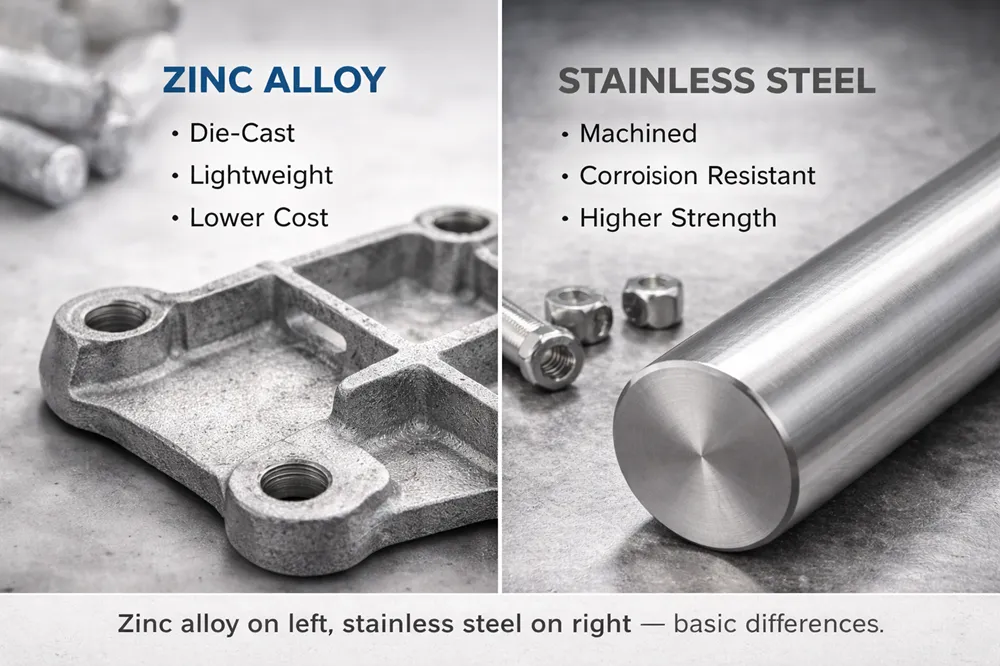
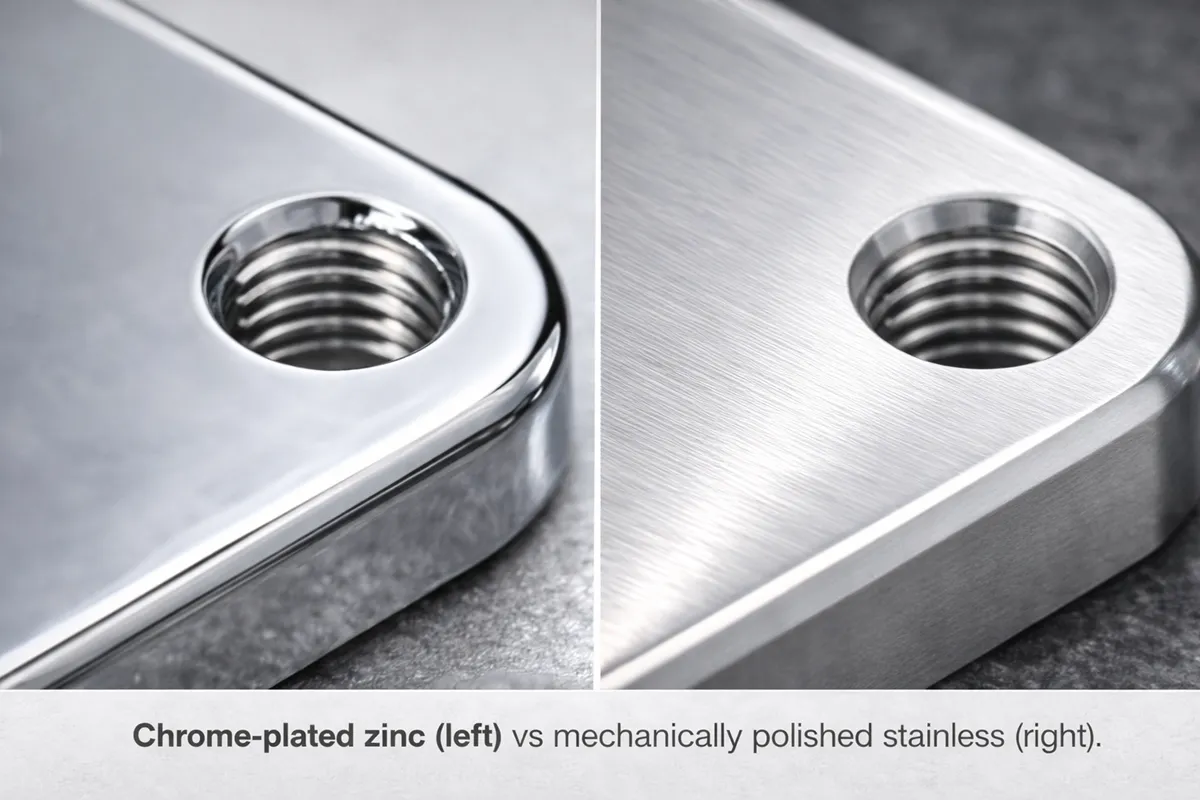
Zinc is the preferred substrate for plating. Its smooth cast surface allows for excellent adhesion of chrome, nickel, or satin finishes with minimal preparation.
Stainless steel is aesthetically pleasing when mechanically polished, but it resists painting and plating due to its anti-corrosion layer. For parts requiring complex aesthetic coatings, zinc is more cost-effective.
Zinc Alloy vs Stainless Steel: Manufacturing Processes Comparison
Physical properties determine production viability. Because the melting point gap between these two materials is over 1000°C, they utilize entirely different manufacturing workflows.
Zinc Alloy: High-Efficiency Die Casting
Zinc is the industry standard for high pressure die casting. Due to its low melting point, it is processed using hot chamber die casting machines, which offer faster cycle times than any other alloy. The molten zinc is injected into the mold at high speed and solidifies in seconds.

The Advantage
This process achieves “net shape” production. Parts emerge from the mold with complex geometries, threads, and thin walls already formed, eliminating the need for extensive secondary machining.
Tooling Life
Because zinc is non abrasive and melts at lower temperatures, die casting molds for zinc last significantly longer. They often exceed 1 million shots before requiring replacement, which amortizes tooling costs effectively over high volumes.
Stainless Steel: CNC Machining
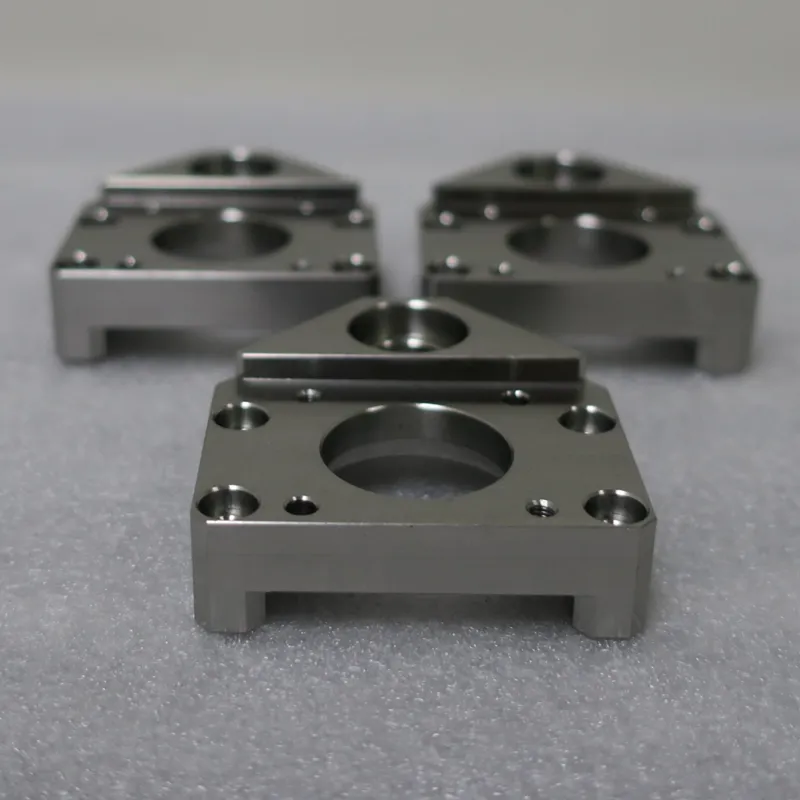
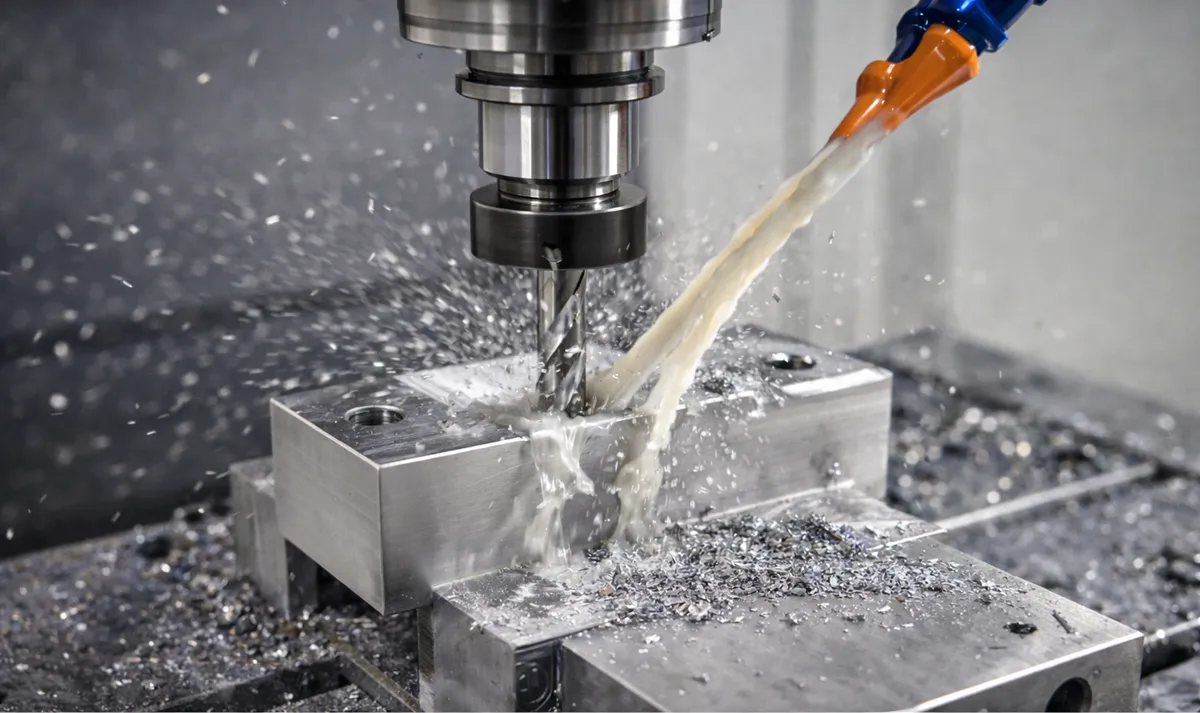
Due to its extreme melting point, stainless steel is rarely die cast. For precision components, CNC Machining is the primary method. This is a subtractive process where the part is cut directly from a solid block of steel.
The Advantage
CNC machining requires zero tooling investment. You can start production immediately without waiting for mold fabrication. It allows for tighter tolerances on critical surfaces than casting can achieve. These are just a few of the many benefits of CNC machining in manufacturing.
The Limitation
This method is slower and generates significant material waste. Machining stainless steel is also hard on cutting tools, which drives up the operational cost per unit compared to the rapid output of zinc casting.
Zinc Alloy vs Stainless Steel: Cost Comparison
Manufacturing workflows directly impact your bottom line. Zinc is primarily die cast while Stainless Steel is often machined. This technical distinction creates two opposing financial models. One prioritizes low unit costs through high volume, while the other prioritizes low upfront risk for smaller batches.
| Cost Factor | Zinc Alloy (Die Casting) | Stainless Steel (CNC Machining) |
| Tooling Investment | High. Requires expensive steel molds (dies). | Low / Zero. Requires only fixtures and programming. |
| Unit Price (High Vol) | Low. Fast cycle times reduce part cost. | High. Slow machining time increases part cost. |
| Raw Material Cost | Moderate. Prices fluctuate with global supply. | High. Nickel and Chrome additives add expense. |
| Cycle Time | Seconds per part. | Minutes or hours per part. |
| Finishing Expense | Low. Surfaces are smooth directly from the mold. | High. Polishing hard steel is labor intensive. |
Which Material Fits Your Application?
Budget and specs rarely align perfectly. The decision usually comes down to volume and environment. If you are scaling to mass production, the tooling cost of Zinc pays for itself quickly. If you need extreme durability for a low-volume industrial run, Stainless Steel is the safer bet. Here is how specific industries navigate this choice.
Electronics and Precision Components
Zinc dominates when complexity and shielding are required. Zinc alloys provide inherent EMI/RFI shielding for sensitive semiconductor and photonics components without the need for extra conductive gaskets.
Stainless Steel is typically reserved for external chassis parts or internal brackets where stiffness is critical and space is too limited for the wall thickness zinc requires.
Industrial and Structural Hardware
Stainless Steel is the industry standard for valves, fasteners, and fluid handling. Its ability to withstand high pressure and caustic chemicals without degrading makes it non-negotiable for safety-critical hardware.
Zinc is used for handles, knobs, and control panels—parts that need to look good and feel heavy but aren’t exposed to the process chemicals directly.
Telecommunications and Outdoor Power
Stainless Steel (304/316 grade) is preferred for outdoor enclosures in coastal or marine environments where salt spray is a constant threat.
Zinc can be used outdoors, but only with heavy-duty plating or powder coating. If the coating is scratched, the zinc will corrode. Therefore, for maintenance-free long-term infrastructure, stainless steel is often worth the extra material cost.
Medical and Food Grade Equipment
Stainless Steel is the only option for surfaces in contact with food or biological tissue. It withstands aggressive sterilization cycles (autoclaving) and harsh chemical cleaning without pitting.
Zinc is generally avoided in sterile zones. However, it is frequently used for the heavy, weighted bases of medical carts or monitor stands to provide stability, where sanitation requirements are lower.
Why Choose Rollyu’s Manufacturing Services
At Rollyu, we do more than just fill orders; we act as your scalability partner. Whether you need a single validation prototype or a million-unit run, our integrated engineering ensures your project moves from design to delivery without the headaches of switching suppliers.
Flexible Solutions: From CNC to Die Casting
Volume shouldn’t limit your options. We handle your entire product lifecycle, starting with rapid CNC Machining Services for prototypes and scaling seamlessly to Die-Casting Parts for mass production. You get the most cost-effective process at every stage without ever needing to requalify a new vendor.
DFM Reviews for Cost Reduction
We fix costly design errors before production starts. Our engineers perform rigorous DFM reviews to identify features that inflate tooling costs. We propose specific geometry adjustments that reduce cycle times and material waste while preserving your original design intent.
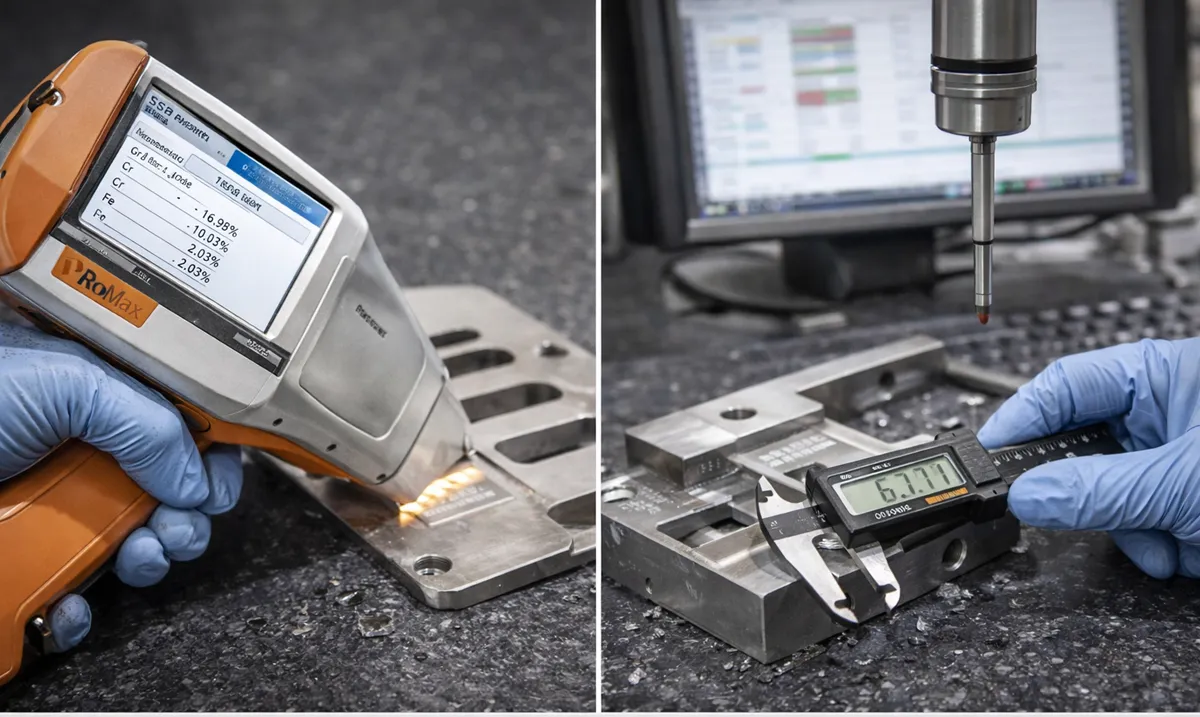
Quality Control: XRF Analysis and Dimensional Reports
We provide proof, not just parts. Every batch undergoes XRF alloy analysis to verify composition against international standards. We include detailed dimensional reports with every shipment, ensuring total traceability from the raw ingot to your loading dock.
FAQ
Does Zinc Alloy Require Plating to Prevent Corrosion?
Yes. Unprotected zinc forms “white rust” in humid environments. It requires plating (like chrome or nickel) for durability. The advantage is that zinc is an excellent substrate for plating, often achieving a smoother, more premium finish than stainless steel.
Can I Weld Zinc Parts to Stainless Steel?
No, the melting points differ too much. Zinc melts at 385°C while steel needs 1400°C, making welding impossible. We strongly recommend using mechanical fasteners or threaded inserts instead.
Can Zinc Die Casting Replace Stainless Steel CNC Parts?
Yes, and it saves money. Plated zinc mimics the heavy weight and feel of stainless steel but eliminates slow machining. This switch often cuts unit costs by 50% or more.