
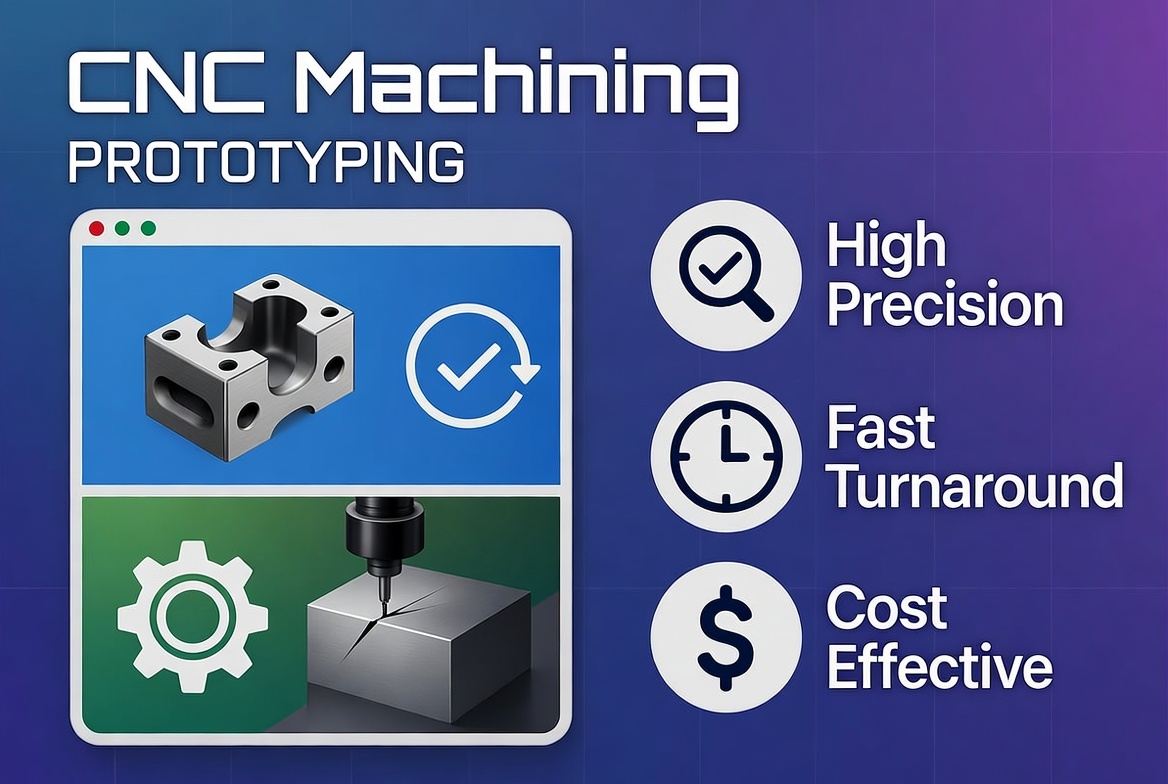

CNC machining prototyping helps you turn your design ideas into desired parts quickly. You can test shapes, sizes, and functions before commencing full-scale production. It also reduces mistakes and ensures your product works as intended.
Prototyping saves time and materials because changes are easier to make. You can see how a part fits with other components. It also allows you to evaluate strength, precision, and surface finish.
At Rollyu, we provide precise CNC manufacturing services for various industries. From medical tools to robotics, we create accurate and reliable parts. Our services help businesses launch products faster and with confidence.
What is CNC Prototyping?
CNC prototyping refers to the manufacturing of a physical model based on a digital model. It involves computerized machines to cut, shape, and form materials precisely. In industries such as semiconductor manufacturing, Semiconductor CNC Machining ensures high precision in creating intricate components. It allows the engineers and designers to get a glimpse and test a real prototype of what they have.
CNC machines can process metals, plastics, and various composite materials. It produces the parts as per the design as they are instructed by the CAD files (in the form of G-codes). This makes it very accurate, and all prototypes are of consistent quality.
To scale, prototyping can predate actual production. It can be used to determine the design flaws early on, test its functionality, and make improvements in a short period. They can save businesses time and costs, and also improve the end product.
Advantages of CNC Machining Prototyping
The Prototyping CNC machining has numerous advantages for the business. It allows firms to test designs in a rapid and precise manner. The real parts are made out of digital parts, and, by doing so, teams can detect problems promptly. This will minimize errors and enhance the quality of products before full production. It is applied in the medical, robotics, and industrial equipment industries and encourages innovation and saving resources and time.
High Precision and Accuracy
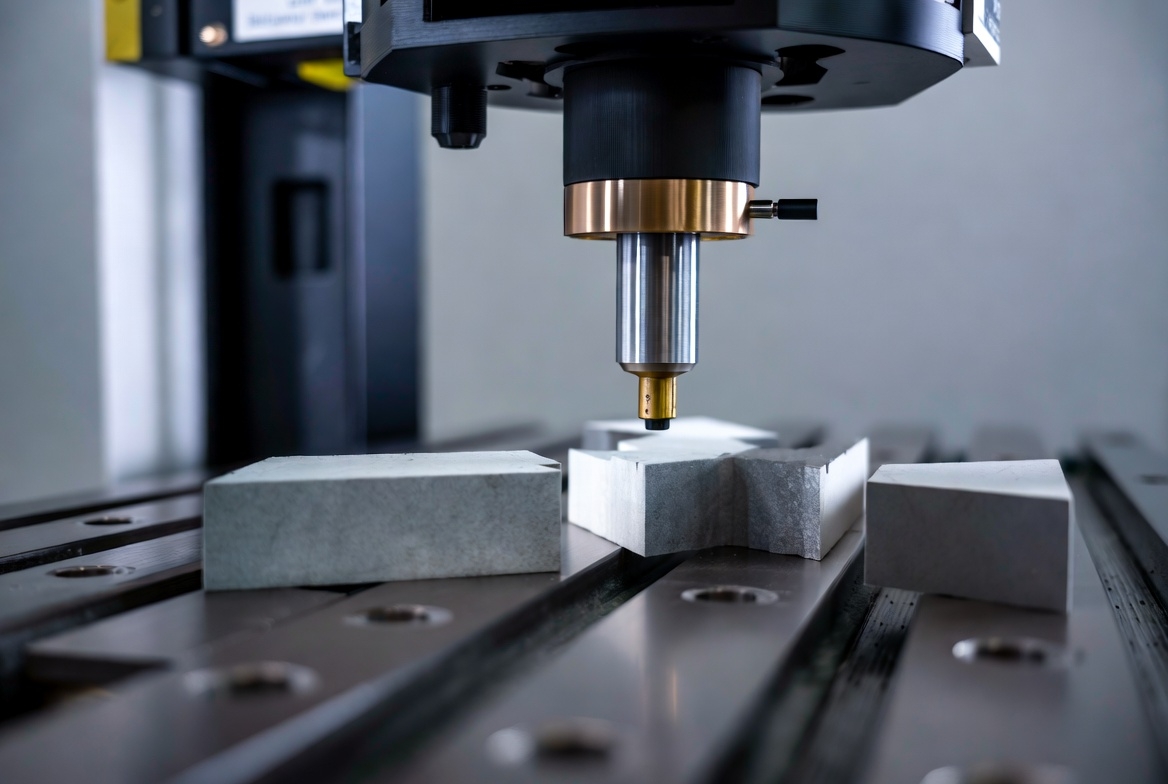
CNC machines are computer-controlled and follow programmed rules in order to cut material blocks. Each component corresponds to the CAD prototype having close tolerances. This accuracy will make sure that prototypes are an accurate representation of the final product.
The high accuracy serves to test the fit and functionality of the parts. Shapes that are complex and minute are replicated with accuracy. The employment of accurate prototypes minimizes rework in full-scale production.
Faster Production
CNC prototyping accelerates product development. It is possible to manufacture parts in a few hours or days rather than weeks. Speedy production allows designers to experiment with a number of formulations within a short span of time.
This quicker turnaround assists companies in achieving the strict project deadlines. It also enables the corporations to adapt promptly to the market needs and design fluctuations.
Cost-Effectiveness for Small Runs
Small batches are affordable to prototype using CNC machines. It does not incur high expenses of manufacturing expenses on a large scale. Just the required components are manufactured, and this minimizes wastage of materials.
The savings related to costs are high when it comes to testing new designs or limited products. Businesses do not have to spend heavily on trying different options.
Versatility in Materials
CNC prototyping deals with diverse materials, including metals, plastics, and composites. This flexibility allows the parts to be tested in terms of strength, durability, and aesthetics. The simulated real production conditions can be done using different materials.
It also serves a vast number of industries, from aerospace to medical devices, including precision medical CNC machining solutions. Before final production, designers are able to select the optimal material to use in regard to functionality and performance.
CNC Machining Prototyping vs Other Prototyping Methods
The selection of a prototyping approach has implications for the quality of products and the speed of development. CNC machining parts also provides accuracy and durability that are not comparable with other methods. The comparison of methods assists you in choosing the most appropriate way depending on your needs.
CNC Machining Prototyping vs 3D Printing Prototyping
CNC machining prototypes are usually made from materials such as metals and engineered plastics. This gives strong and functional parts, which are not always durable with 3D printing, as resin or plastic is used.
CNC gives better precision and tighter tolerances than 3D printing. Complicated shapes and fines are simpler to accomplish. 3D printing is quicker with simple forms but less precise in general.
CNC is best used in testing fit, working, and assembly. 3D printing is suitable for concept models or graphical representations. The decision to use CNC guarantees that the prototypes act like the product.
CNC Machining Prototyping vs Injection Molding
The injection molding is economical when handling large-scale manufacturing, but when it comes to prototyping, it is costly. CNC enables low-volume production without expensive molds. This is what makes it perfect when it comes to testing several design versions.
CNC prototypes will be completed within a shorter time than injection-molded parts. One can make alterations directly in the digital file. Injection molding involves making or altering molds, which retards development.
CNC is less expensive when dealing with small quantities of runs or specialist parts. Injection molding would be good for high-volume production, but it will be restricted in terms of prototyping.
CNC Machining Prototyping vs Casting
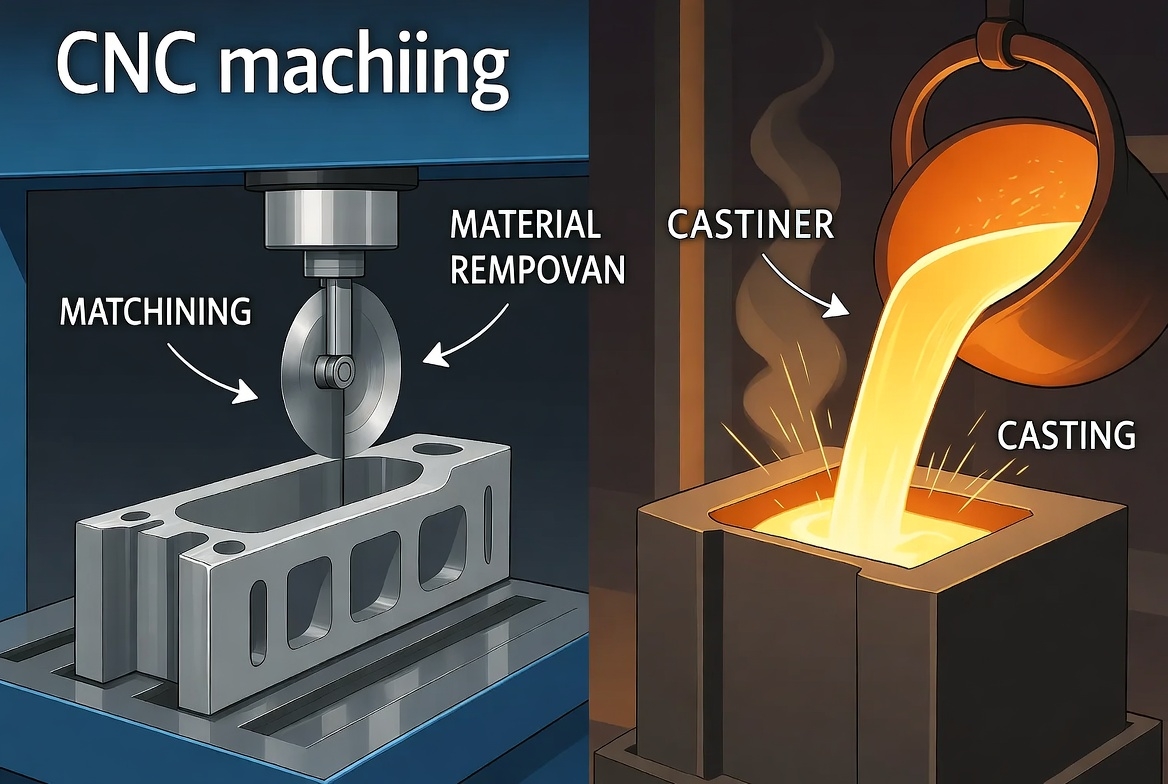
Casting is capable of making complicated shapes, but it is not precise. CNC machining will make sure that all parts are perfectly specified. Tight Tolerances and smooth finishes can be achieved using CNC.
Moreover, CNC enables fast repetition of designs without the need to produce new molds. Molds or patterns are necessary in casting, which adds to the expenses and time of setup. CNC models can be changed with relative ease and replicated.
In industries that demand specific dimensions and testing functionality, CNC is the best. Casting is possibly more appropriate for decorative or bulk parts, but not accurate prototypes.
Application Industries of CNC Machining Prototyping
CNC machining prototyping and sheet metal manufacturing are common practices in most industries. They enable firms to design the exact part in a short time and test designs speedily. CNC prototyping of high-tech equipment and medical devices, along with sheet metal manufacturing, ensures quality and functionality prior to full-scale manufacturing.
Automotive Industry
Automobile parts and components require CNC prototyping. Engineers are able to test engine components, body parts, as well as mechanical components to check their fit and durability. Prototypes also assist in avoiding expensive mistakes to be avoided in the process of actual production.
New designs or custom modifications can also be tested by way of prototypes. production, the components can be optimized in performance, strength, and weight. This guarantees the safety and efficiency of vehicles.
Avoidable costs and time are saved by automotive manufacturers when they discover design errors at an early stage. The CNC prototype has made it possible to rapidly iterate and test reliably both the production and testing.
Aerospace Industry
Precision is essential in aerospace for both safety and performance. Aerospace CNC machining is used for high-tolerance parts of aircraft engines, brackets, and structural parts. A guide to Aerospace CNC machining helps ensure that these processes are carried out with the highest level of accuracy and efficiency.
Prototypes can also be put to the test in terms of weight, strength, and heat. This makes sure that finished parts are up to the aerospace standards. CNC machining minimizes the malfunction of the vital systems.
The engineers are able to cycle through designs rapidly without committing themselves to costly full-scale components. This increases the speed of development, yet remains of high quality and reliability.
Medical Device Manufacturing
CNC prototyping is an important aspect of medical equipment. It enables an exact production of surgical equipment, implants, and diagnostic elements. All components may be checked regarding their correctness, safety, and functionality.
Prototyping is used to ensure validity in design before full production. They minimize the chances of mistakes that might jeopardize the safety of patients. CNC components have a high accuracy needed in the medical sector.
The prototypes provided by Rollyu facilitate the rapid creation of custom prototypes. This assists medical firms in being innovative and meeting regulatory requirements effectively.
Robotics and Automation
CNC prototyping is applied to critical precision robotics parts and automation components. Small parts such as gears, brackets, and enclosures can be tested prior to assembly.
Designs are repeatable and can be used to enhance functionality and performance. Proper prototypes make sure that the automated systems are reliable when applied to the real world.
CNC prototyping minimises lead times and assists in the custom automation solutions. The companies are able to produce new robotic parts without incurring heavy investments.
Why Choose Rollyu CNC Machining Prototyping?
At Rollyu, we offer reliable and accurate machining solutions. Our services assist businesses in making the correct parts in a quick and efficient manner. We focus on quality and flexibility to benefit from prototype to full-scale production of projects. When choosing the best online CNC service, Rollyu stands out with its commitment to accuracy, quick delivery, and expert advice. Clients benefit from accuracy, quick delivery, and expert advice. Each prototype is checked in terms of accuracy, surface finish, and functionality. With Rollyu, one can be sure of excellent performance and delivery.
High-Quality CNC Machines and Technology
Rollyu’s in-house facility is equipped with high-end CNC machines with 5-axis capabilities. This enables us to make complicated components with very high tolerances. These are high-speed turning lathes, wire EDM, and automated production lines.
Our machines deal with metals, plastics, and other materials. Every prototype is made to the specifications of precise CAD designs. Advanced technology means quality, consistency, accuracy, and reliability of each order.
Finishing processes such as anodizing, painting, and assembly are also incorporated at Rollyu. That gives ready-to-use prototypes that evoke functions and appearance demands.
Experienced Team and Reliable Service
The team of Rollyu has decades of expertise in CNC machining and prototyping over the years. Our engineers and technicians make sure that every project is up to the expectations of the client. We take businesses through the design process, prototyping process, and production.
We provide complete assistance in materials choice, process consultation, and quality assurance. Each part/product is checked to preserve the dimensional accuracy and surface standards. Rollyu strives to maintain clarity in communication and personalized services to each customer.
Fast Turnaround and Competitive Pricing
Rollyu offers fast prototyping without quality being compromised. Small and medium batch production is done within a short period to satisfy project deadlines. This minimizes lead-time and speeds up the product development process.
Our clients save on materials, set-up costs, and production changes. Quick delivery means that products are transferred between the idea and the testing process within a short period of time.
Conclusion
CNC machining prototyping helps turn ideas into real, functional parts. The Rollyu team consists of skilled engineers and a reliable support team. We create prototypes from metals, plastics, and other materials accurately. Every part is checked for fit, finish, and performance.testing designs, improving quality, and finding problems early.
Partnering with us saves time and reduces costs. Their fast, high-quality prototypes help businesses in automotive, medical, aerospace, and robotics. With Rollyu, you can develop products with confidence and efficiency.