

Machinery uptime hinges on proper bearing selection. According to Fortune Business Insights, the global market is projected to hit $124 billion by 2034. The demand for component durability is intensifying. A mismatched bearing doesn’t just reduce efficiency. It causes premature failure and expensive, unplanned downtime.
This article compares Ball, Roller, and Plain bearings for industrial applications. We analyze specific material performance regarding Bronze, PEEK, and Steel. We also examine how load capacity and CNC tolerances dictate the best fit for your system.
What is a Bearing?
A bearing is a mechanical component that reduces friction between moving parts. It constrains motion to the desired direction and supports radial or axial loads. This allows smooth rotation or linear travel while preventing direct surface contact.
What are Types of Bearings and Their Applications?
Bearings are categorized by how they handle friction. The main difference is between rolling bearings for speed and plain bearings for load capacity.
Ball Bearings
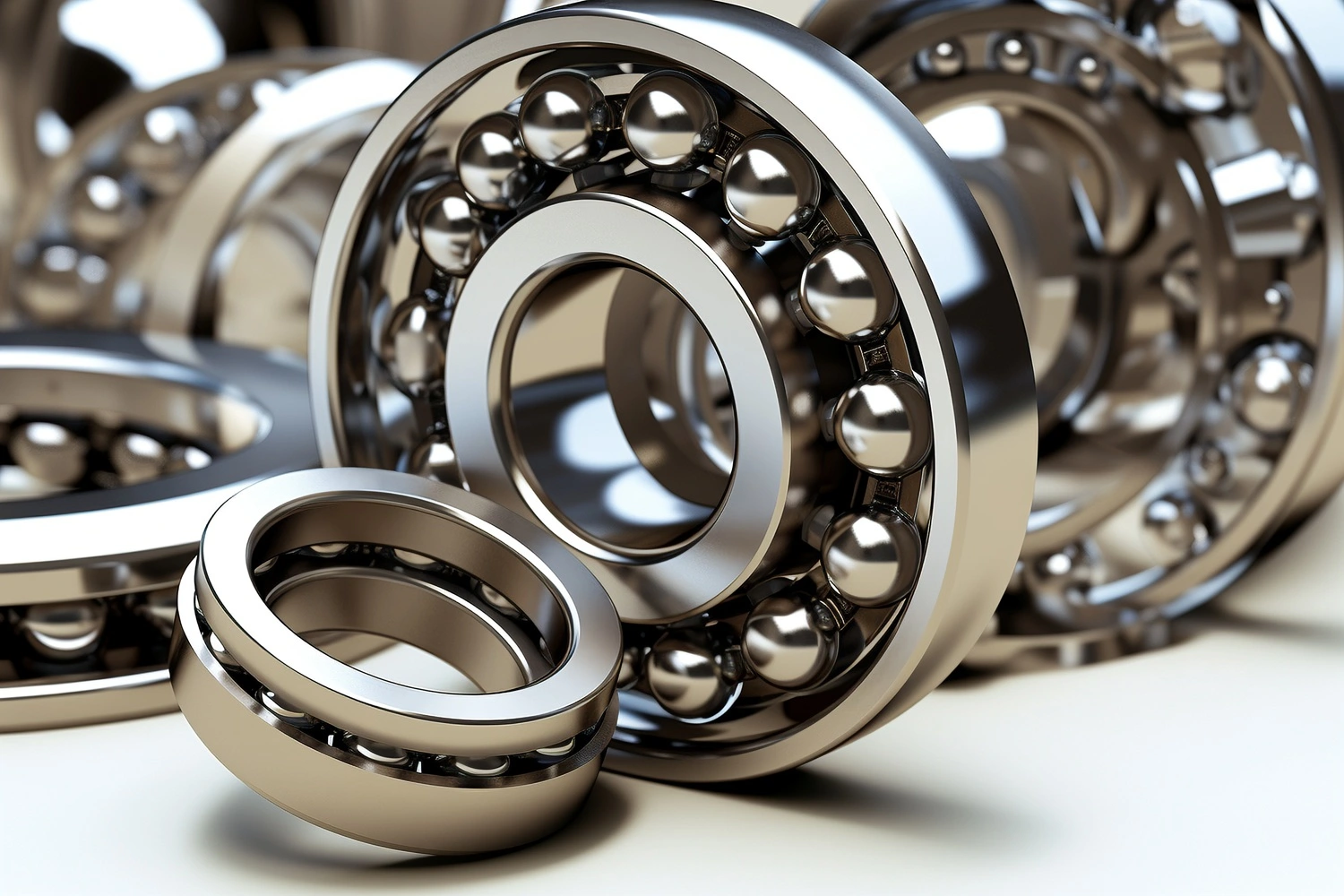
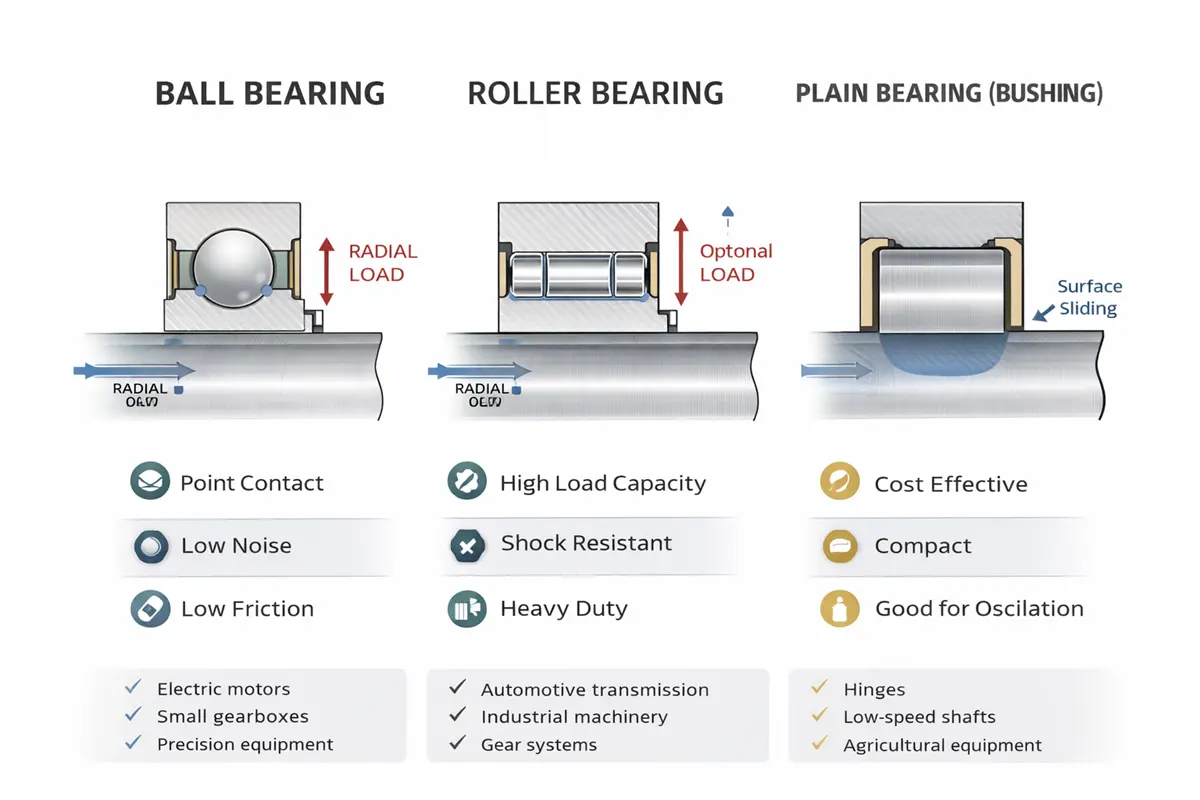
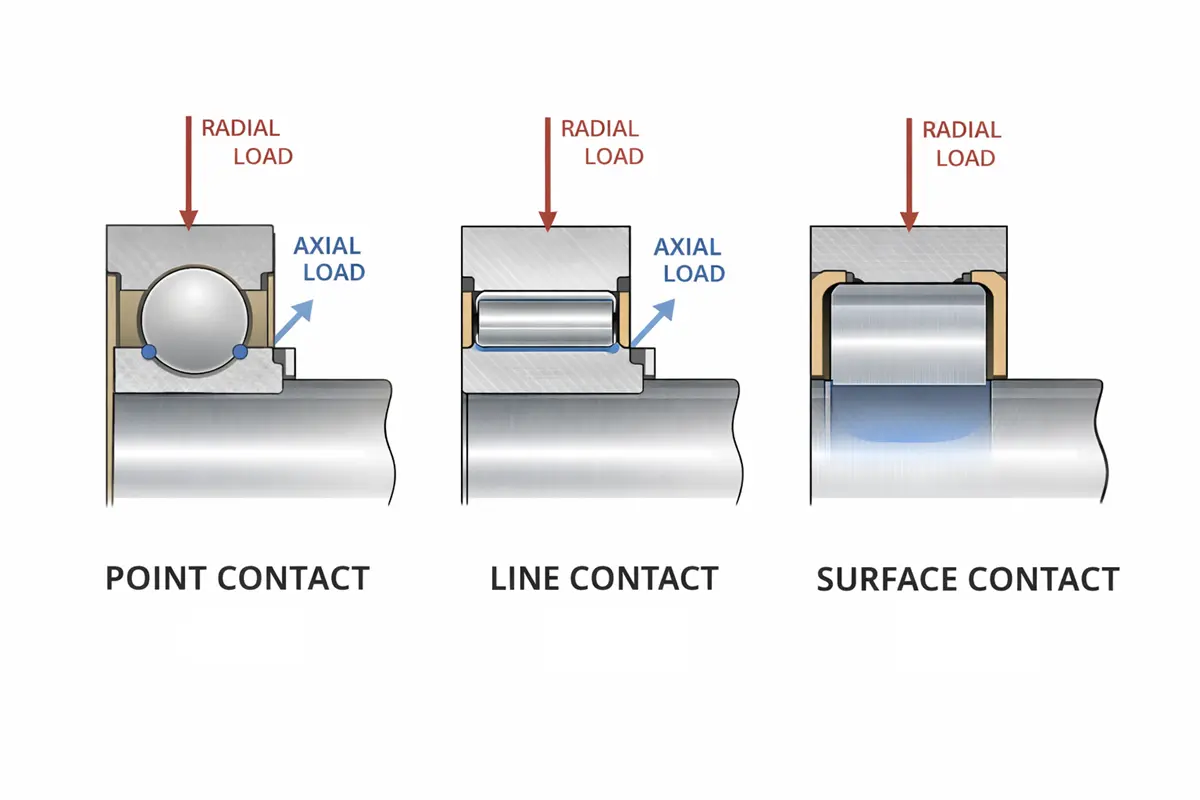
Ball bearings use balls to create a single point of contact between the races. This minimal contact area cuts friction and heat, making them a standard choice for electric motors, fans, and high-speed spindles. However, this design can deform under heavy shock loads.
Plain Bearings
Plain bearings, also known as bushings, rely on sliding surfaces without rolling elements. This maximizes contact area, allowing them to dissipate shock and support heavy radial loads that could crush a ball bearing. They are the preferred solution for heavy construction machinery and hydraulic cylinders.
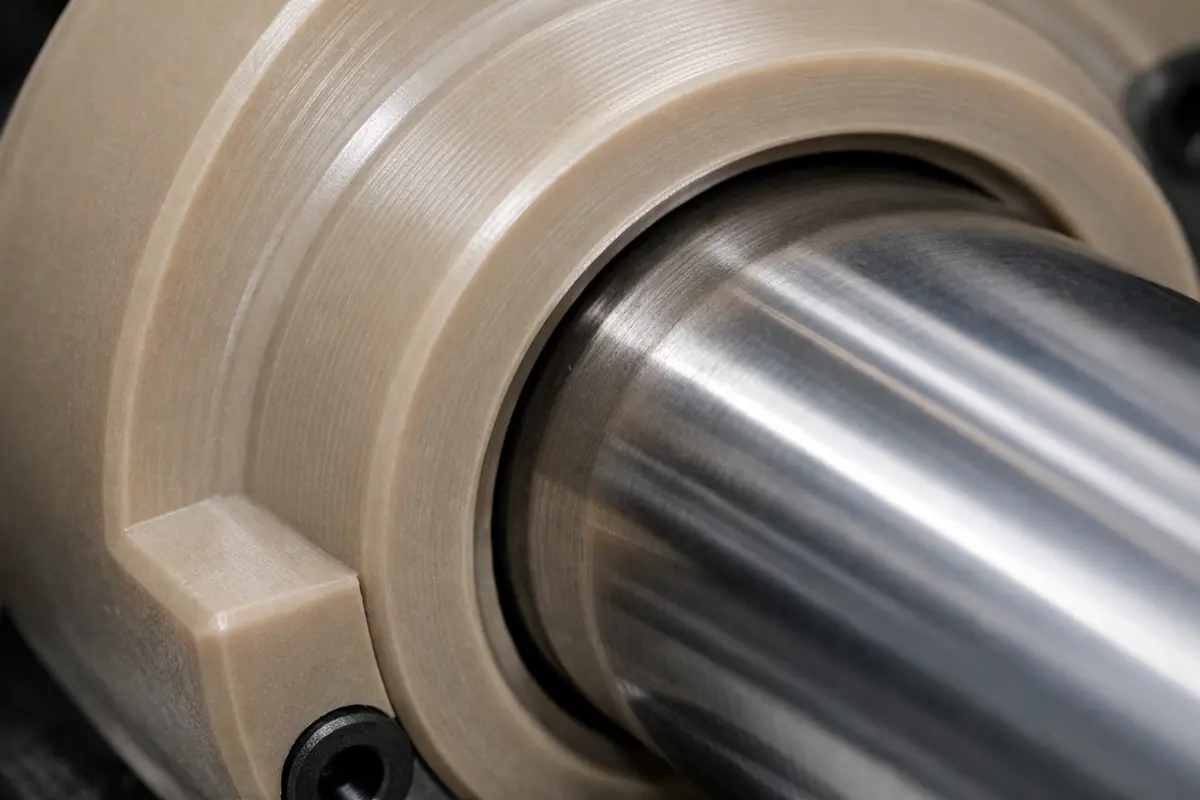
Molded bushings work for basic tasks, but critical assemblies demand CNC precision. Machining from Bronze or Medical-grade PEEK delivers the exact concentricity needed for a true interference fit without the play and wear often seen in molded parts.
Linear Bearings
Linear bearings guide motion along a straight rail rather than a rotating shaft. They are the backbone of automation gantries, 3D printers, and CNC slides. Precision is important. The bearing block and housing require tight tolerances to align accurately with the rail.
If the housing is slightly off, the bearing can bind, leading to vibration and premature wear.
Roller Bearings
Roller bearings use cylinders instead of balls to create a line of contact across the raceway. This distributes weight evenly, allowing them to carry significantly higher radial loads than ball bearings. These are widely used in conveyor belts and automotive hubs where durability is more important than maximum speed.
Fluid and Magnetic Bearings
Fluid and Magnetic bearings are non-contact solutions that virtually eliminate mechanical friction.
- Fluid Bearings: These float the shaft on a pressurized film of oil or gas.
- Magnetic Bearings: These use magnetic fields to levitate the rotor.
These are high-cost solutions reserved for environments like semiconductor manufacturing where physical contact would cause catastrophic failure.
What Are the Best Materials for Bearings?
Selecting the right material prevents premature failure. The choice depends heavily on load, speed, and the operating environment.
Bronze and Brass Alloys
Bronze is the standard for heavy loads. It is designed to be softer than the steel shaft. This allows the bushing to wear down first, protecting the critical mating parts from damage. CNC machined bronze offers a denser structure than porous sintered alternatives, ensuring longer service life.
Engineering Plastics
Plastics like PEEK and PTFE (Teflon) are self-lubricating and chemical-resistant. Unlike injection molding, which shrinks and warps, CNC machining holds the tight tolerances required for precision medical devices (ISO 13485) and semiconductor assemblies.
Stainless Steel and Titanium
Standard bearing steel corrodes rapidly in moisture.
- Stainless Steel: The default for washdown or marine environments.
- Titanium: Superior corrosion resistance at half the weight. It is non-magnetic and withstands extreme temperatures.
This specific strength advantage is often the deciding factor when comparing Titanium vs Aluminum for aerospace or demanding applications. It is magnetically inert and withstands extreme temperatures.
What are the Key Differences between Types of Bearing?
Choosing the right bearing comes down to three physical constraints: load, speed, and fit precision.
Load Capacity
Surface area dictates strength. Plain bearings (bushings) distribute load over a large surface. This allows them to handle massive shock loads and vibrations that would crush a ball bearing. Ball bearings concentrate stress on tiny points of contact, limiting them to lighter duties. For heavy lifting, Plain Bearings are superior.
Speed and Friction
Less contact enables higher speeds. Ball bearings roll with minimal resistance, generating little heat. This allows high RPM operation without seizing. In contrast, plain bearings heat up rapidly from sliding friction. If speed is the priority, Ball Bearings are the standard.
Precision and Housing Fit
The housing defines the lifespan. A bearing is only as good as its fit. A loose or oval housing bore causes vibration and early failure. CNC machining ensures the strict tolerances (±0.005mm) needed for a precise interference fit. This prevents the mechanical play common in molded alternatives.
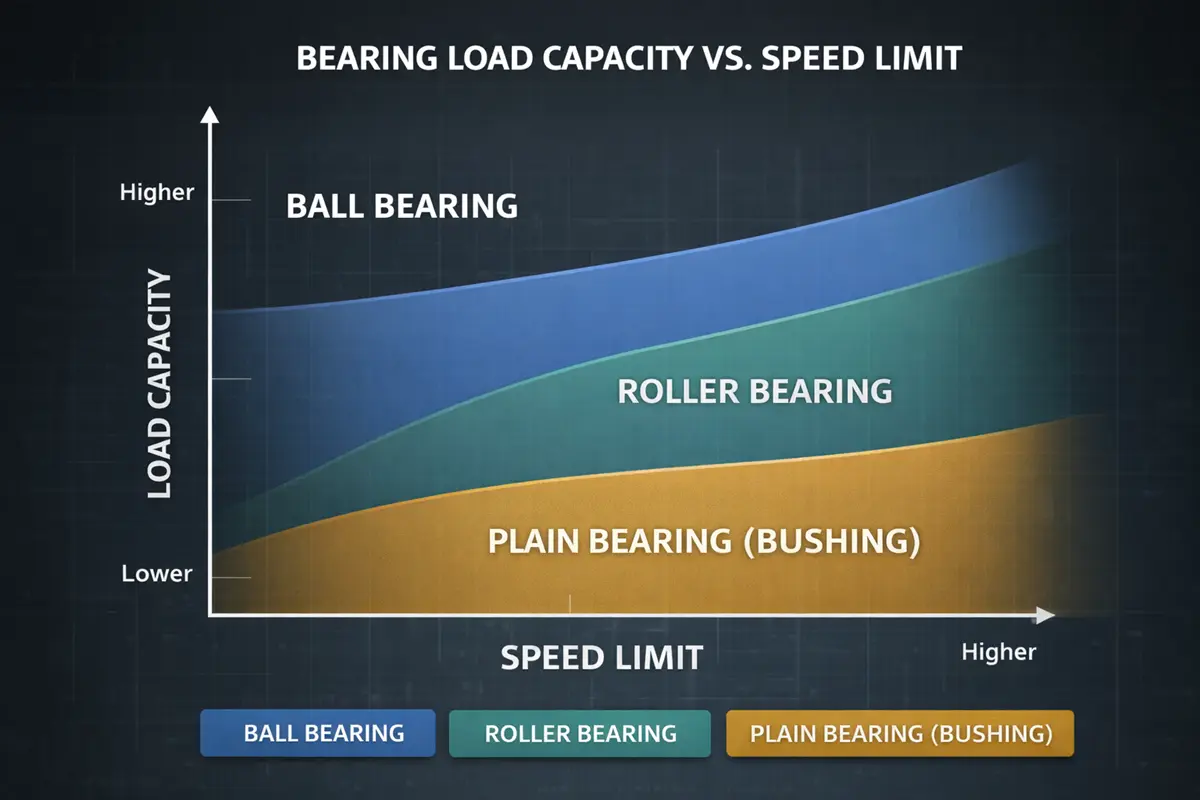
Types of Bearing Comparison Chart
The following chart outlines the key performance differences.
| Key Factor | Ball Bearings | Plain Bearings (Bushings) | Roller Bearings | Fluid / Magnetic |
| Contact Type | Point (Low Friction) | Surface (High Friction) | Line (Medium Friction) | Non-Contact (Zero Friction) |
| Load Capacity | Low to Medium | High | High | Low |
| Speed Limit | High RPM | Low | Medium | Extreme RPM |
| Shock Load | Poor | Excellent | Good | Poor (Fragile) |
| Primary Failure | Fatigue | Wear / Heat | Fatigue | Contamination / Power |
| Best For | Motors, Fans | Excavators, Pivots | Conveyors, Axles | Semiconductor, Turbines |
When to Choose Custom CNC Machined Bearings?
Stock bearings work for general use. However, when constraints are tight, catalog parts often force expensive design compromises. Custom CNC machining is the ideal solution for specific fit and performance needs.
Strict Dimensional Constraints
Fit the bearing to existing space constraints. Catalog bearings come in fixed increments. If a retrofit requires a custom Inner (ID) or Outer Diameter (OD), modifying the housing is often impractical.
Since bearings are cylindrical, CNC turning is the ideal process to produce the exact dimensions needed to fit existing constraints, avoiding the need for a system redesign.
High Assembly Complexity
Integrate multiple features into a single unit. Instead of relying on separate retaining rings and mounting plates, designing custom CNC machining parts allows you to add flanges or oil channels directly into a single solid component.
This consolidation simplifies the Bill of Materials (BOM) and reduces assembly errors.
Specific Material Demands
Select materials that are unavailable in stock catalogs. Stock catalogs typically limit options to generic steel or standard SAE 660 bronze.
Advanced grades like PEEK or Titanium are rarely stocked in standard bearing sizes. CNC machining allows you to use these exact materials without being restricted by what is on the shelf.
Rapid Development Cycles
Test functional prototypes in days, not weeks. Speed is critical in development. Waiting weeks for a mold slows down momentum.
CNC machining services, such as those provided by Rollyu, deliver functional prototypes in days. This allows engineers to test fit and friction in actual operating conditions before committing to expensive production tooling.
FAQ
What Is the Difference Between a Bushing and a Bearing?
A bushing is a solid sleeve that supports a shaft via sliding. A bearing is the broader category covering both bushings and rolling assemblies. If the component uses balls or rollers, it is a bearing, not a bushing.
What Surface Finish Is Required for Bearing Housings?
Standard housings require Ra 1.6 µm. Precision interference fits demand a finer Ra 0.8 µm. CNC grinding ensures this functional accuracy, distinct from cosmetic finishes like bead blasting used on exteriors.
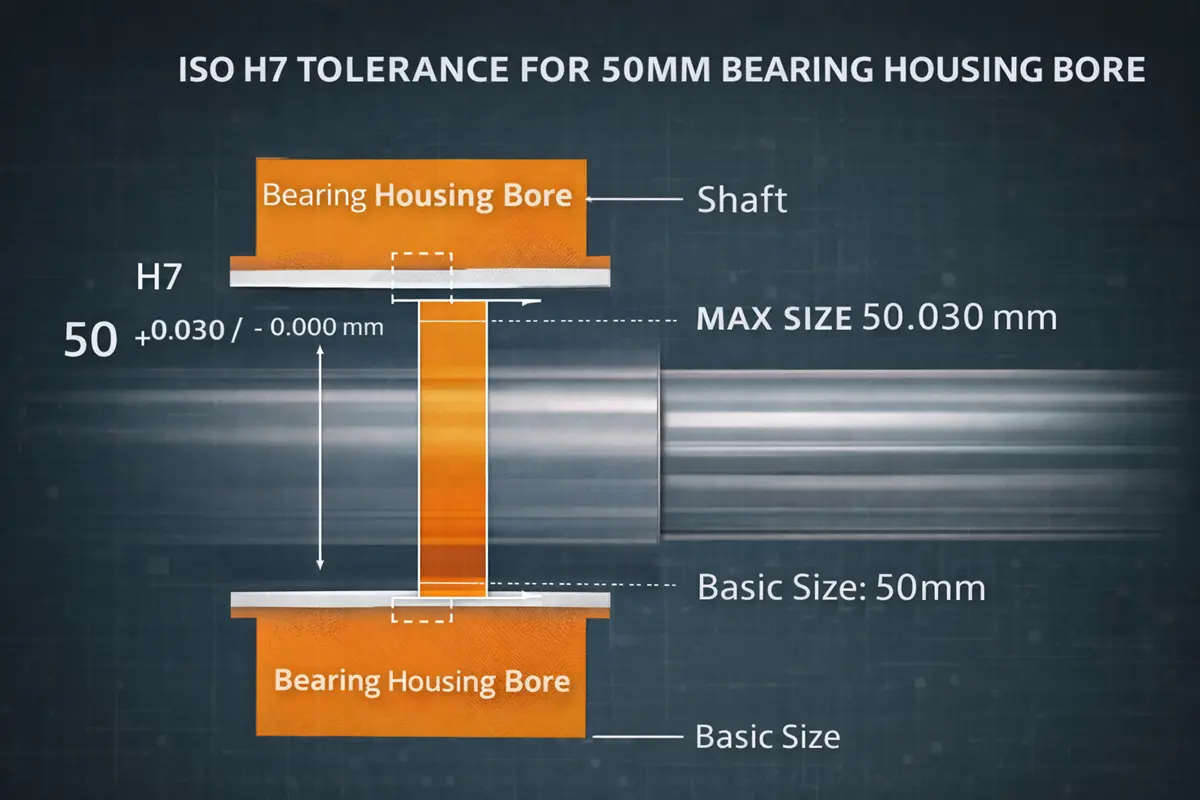
How Tight Should the Tolerance Be for a Bearing Housing?
The standard is ISO H7. For a 50mm bore, the diameter must hold between 0.0 mm and +0.025 mm. Deviating from this range causes spun races or overheating. CNC machining ensures the ±0.005mm accuracy needed to prevent failure.
Conclusion
Standard bearings often fail critical tolerances. Rollyu provides the custom solution. We specialize in custom plain bearings, from heavy-duty Bronze to self-lubricating PEEK, machined to ±0.005mm accuracy for peak performance.