
Kovar machining services offer specialized manufacturing solutions in the production of precision components of this special iron-nickel-cobalt alloy.
The material—renowned for controlled thermal expansion—hardens quickly during cutting, yet expert techniques counter that tendency and maintain tight tolerances in high-reliability parts. Aerospace, medical, telecommunications, and hermetic-sealing manufacturers rely on these services; components stay dimensionally stable across wide temperature ranges.
What is Kovar Machining?
Kovar machining involves precision cutting of an iron-nickel-cobalt alloy engineered for controlled thermal expansion. Skilled operators manage its rapid work-hardening while holding the tight tolerances demanded by high-reliability parts. These kavar machined components remain dimensionally stable when glass-to-metal or ceramic-to-metal seals are formed, making the process essential for hermetic sealing.
To clarify the field, the sections below cover Kovar’s definition, core properties, and key machining challenges.
Definition of Kovar Alloy
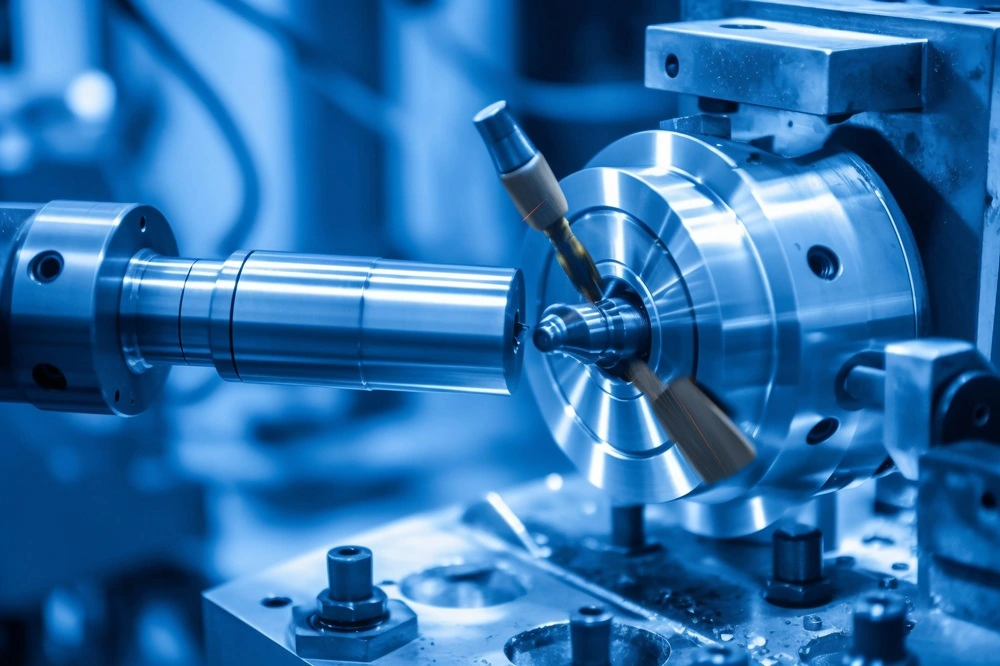
Kovar (UNS K94610) is a nickel-cobalt ferrous alloy, which is designed to have a thermal expansion coefficient that is nearly equal to that of borosilicate glass and some ceramics.
This alloy, designated ASTM F-15, is usually made up of 53% iron, 29% nickel, and 17% cobalt, and the trace elements are always controlled to maintain a steady performance. The special qualities of the alloy make it useful more especially in such applications where good seals between glass and metal or ceramic and metal are needed.
Key Characteristics of Kovar Alloy
Dimensional Stability: Kovar material offers great dimensional stability across -65°C to 450°C, the thermal expansion coefficient between 30°C and 200°C is about 5.1×10⁻⁶/°C. The property guarantees a low level of stress formation in closed assemblies during temperature cycling.
Magnetic Permeability: The kovar alloy is ferromagnetic under the Curie temperature (around 435°C), so it is readily used in magnetic shielding applications with proper machining.
Weldability and Hermetic Sealing: Kovar has a high level of weldability in TIG, laser, and electron beam. The kovar alloy produces strong oxide surfaces that form clear bonds with glass and ceramics, with the help of which hermetic seals are reliable and can be used in severe conditions.
Chemical Composition: The special Fe-Ni-Co balance (53% Fe, 29% Ni, 17% Co) produces the special thermal expansion characteristics that make Kovar stand out among other alloys.
Low Coefficient of Thermal Expansion: Kovar material has a well-controlled thermal expansion (5.1 × 10⁻⁶/°C), equivalent to that of borosilicate glass and ceramics. Thermal cycling therefore induces almost no stress at seals. Interfaces stay intact; differential expansion rarely causes cracks or leaks, so electronic and optical packages perform reliably over wide temperature swings. The property has integrity of its interface, in which differentiation expansion will lead to failure.
Kovar Composition
| Element | Typical Percentage (%) |
| Nickel (Ni) | 29% |
| Cobalt (Co) | 17% |
| Iron (Fe) | Balance (~54%) |
| Manganese (Mn) | 0.2–0.5% |
| Silicon (Si) | ≤ 0.2% |
| Carbon (C) | ≤ 0.04% |
| Sulfur (S) | ≤ 0.02% |
| Phosphorus (P) | ≤ 0.02% |
The Challenges of Machining Kovar
Dealing with Work Hardening: Kovar is a rapid work-hardening material and needs to be machined with special attention to the selection of tools and machining parameters. The hardening nature of the material requires sharp cutting tools and constant feed rates to ensure that the material does not harden on the surface, thus affecting the results of further operations.
Chip Control and Tool Wear: The alloy gives rise to stringy and continuous chips, which have the potential to disrupt machining activities and are hazardous to the safety of operators. The geometries of specialized tools and chip breakers are necessary and due to the abrasive nature of Kovar, tools wear quickly, especially when they are used with incorrect cutting parameters.
Achieving Tight Tolerances: Tight tolerances are only achievable with care with regard to the residual stresses and thermal effects. The sensitivity of the material to the machining stresses requires advanced fixturing and machining plans in order to accomplish the ±0.005 mm tolerances needed in components of precision components.
The DFM (Design for Manufacturability) of Machining Kovar
Machining Kovar (UNS K94610 / ASTM F-15) requires far more design planning than machining aluminum, stainless steel, or even titanium. Because the alloy work-hardens rapidly, distorts under heat, and is sensitive to stress concentration, good DFM (Design for Manufacturability) is essential for producing stable, hermetic-grade components.
Kovar Machining Capabilities and Processes
In order to overcome these difficulties and cut this special alloy successfully, we use a range of modern machining methods, all of which are selected due to their capacity to provide precision and material integrity.
CNC Turning for Kovar
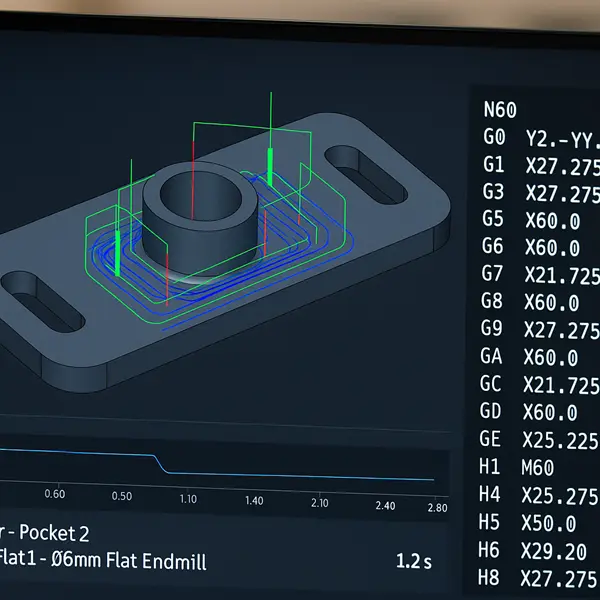
Kovar requires firm machining material and machining equipment to work around the work-hardening nature of the material. Our CNC lathes have a constant surface speed control and profiled feed rates to ensure constant chip formation and minimal work hardening. This is especially good in the manufacture of cylindrically shaped parts such as hermetic connector pins, sealing rings, and RF housing components.
CNC Milling for Kovar
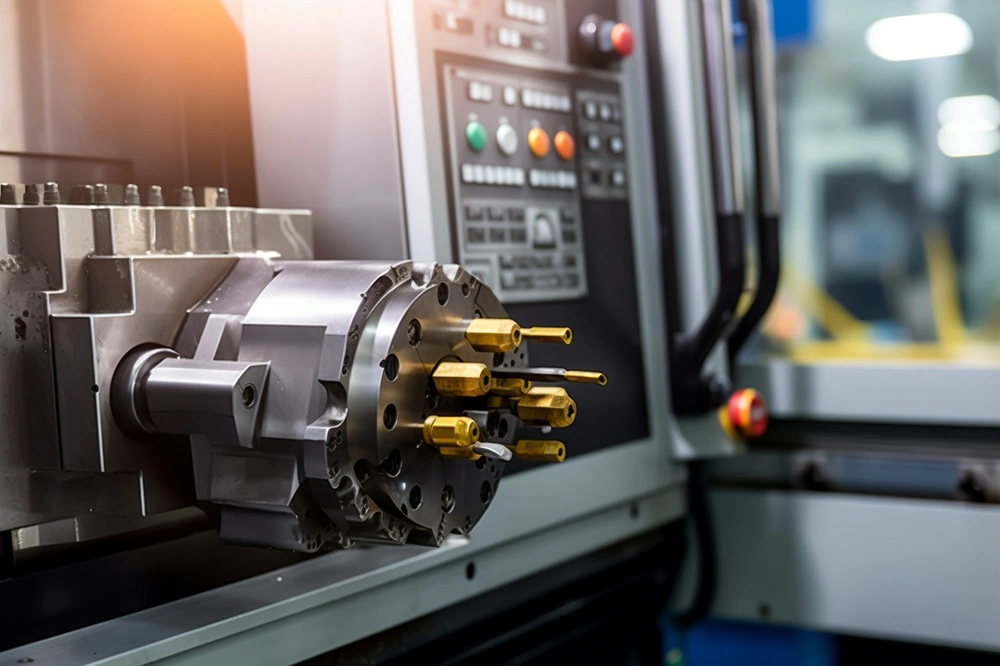
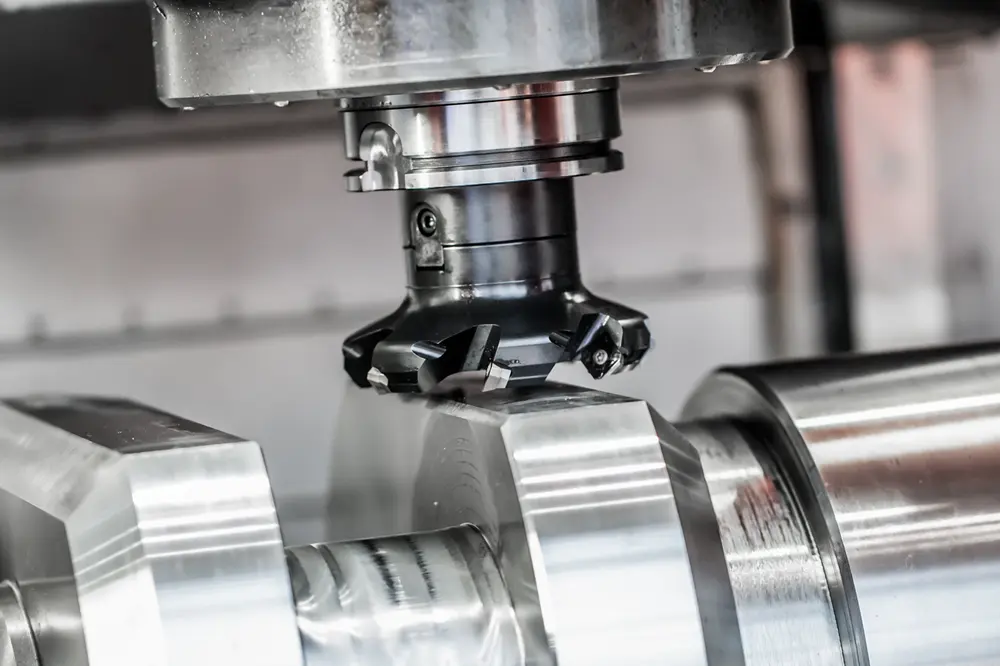
Complex geometries in Kovar components can be transferred using a multi-axis CNC milling, with the tough machinability properties of the material being handled. Our machining techniques are high-speed machining techniques, and the machining toolpaths are special toolpaths that ensure minimal variation in tool engagement, and hence work hardening is minimized. This is necessary to make complex optical package frames, sensor casings, and bodies of microwave components.
Electrical Discharge Machining Kovar
Wire and sinker EDM operations are a viable solution to machining Kovar without the stresses that are produced by conventional machining. This non-contact technique is best suited to creating sharp internal corners, sophisticated profiles, as well as micro-features, which would be difficult to create with milling or turning, especially in hardened Kovar parts.
Surface Grinding and Polishing for Kovar
High-quality finishes and flatness on surfaces are needed to seal surfaces and optical mounting interfaces. This is done by precision grinding. The grinding processes also ensure Ra values of 0.2-0.8 μm and keep the material intact. Mirror finishes with special applications that need a small amount of surface roughness can be obtained by subsequent polishing.
Industries and Applications for Kovar machining services
Its peculiarities of Kovar alloy render it an irreplaceable material in a variety of high-technology sectors, such as:
Aerospace and Defense
In the demanding field of Aerospace CNC Machining, Kovar parts are reliable in gyroscopes, inertial measurement units (IMUs), and satellite communication systems, where thermal stability is also a serious concern. The ability of the alloy to perform equally over the full range of high and low temperatures has made it indispensable in space-qualified electronics and avionics systems.
Telecommunications and Photonics
Kovar has a similar thermal expansion to glass fibers and optical components, which are beneficial to fiber-optic feedthroughs and optical packages. This is compatible with avoiding stress-induced alignment changes and ensuring signal integrity with telecommunications infrastructure and laser systems.
Electronics and Semiconductors
Hermetic packages and RF housings are based on the electromagnetic properties and sealing properties of Kovar to provide the protection of sensitive electronic elements. The material offers good shielding and preserves package integrity in high-frequency and extreme environments.
Medical Devices
The biocompatibility and the stability of Kovar are applied in implantable components and shielding parts to be used in long-term medical applications. The reliability of the alloy is guaranteed in the uniformity of the performance of the alloy in pacemaker housing, neurostimulator packaging, and diagnostic imaging parts.
Rollyu Precision’s Kovar Machining Capabilities
In order to satisfy the challenging needs of these various industries, Rollyu Precision has established specialised capabilities in precision machining and CNC machining parts for Kovar applications, assuring reliability and performance.
Advanced CNC Technology and Equipment
Our plant has the latest CNC machining centers with thermal compensation and high-pressure coolant delivery for Kovar machining. The high-tech equipment ensures accuracy as it handles the special needs of the material.
Strict Quality Control
We use a detailed quality management system, which is certified as ISO 9001 and ISO 13485. All the Kovar components are inspected and documented to meet the industry requirements and specifications.
Competitive Pricing and Fast Lead Times
Standardized machining and management of materials can result in competitive prices without affecting quality. Our lean manufacturing and prototyping departments allow us to have quick prototyping and manufacturing of our products, with most of our Kovar products having lead times of 2-4 weeks.
CNC Milling and Turning Tolerances for Kovar Machining Services
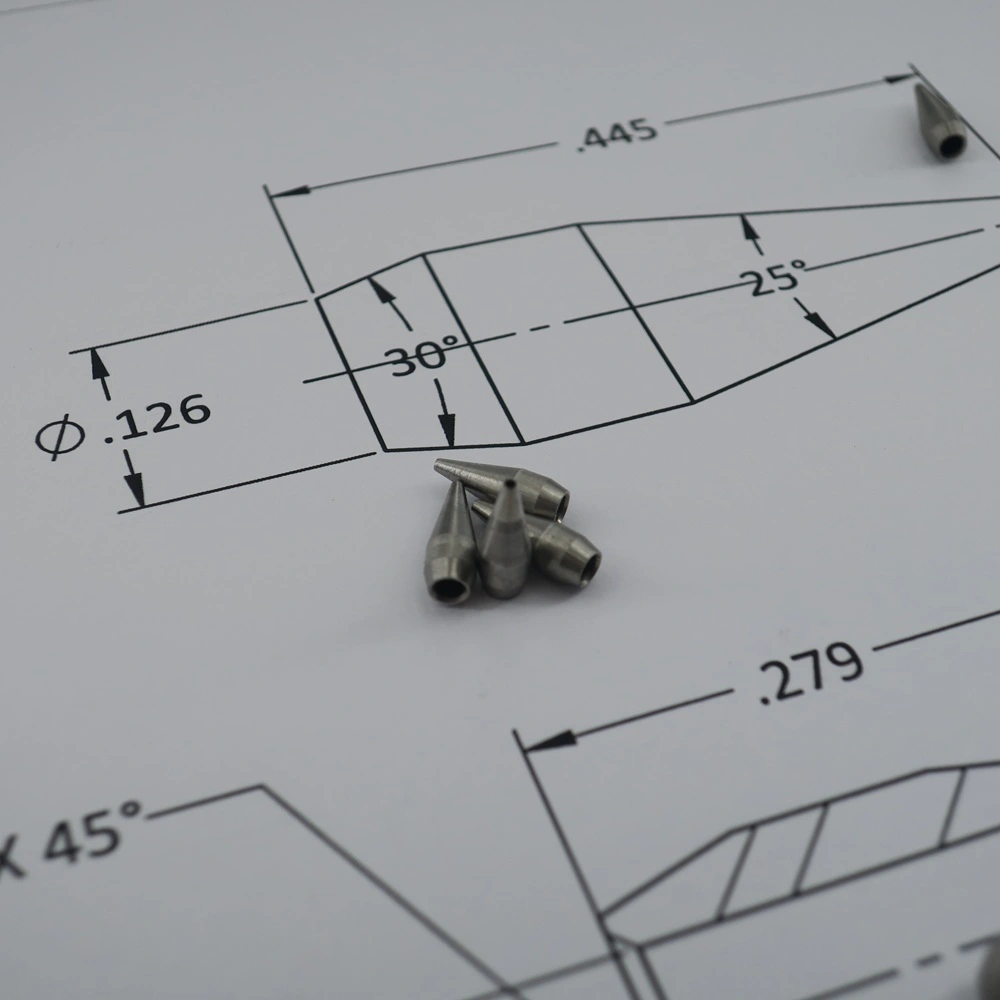
The tolerances on important features are maintained to ±0.005 mm using an advanced process control and high metrology. Such accuracy is necessary in elements that need to have a high degree of dimensional stability and fit adequately in the assembled systems.
Hermetic Component Machining Expertise
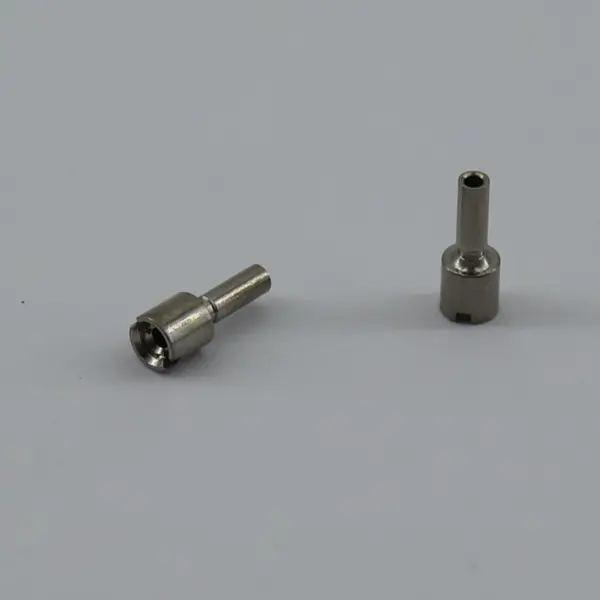
Our expertise has included optical packages, sensor housing, sealing rings, and Kovar frames that have been developed with hermetic performance that is reliable. We learn the imperative interface needs and surface preparation that are required to allow successful sealing of the glass or ceramics.
Thin-Wall and Micro-Feature Machining
Through special fixturing and machining techniques, we are able to make thin-walled (down to 0.1 mm) and micro-featured structures with minimal distortion and structural integrity in sensitive components of Kovar.
Surface Finish Control
Achieving a consistent surface finish (Ra 0.2-0.8 μm) is critical to providing the best sealing performance for functional interfaces. Our strictly controlled procedures deliver these precise textures, ensuring the required degree of consistency and dimensional precision for your applications.
Surface Finishes for Kovar Parts
The use of the right finish is just one of the solutions; all the parts have to be subject to stringent inspection to ensure that they satisfy all the requirements that were set concerning their performance and reliability.
Nickel Plating
Electroless nickel plating offers high levels of corrosion resistance as well as enhanced solderability without compromising the thermal expansion properties of the underlying material. The normal thickness is between 5-25 mm according to the application needs.
Tin Plating
Tin coatings provide a cost-effective way of providing corrosion resistance and solderability in electronics. The plating process is very controlled to avoid hydrogen embrittlement and preserve the mechanical properties of Kovar.
Gold Plating
The purity of gold plating is high in order to provide the best corrosion and bonding properties in the critical applications. The process is especially useful with elements that need wire bonding or electrical contacts of high reliability.
Black Oxide
Applying black oxide to Kovar is possible, but it requires special chemical formulations and strict process controls.
Because Kovar is an Fe–Ni–Co alloy, it does not react the same way as carbon steel. Standard black oxide solutions for steel will not produce a uniform or reliable coating on Kovar.
Black oxide is used on Kovar primarily for optical, photonics, or sensor housings where a non-reflective, matte black surface is required.
Special Coatings for Hermetic Welding
Kovar surfaces are coated in proprietary systems to achieve the best welding in hermetic uses. These special treatments provide strong, reliable bonds and thermal matching properties of the material.
Inspection and Quality Control for Kovar Machining
To ensure the consistent quality required for Kovar components, we operate a fully integrated inspection and quality-control system supported by advanced metrology equipment and rigorous process validation. Our approach combines precision measuring tools, controlled environments, and alloy-specific inspection protocols to verify that every machined Kovar part meets its dimensional, geometric, and functional specifications.
CMM Dimensional Verification
Thermally-compensated Coordinate Measuring Machines check the critical dimension against design values. We have CMM abilities in the 3D scanning of complex contours, and we also do relationship analysis of features.
Surface Integrity and Flatness Measurement
The high surface metrology tools are used to measure the roughness, waviness, and flatness to ensure the sealing surface is also in compliance with the requirements. Surface features that are essential in hermetic performance are confirmed by white light interferometry and precision indicators.
Hermeticity-critical Features
Dimensions and surface conditions that are important to successful hermetic sealing are checked by special inspection protocols. These involve close inspection of sealing surfaces, corner geometries, and interface geometries.
Batch Traceability and Material Certificates
Full material traceability and certification are guaranteed to adhere to the standards of the industry. Any output batch is accompanied by comprehensive records of the composition of materials, the history of processing, and inspection.
FAQ
Is Kovar difficult to machine?
Yes, Kovar is a very tricky machining material because it hardens at a very fast rate and is hard to work with. Effective machining involves the use of specialized tooling, parameters that are closely managed, and skillfulness in handling the special properties of the material.
What tolerances can be achieved in Kovar CNC machining?
The critical features are normally maintained at a tolerance of ±0.005 mm by high-end process control and high-tech metrology equipment. Non-critical dimensions of less than 0.01 mm are regularly attained with standard machining tolerances of ±0.01 mm.
What industries use Kovar components?
Kovar is a very important metal in aerospace, medical equipment, photonics, semiconductor, and vacuum electronics, where thermal expansion is of much concern and hermetic sealing is mandatory.
Can Kovar be gold-plated?
Yes, gold plating is used to hermetically seal, to bond, and to protect against corrosion. The plating process is handled with care to ensure that Kovar does not change the dimensions and thermal properties.
Does Kovar require special heat treatment?
Annealing is also recommended to remove stress before and after machining to stabilize the material and reduce the residual stresses. Common methods include heating under 750-850 °C in hydrogen or vacuum conditions to maximize the material properties.
Conclusion
Kovar machining services offer much-needed manufacturing services to industries where manufacturing has to be tightly controlled in terms of thermal expansion as well as dependable hermetic functionality.
The specialized skills that are needed to achieve a successful Kovar machining guarantee the components will not change size under temperature extremes and have a very high quality standard. With the ever-increasing technology in the aerospace, medical, and telecommunications industries, the need to have accurate Kovar machining services from trusted partners like Rollyu is increasing, leading to the development of machining processes and quality assurance procedures that stretch the limits of what can be done with this incredible alloy.