
Your design is finalized, your prototypes—machined through CNC processes or created via 3D printing—have been approved, and now you’re ready for mass production. To meet market demand and achieve your target cost per part, it’s time to invest in tooling. This brings you to a decision that will determine your product’s performance, appearance, manufacturability, and long-term cost:
Should you choose die casting for metal parts or injection molding for plastic parts?
Both manufacturing processes can produce highly detailed, accurate, and repeatable components—but each is suited to very different applications. Selecting the right one ensures your product launches smoothly, performs reliably in the field, and stays within your production budget.
At Rollyu, we take you through this decision. We completely review your design, materials, and budget, and give you the best choice. We also employ these two techniques under one roof, so you get all parts done in a short time from one manufacturer and supplier.
What Is Die Casting?
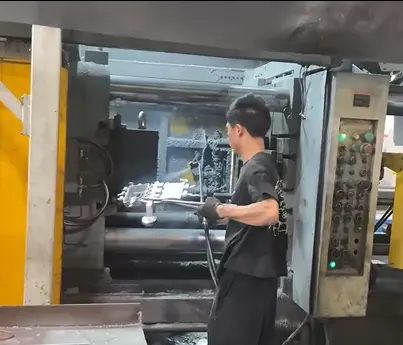
Die Casting is a manufacturing technology employed to craft high-accuracy and resilient metal components. To fully understand its nuances, our detailed guide explores what is die casting from start to finish. In this procedure, a melted metal is forced into a mold using high pressure between 700 to 2500 bar. The metal is hardened as it cools. The shape is determined by the mold. The mold is then opened, and the part is taken out. It is suitable for producing detailed and repeatable parts in bulk volumes.
This method is ideal for producing large quantities of identical parts with exceptional repeatability.
- Common Materials: Aluminum alloys (e.g., A380, ADC12), Zinc alloys (Zamak series), Magnesium alloys (AZ91D, AM60). These metals offer excellent strength-to-weight ratios, corrosion resistance, and heat resistance.
- Key Advantages: Die-cast components are known for their superior strength, heat resistance, and durability, making them essential in the automotive, aerospace, and industrial electronics industries.
- Superior Finish: The process yields parts with a smooth surface finish and net-shape accuracy, significantly minimizing the need for secondary machining or finishing operations. This saves both time and cost in your production cycle.
Die casting is the preferred manufacturing process for aerospace components, automotive housings, medical enclosures, robotics case, metal junction box, industrial enclosures, motors, gearboxes, structural brackets, and many other applications where long-term durability is essential.
Rollyu Precision uses modern high-pressure die casting systems to ensure each component is consistent, clean, and production-ready with minimal finishing.
What Is Injection Molding?
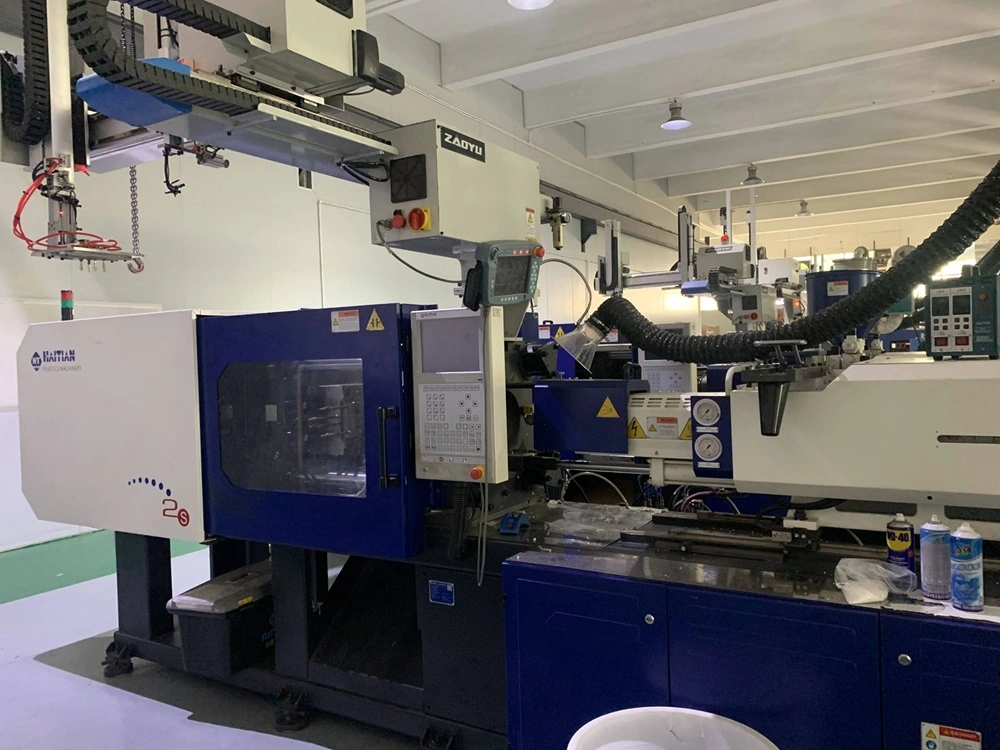
Injection molding is a useful technique for making plastic parts in large quantities. It uses melting plastic pellets. These pellets are forced into a mold under high pressure. The pressure range is typically between 5,000 to 50,000 psi. Upon process completion, the parts are cooled and solidified. Then, these are ejected, and the process is repeated.
Injection molding is an optimum technique for high-volume production. One mold may produce between 50,000 and 1,000,000 identical parts of the same quality and precision. Therefore, it is commonly applied in automotive manufacturing, consumer electronics, and medical device industries.
Injection molding is the gold standard for high-volume manufacturing, with a single mold capable of producing hundreds of thousands, or even millions, of identical parts with consistent quality.
- Common Materials: A vast range of engineered plastics is available, including ABS, Nylon, Polycarbonate (PC), and Polypropylene (PP), PEEK, offering properties from high flexibility to rigid strength.
- Key Advantages: This method is celebrated for its speed, low per-part cost at scale, minimal material waste, and the ability to produce highly complex geometries with intricate details.
- Widespread Applications: You’ll find injection-molded parts everywhere, from automotive interiors and consumer electronic casings to life-saving medical devices
Injection molding is widely used in consumer electronics, medical devices, automotive interiors, PLC controllers, IoT housings, connectors, and many mass-market products.
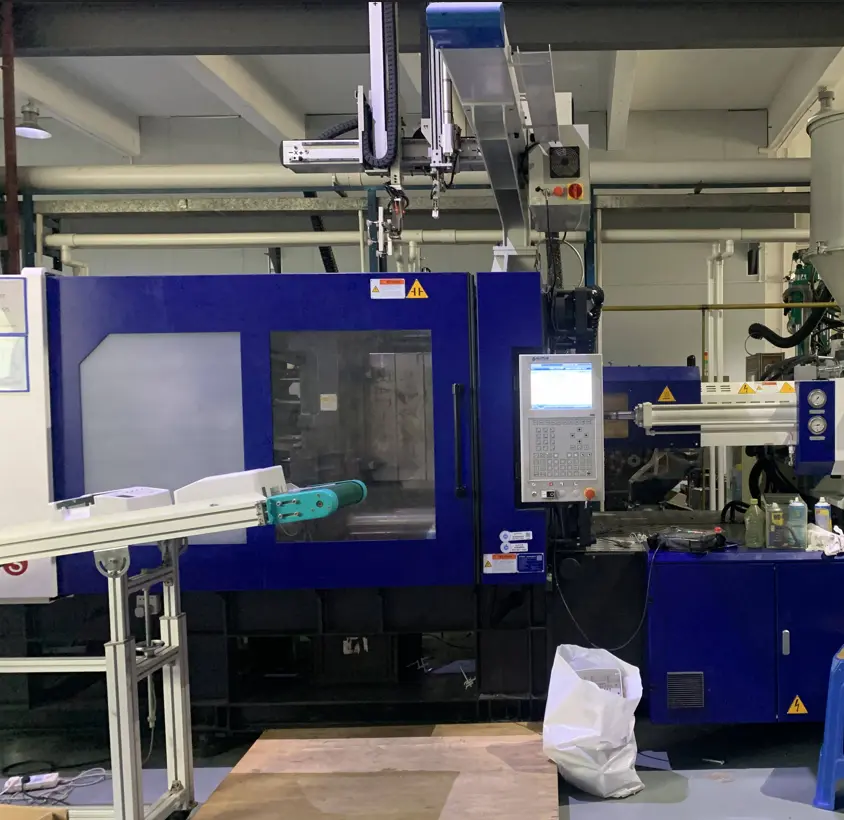
Rollyu Precision leverages precision molds and advanced molding systems to support projects from prototype to full-volume production.
Injection Molding vs Die Casting: Key Differences
Injection molding and die casting are two popular manufacturing processes, each with distinct advantages and applications.
Production Cycle
Injection molding is quicker in production compared to die casting. Plastic melts and hardens fast, and every component can be produced in seconds or minutes.
Die casting, conversely, is slow due to the fact that metals require longer periods of time to melt and consolidate. Injection molding is preferred when you require 1000s of plastic parts in a short time. However, in the case of strong, metal parts that must withstand stress, die casting is worth the time.
Precision and Surface Finish
Both processes are capable of obtaining detailed parts, but die casting provides a smoother finish to the metal and more dimensional stability. The components emerge thick and resilient and are ready to be finished or assembled.
Injection-molded parts are also produced accurately but might require little after-processing to make them look perfect. It is fine in case you desire a shiny plastic surface. Die casting is the choice in case a fine metallic finish is required.
Complexity and Detail
Injection molding is more economical when your components need an intricate shape, thickness, or have complicated outlines. The plastic is able to move through the narrow crevices of the mold. Die casting may also be useful to produce finer shapes, but it is restricted by the flowability of the metal. Thus, injection molding is ideal when it comes to finer detail or flexible design. In the case of the thicker and harder structures, die casting is the way to go.
Material Compatibility
Injection molding uses plastics like ABS, nylon, and polycarbonate. They are lightweight materials and also readily available at reasonable costs. Die casting, on the other hand, uses metals like aluminum, zinc, and magnesium. These metals are strong, heat-resistant, and durable. The key difference, then, is in the purpose of the part itself: plastic in lightweight consumer goods, metals in heavy industry parts that have to serve and last longer.
Injection Molding vs. Die Casting: A Head-to-Head Comparison
While both processes inject material into a mold, their core differences in material, speed, and cost dictate their best applications.
| Feature | Die Casting | Injection Molding |
| Material | Metals (Aluminum, Zinc, Magnesium) | Plastics (ABS, PC, Nylon, PP, PEEK, PMMA) |
| Strength & Durability | Exceptional. High tensile strength, heat resistance, and hardness. | Good to Excellent. Varies by polymer, but generally lower strength and temperature tolerance than metal. |
| Production Cycle Time | Slower. Metals take longer to melt and cool, resulting in longer cycle times. | Extremely Fast. Plastics melt and solidify quickly, often producing parts in seconds. |
| Precision & Finish | Excellent. Delivers very tight tolerances and a smooth, metallic surface finish directly from the mold. | Very Good. Highly precise, but may show parting lines or require minor post-processing for a perfect aesthetic. |
| Design Complexity | Good for strong, relatively thick-walled parts. Limited by the flow of molten metal in very thin or complex sections. | Superior. Ideal for intricate designs, thin walls, complex curves, and integrated features like living hinges. |
| Tooling Cost | High. Molds are made from hardened steel to withstand high temperatures and pressures. | High. Molds are complex and made from high-grade steel, but can be less expensive than die casting tools. |
| Per-Part Cost | Higher, due to material cost and longer cycle times. | Very low at high volumes, thanks to fast cycles and inexpensive raw materials. |
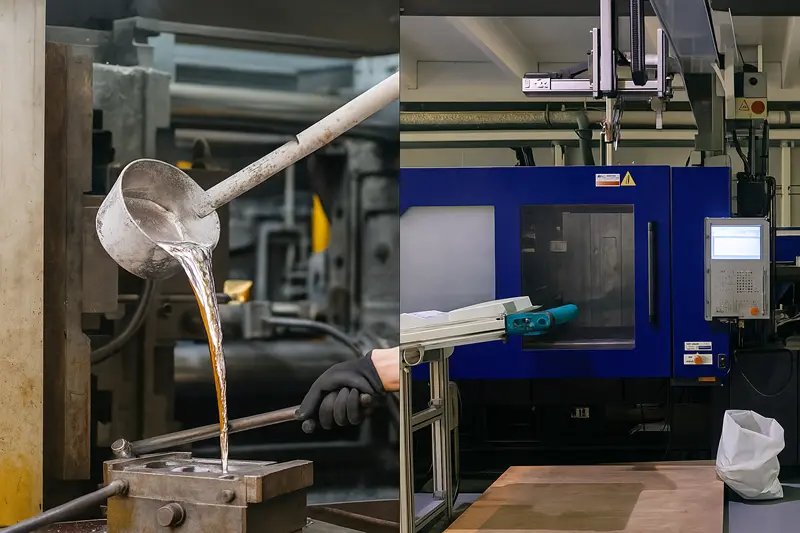
Cost & Lead Time Comparison
When deciding between die casting and injection molding, cost per part and production lead time are often the deciding factors — especially in high-volume manufacturing in industries like automotive, medical devices, robotics, aerospace, and consumer electronics.
| Category | Die Casting | Injection Molding |
| Mold Cost | $10,000 – $80,000 | $5,000 – $50,000 |
| Part Cost | Medium | Very low at scale |
| Cycle Time | Slow | Very fast |
| Mold Life | 100k–500k shots | 200k–1M+ shots |
Need help determining the best process for your part?
Our engineers can review your CAD files and provide a free DFM analysis.
DFM Design Guidelines for Die Casting and Injection Molding
When moving from prototype to mass production, Design for Manufacturability (DFM) is critical to ensure your parts can be made at the lowest cost, highest quality, and shortest lead time. Whether you choose die casting or injection molding, following proper DFM principles during the design stage reduces tooling modifications, improves cycle time, and enhances part performance.
General DFM Principles
- Understand Process Constraints– Each manufacturing method has specific limits on wall thickness, draft angles, and material flow. Design within these boundaries to avoid defects.
- Simplify Geometry– Complex shapes increase tooling cost and cycle time. Where possible, combine features or reduce unnecessary contours.
- Minimize Secondary Operations– Parts designed to meet dimensional and finish requirements straight from the mold will save significant post-processing labor and cost.
- Consider Ejection and Cooling– Proper draft angles and uniform wall thickness help parts release smoothly from the mold and reduce cooling cycles.
Material Selection – Choose materials that meet the mechanical, thermal, and aesthetic requirements of your product, while staying within process capabilities.
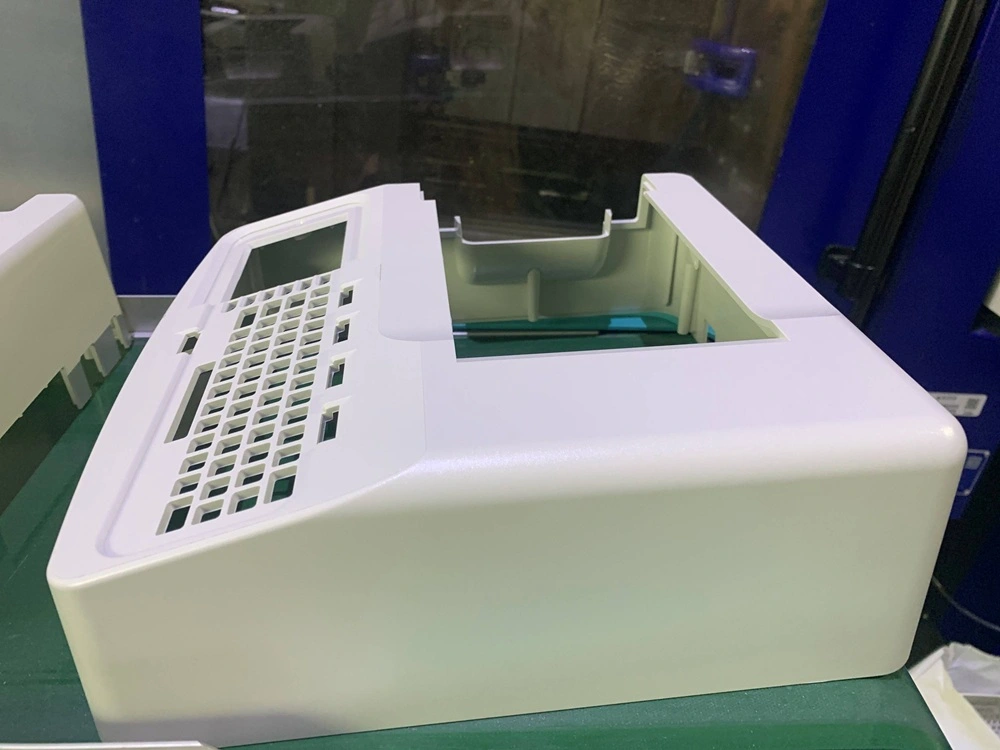
DFM Guidelines for Die Casting
When designing for high-pressure die casting:
Wall Thickness: 2.5–4.5 mm is typical for aluminum; maintain uniform thickness to prevent shrinkage or porosity.
Draft Angles: Include 1–3° draft for external walls, and slightly more for internal cavities to aid release.
Ribs and Bosses: Use ribs to reinforce thin sections and reduce warping; avoid excessively thick bosses to prevent sink marks and voids.
Coring: Use cores to reduce part weight and material usage without compromising strength.
Avoid Sharp Corners: Fillets of at least 0.5 mm radius improve metal flow and reduce stress concentrations.
Allow for Machining Stock: Add minimal extra material for critical surfaces that require CNC finishing.
DFM Guidelines for Injection Molding
When designing for plastic injection molding:
Wall Thickness: Keep between 0.8–3 mm depending on polymer type; ensure uniformity to avoid warpage.
Draft Angles: Apply at least 1° per side for untextured surfaces; textured molds may require 3–5° or more.
Ribs and Gussets: Strengthen thin walls while preventing sink marks; rib thickness should be 60% of adjacent wall thickness.
Gates and Flow: Position gates to allow even filling and avoid weld lines in critical areas.
Undercuts: Minimize undercuts to reduce tooling complexity; if essential, plan for side-actions or lifters.
Material Shrinkage: Account for shrinkage rates in mold design to meet final part dimensions accurately.
Application Scenarios: When to Use Which Method?
Choosing the right method depends on the specific requirements and materials of your project.
When to Choose Die Casting?
Die casting is particularly useful for metal parts/products. These parts are required to be tough and durable for longer use. For example, die casting is essential for manufacturing robust housings, enclosures, and structural frames. These components must withstand sustained stress and heat, making them critical in demanding fields like Aerospace CNC Machining where failure is not an option.
In addition, die casting provides a uniform surface finish. Therefore, parts made usually do not require much polishing in the latter stages. It also maintains the dimensional accuracy, which is crucial when the parts need to fit in between. You can count on it for medium to large production volumes and production runs. However, it appears costly to make parts on a small scale.
When to Choose Injection Moulding?
Injection molding is suitable for plastics. Now, modern approaches like overmolding allow to use of metal inserts and plastic grips to make parts stronger than ever. It also enhances the ergonomics and aesthetic value of parts.
It is ideal and cost-effective when you need parts in large quantities. It is commonly applied to consumer goods, medical apparatus, and electronic covers for detailed shapes and thin sections. Thus, injection molding is also used when the emphasis is made on flexibility and visual appeal, and not high strength.
Choosing a Die Casting vs an Injection Molding Service Provider
When it comes to choosing the proper process, the choice of the manufacturing partner is as crucial as the process itself. A reliable service provider would make sure that your design is created properly, efficiently, and at a reasonable cost with no hidden charges.
In making the comparison, you must find a company that does both die casting and injection molding under a single roof. This allows superior project management, uniform quality, and reduced product delivery and lead times.
Rollyu is your trusted, full-service manufacturing partner. We offer a comprehensive suite of services, including high-pressure die casting, precision injection molding, and expert CNC machining. We specialize in producing critical components for high-tech industries, from precision robotics parts manufacturing for leading innovators, to medical devices parts. Both large-scale production and prototyping are supported by Rollyu in-house, making us suitable for startups and established brands alike.
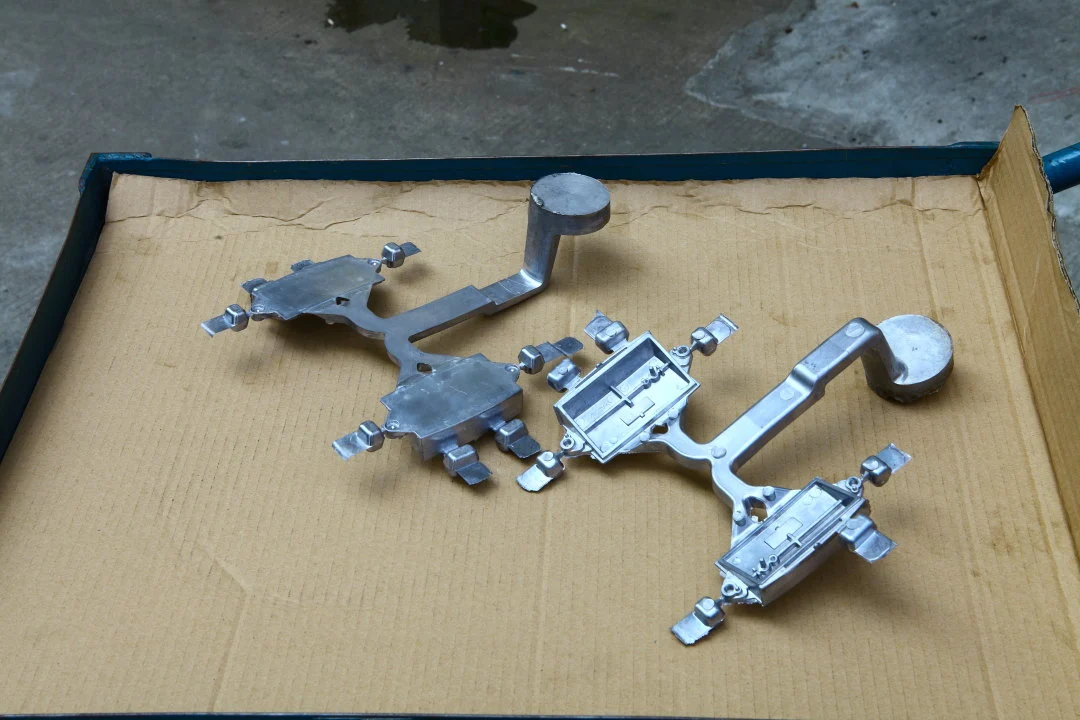
Choosing a Manufacturing Partner
Selecting the right process matters—but selecting the right partner matters even more.
A qualified supplier should offer:
- DFM engineering support
- Transparent tooling + part cost
- In-house mold manufacturing
- Strong quality systems (ISO 9001, ISO 13485)
- Ability to produce metal and plastic parts
- CNC machining for secondary operations
- Rapid prototyping for validation
Rollyu Precision meets all of these requirements with integrated manufacturing under one roof.
Conclusion
Die casting and injection molding are both powerful, high-volume manufacturing technologies—but each excels in different scenarios.
- Die casting is the best choice for strong, durable metal components.
- Injection molding is the ideal method for high-volume, cost-effective plastic parts.
Your design, material requirements, strength, geometry, and projected volume ultimately determine the best solution.
With decades of experience, Rollyu Precision supports customers from concept to production, ensuring every part meets your specifications, performance requirements, and budget.
Ready to choose the right manufacturing process?
Upload your 3D files or drawings, and our engineers will provide:
- A free DFM analysis
- A cost comparison between die casting and injection molding
- Lead time and tooling recommendations
Contact Rollyu Precision today for a fast, accurate project quotation.