

CNC Machining Bronze refers to a meticulous manufacturing method of producing bronze alloys into high-performance components with computer-controlled machines. This hi-tech process has utilised the outstanding characteristics of bronze, such as good wear resistance, excellent machinability, and excellent corrosion resistance, to make durable bronze components used in the high-stress industries.
CNC Machining Bronze is versatile and thus is widely utilized in aerospace CNC machining as well as marine, automotive, and industrial industries. Since technology has advanced in manufacturing, CNC Machining Bronze still allows the engineers to produce very complex parts that have narrow tolerances and with good performance through time.
What Is CNC Machining Bronze?
CNC machining bronze combines both ancient metallurgy and modern precision technology, which makes this ancient material a high-performance component. This modern production technique utilised the inherent versatility of bronze to achieve complex custom bronze parts that can be used to satisfy stringent modern engineering requirements.
Meaning of CNC Machining Bronze
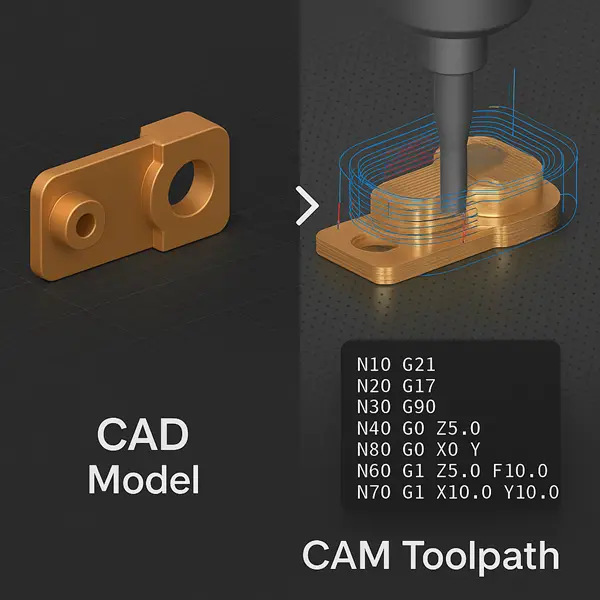
CNC Machining Bronze is the subtractive type of production bronze machining process in which computer-controlled machines cut material from bronze workpieces and produce precision machining bronze components. The digital CAD designs are converted into physical parts of high dimensional accuracy, often with tolerances of less than 0.005 inches. The combination of qualities that can be found in bronze makes it specifically good in CNC machining since it allows one to create complex geometries that would otherwise be difficult with traditional machining tools.
Benefits of CNC Machining Bronze
The machinability of bronze is also very high, and therefore, CNC machining bronze is good in critical parts since it speeds up the production process and increases the life of the tools. The main advantages are excellent corrosion resistance, more than carbon steel, excellent thermal conductivity (>70 W/mK), and intrinsic lubrication that eliminates the use of external lubricants. The strength of bronze is also appreciated, as well as its non-sparking safety in explosive places, as well as being able to withstand heavy loads.
Difference Between Bronze, Brass, and Copper Machining
Although alloys of brass, bronze, and copper are all based on copper, they differ in certain aspects depending on the application.
Bronze (Copper-Tin): It is an alloy that is appreciated due to its ability to withstand strength, great wear resistance, and better corrosion resistance, particularly in sea routes. It is a good bearer of heavy-duty bearings, bushings, and marine parts, and has retained its properties at high temperatures.
Brass (Copper-Zinc): It is highly machinable (with certain grades being rated 100%), so it is used when a large number of components are to be machined, such as fittings, screws, and gears. Nevertheless, it is usually less strong and less resistant to wear as compared to bronze.
Copper: This has the best electrical and thermal conductivity and is the hardest to machine, as it is soft and it develops built-up edges. It is mostly used in electrical components and heat exchangers.
How the CNC Machining Bronze Process Works
Bronze is a metal alloy that is machined in a CNC machine, in a multi-step process. It begins by picking material and computer-assisted design and computer-aided manufacturing (CAD/CAM) programs to generate machine instructions (G-code).
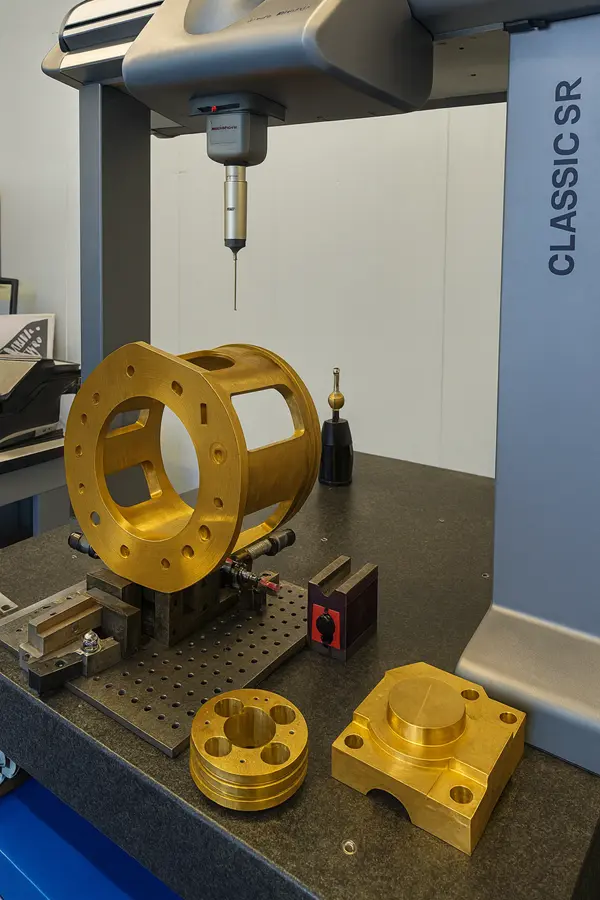
The bronze machining stage involves the use of milling to make complicated forms, turning to form cylindrical items, and drilling and tapping to make holes and threads. Grinding is commonly used for outstanding surface finish and tolerances. Lastly, the stage of post-processing involves deburring, surface treatments, and quality inspection using such tools as CMMs to keep the part within specification limits.
Typical CNC Machined Bronze Components
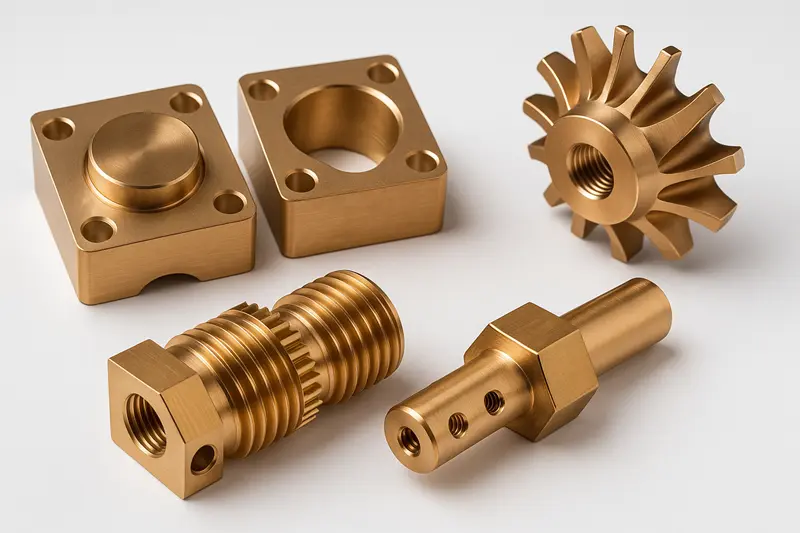
The following are the typical CNC machined Bronze components
Bearings, Bushings, and Sleeves
The very low friction coefficient and high wear resistance characteristics of bronze make it a very suitable bearing material. C932 with bronze is especially used in these parts because it has anti-friction characteristics and is capable of high loads.
Gears and Worm Wheels
The strength and wear resistance of aluminium bronze (C95400) and phosphor bronze are high, so the two are used in gear applications where they are required to resist tooth deformation when subjected to high loads.
Marine Components (Valves, Fittings, Prop Hardware)
The property of bronze that has made it useful in marine hardware includes its superior resistance to corrosion, especially in salt water. Propeller shafts are usually made of nickel-aluminium bronze (C95800), which is also used in other bronze alloys in forms of valves, fittings, and pump parts.
Electrical and Conductive Components
Phosphor bronze (C51000) is a popular electrical contact, spring, and connector material since it is a good electrical conductor, resists fatigue, and is a spring-like substance
Pump Parts, Impellers, and Industrial Valves
The characteristics of bronze are not only that of corrosion resistance but also its durability, which makes it good for fluid handling use. Aluminium bronze is also ideal in pump parts where there is corrosive fluid.
Automotive and Heavy Equipment Wear Parts
The wear resistance and capability of supporting heavy loads make bronze useful in the automotive industry in the form of transmission synchronizers, bearing cages, and other wear parts.
What Are the Bronze Types Available for CNC Machining?
Table: Comparison of CNC Machining of Common Bronze Alloys.
| Alloy Type | Key Properties | Machinability Rating | Common Applications |
| C932/SAE 660 Bearing Bronze | Superior lubricity, high wear resistance. | 70% | Bushings, bearings, gears |
| Aluminium Bronze (C95400) | Strong, good corrosion ability. | 60% | Bearing and marine elements, high-speed bearings. |
| Phosphor Bronze (C51000) | Good wear resistance, high fatigue strength. | 20% | Connectors, electrical, springs, fasteners. |
| Silicon Bronze | High-quality corrosion protection, warm colour. | 30% | Marine fittings, architectural fittings. |
| Leaded Bronze | Lubricity is prebuilt, facilitates chip breaking. | 60-75% | Machine, parts, bearings, general. |
C932 / SAE 660 Bearing Bronze
The best-known bearing bronze alloy is C932 bronze (SAE 660) and provides superior lubricity and reasonable wear resistance. It has a lead that forms an inherent lubricant, but makes it unsuitable for applications of food and drinkable water.
Aluminum Bronze (C63000)
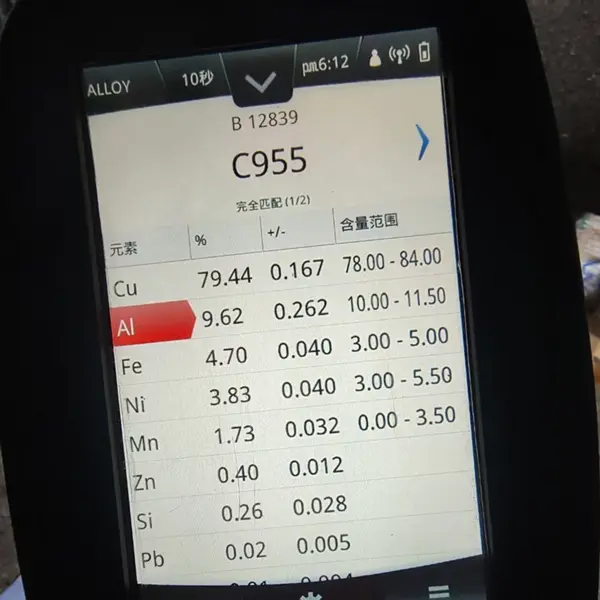
C63000 is an aluminium bronze alloy, which is more stable and anti-corrosive under seawater and chemical situations. It is superior to other aluminium bronzes; it can be easily machined, and also would not weaken at high temperatures, and is established in corrosive environments.
Aluminium Bronze (C95400/C95500)
C95400 / C95500 aluminium bronze could provide desirable load-carrying ability and wear stability in severe pressure situations. It is also of excellent tensile strength and anti-galling property, hence it is applicable in heavy-duty bushings, bearings, and gear systems where maximum life is required.
Phosphor Bronze (C51000/C54400/C51900)
Phosphor bronze is of good spring, high fatigue, and wear. It is especially applicable to the field of electrical labour and to the components that are to be subjected to repeated stress cycles.
Silicon Bronze
Silicon bronze provides a compromise of medium strength, high corrosion resistance, and high weldability. It has a warm golden look, which makes it acceptable in architectural use besides its functional parts.
Leaded Bronze
Leaded bronze contains 4-8 per cent lead, which gives far greater machinability, in that it breaks chips much more easily and serves as an inbuilt lubricant. But it is not a good fit in high-temperature applications or food contact applications.
Bronze vs. Brass vs. Copper Machining
| Material | Composition | Machinability | Key Strengths | Typical Uses |
| Bronze (Cu–Sn or Cu–Al) | Copper + Tin/Aluminum/Nickel | 20–75% | Wear resistance, load strength, corrosion resistance | Bearings, bushings, gears, marine hardware |
| Brass (Cu–Zn) | Copper + Zinc | Up to 100% | Very easy to machine, low cost | Fittings, valve bodies, fasteners |
| Copper (Pure Cu) | 99% Cu | Difficult | Best conductivity | Busbars, contacts, heat exchangers |
Bronze offers the best combined strength, wear performance, and corrosion resistance—ideal for parts that undergo high mechanical stress.
Tolerances, Surface Finishes, and Quality Control for Machining Bronze
The following are tolerances, surface finishes, and quality controls for machining bronze.
Typical Tolerances for Bronze CNC Parts
Bronze is suitable for CNC machining and can achieve very tight tolerances, typically and conventionally as low as the standard parts of ±0.01-0.02 mm. High precision bronze machining with tolerances in the range of ±0.005 mm or even lower, as fine as the geometry of the part and the alloy composition allows, is even more accurately machined.
Surface Roughness Requirements for CNC Bronze
Surface finishes to as-machined surfaces up to Ra0.8,Ra 1.6-3.2 μm with mechanical polishing. CNC bronze components can obtain a surface finish of less than Ra 0.2 μm with mechanical polishing. The roughness requirement on a particular surface is also determined by the application, where bearing surfaces are normally assigned a smoother finish to reduce friction and wear.
Bearing Surface Requirements
Other geometrical tolerances, such as roundness, cylindricity, and concentricity, are also essential in bearing applications. The ID/OD control also gives the assembly a proper fit and working, and the clearance requirements are specific to the conditions of operation
Material Certification, Hardness, and Composition Tests
Certified manufacturers give material certifications of alloy composition and mechanical properties. The standard tests are hardness testing (Brinell or Rockwell), chemical composition testing, and microstructural analysis to guarantee the quality of materials.
Custom Bronze CNC Machining Services at Rollyu
At Rollyu, our area of specialisation is the provision of precision CNC Machining Bronze services that meet your needs. We have total production solutions that guarantee superior bronze products for various industrial uses.
Precision Equipment and ISO Quality Standards
We have state-of-the-art CNC machines, including multi-axis milling and turning machines with the ability to work on both simple and complex geometries. Our certified quality management systems are ISO 9001 and ISO 13485, which guarantee consistency in the results, corresponding to the international standards.
DFM Support and Cost-Effective Solutions
Our engineering will offer you Design for Manufacturability (DFM) feedback to streamline your designs for production, to eliminate complexity that is not required, and still ensure that the design will work. Such a team method helps to reduce the costs of production and enhances manufacturing.
Fast Turnaround and Reliable Delivery
We understand how critical scheduling is in the manufacturing process, and we have an efficient production workflow to ensure the smooth movement of your CNC parts. Our lean operations reduce lead times without compromising quality.
For your reference, sample parts are typically delivered within 3–5 days, while standard production orders are completed within 2–4 weeks, depending on part complexity and volume.
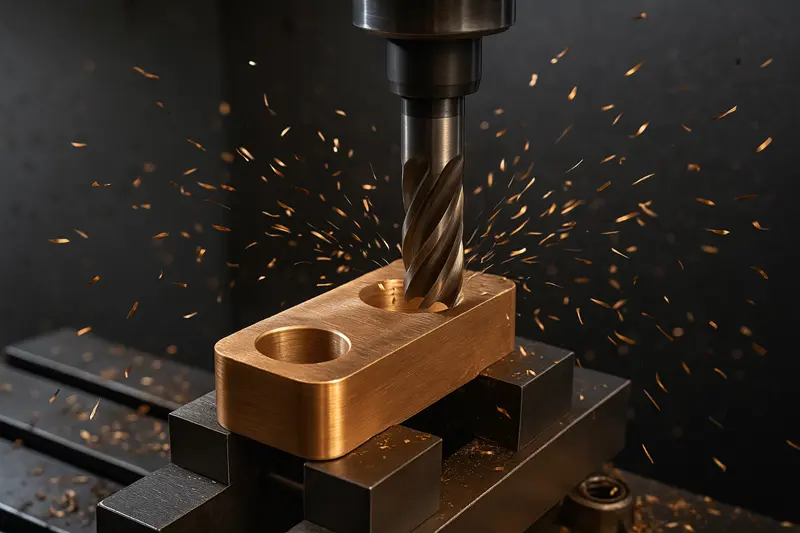
High-Precision CNC Milling for Bronze Components
Our CNC milling capability allows us to machine large and complex bronze components with exceptional dimensional control. Using advanced multi-axis milling centers, precision fixturing, and stable cutting parameters, we consistently achieve tolerances as tight as ±0.005 mm on critical features. This level of accuracy ensures precise hole positions, flatness, pocket dimensions, and alignment—essential for bronze gears, housings, valve bodies, and structural components used in high-load or high-temperature environments.
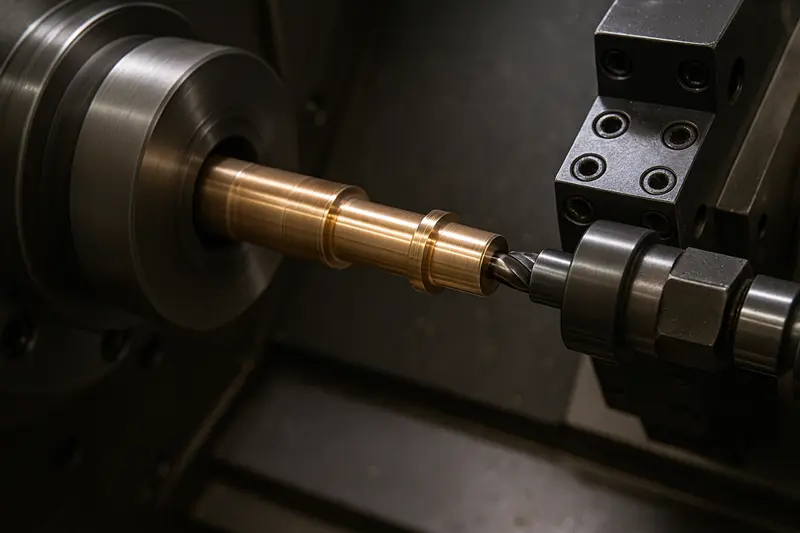
Tight-Tolerance CNC Turning for CNC Bronze Shafts and Bushings
For cylindrical and rotational bronze parts, our CNC lathe turning operations deliver the same uncompromising precision. With rigid turning centers, fine-tuned tool geometry, and controlled cutting speeds suited for bronze alloys, we maintain concentricity, roundness, and ID/OD tolerances down to ±0.005 mm. This guarantees consistent performance for bronze bushings, bearings, shafts, threaded components, and wear parts—ensuring smooth operation, proper clearance, and long service life even in demanding industrial applications.
Large and Small Batch Production
We serve both small and large-scale volumes, from single prototypes to full production runs. Our flexible manufacturing capacity adapts to your project’s needs—whether you require a minimum order quantity of just 1 piece or high-volume production.
Surface Treatment Custom Finishing
Rollyu provides full-service surface treatments on bronze parts, such as electropolishing to give smooth surfaces, and other mechanical finishes, such as polishing, bead blasting, among others.
Discover our high technology processes in meeting your unique industry demands, and our CNC machining services and experience in developing parts in the space and satellite sector.
Benefits of electropolishing for bronze
- Produces a bright, reflective finish
- Removes micro-burrs and improves smoothness
- Reduces surface roughness
- Enhances corrosion resistance
- Improves cleanliness and aesthetic appearance
What bead blasting does for bronze
- Creates an even matte or satin finish
- Removes light scratches and imperfections
- Prepares the surface for coating (paint, lacquer, plating)
- Improves the aesthetic consistency of the part
ISO 9001 and ISO 13485 Quality Systems
This is because Rollyu Precisionhas both the ISO 9001 and ISO 13485 certification that guarantees high quality in all the bronze machining processes. ISO 9001 ensures quality management throughout the entire supply chain, including sourcing of materials to end product inspection, whereas ISO 13485 offers medical-grade standards of healthcare components. Combined, these certifications provide proven reliability and conformance to both industrial and medical applications, where all bronze parts are subjected to high standards of international certification.
FAQ
Is Bronze Easy to Machine?
Yes, bronze is usually simple to machine, and leaded tin bronze corresponds to 60-75% of the machinability of free-cutting brass. The best outcomes are achieved with the right choice of the tool and machining parameters.
Is Bronze More Machinable than Brass?
No, bronze is not as machinable as brass, with a rating of 20-75% on 100 of brass. Bronze is, however, superior on the aspect of mechanical properties, which include strength and corrosion resistance.
How to Prevent Oxidation on Bronze Parts?
Deter oxidation by passivation of protective layers and electropolishing of smooth surfaces, and by correct storage with suitable coating to reduce exposure during transportation and storage.
Conclusion
CNC machining Bronze is thus seen as a key production process in the production of high-performance and durable components in endless industries. Bronze alloys are versatile and, when supplemented by precision CNC technology, allow engineers to come up with solutions that can survive under the harshest working conditions, do not lose their dimensions, and have long service lives.
With the ever-growing material science and manufacturing technology, CNC Machining Bronze will remain one of the most vital processes in creating quality parts to meet high usage requirements. The reason behind this is that the innovation in CNC Machining Bronze processes keeps this primordial alloy on the leading edge of manufacturing excellence in modern times.