

According to data from The Aluminum Association, aluminum remains the most widely used non-ferrous metal in industrial applications. Specifically, the 6000 and 7000 series dominate the CNC machining landscape due to their availability and consistent performance profiles. For product designers and machinists, this popularity often narrows the material selection process down to two primary contenders: the versatile 6061 alloy and the high-strength 7075 alloy.
Choosing the wrong alloy isn’t just a technical error, it’s a financial one. Over-specifying wastes budget, while under-specifying leads to catastrophic failure. This guide compares cost, manufacturability, and application trade-offs to help you make the profitable choice.
What are 6061 and 7075 Aluminum 6061?
On the shop floor, these alloys may look identical, but their properties dictate entirely different use cases. Think of them as “Standard” vs. “Premium” tiers in your material selection.
What is 6061 Aluminum?
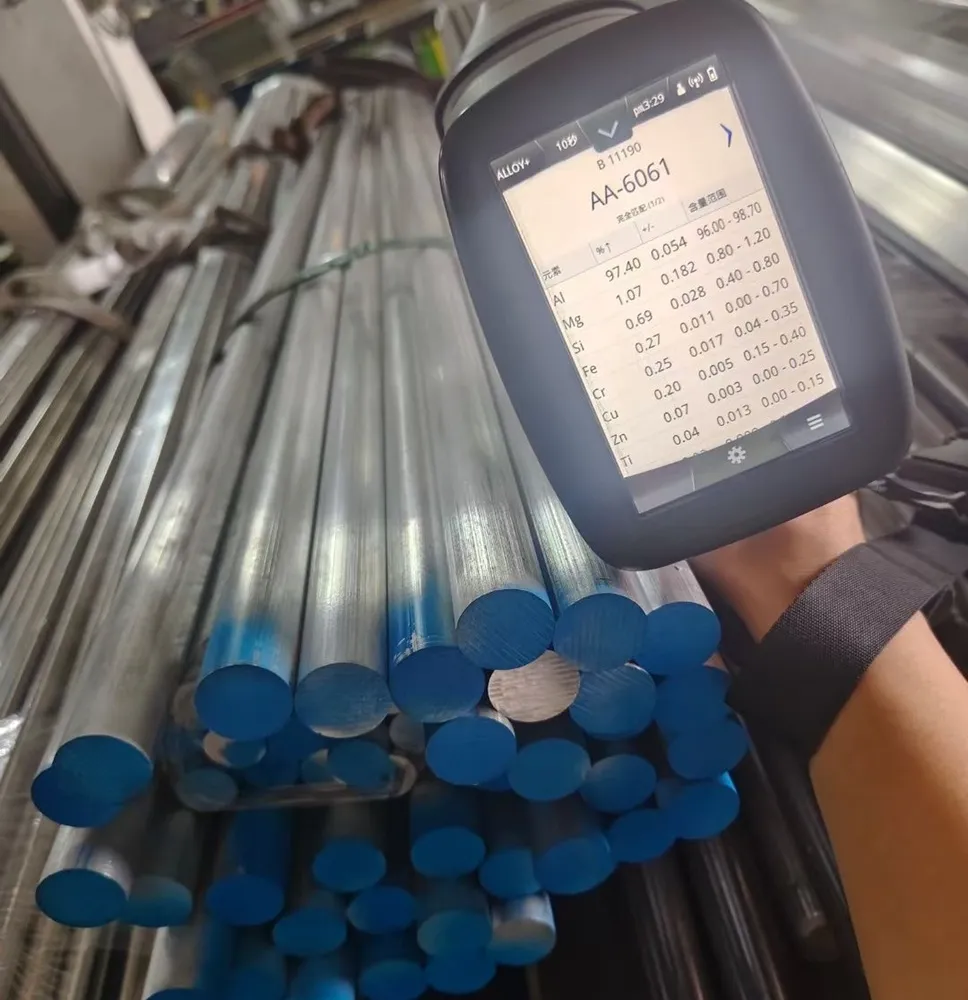
6061 Aluminum is the industry standard for general-purpose CNC machining. Its primary alloying elements are Magnesium and Silicon. It isn’t chosen for extreme strength, but for its versatility and weldability. Unlike harder alloys, 6061 offers superior corrosion resistance and is easy to fabricate. It is the most cost-effective solution for structural frames, automotive parts, and consumer electronics where balanced performance is prioritized over raw durability.
What is 7075 Aluminum?
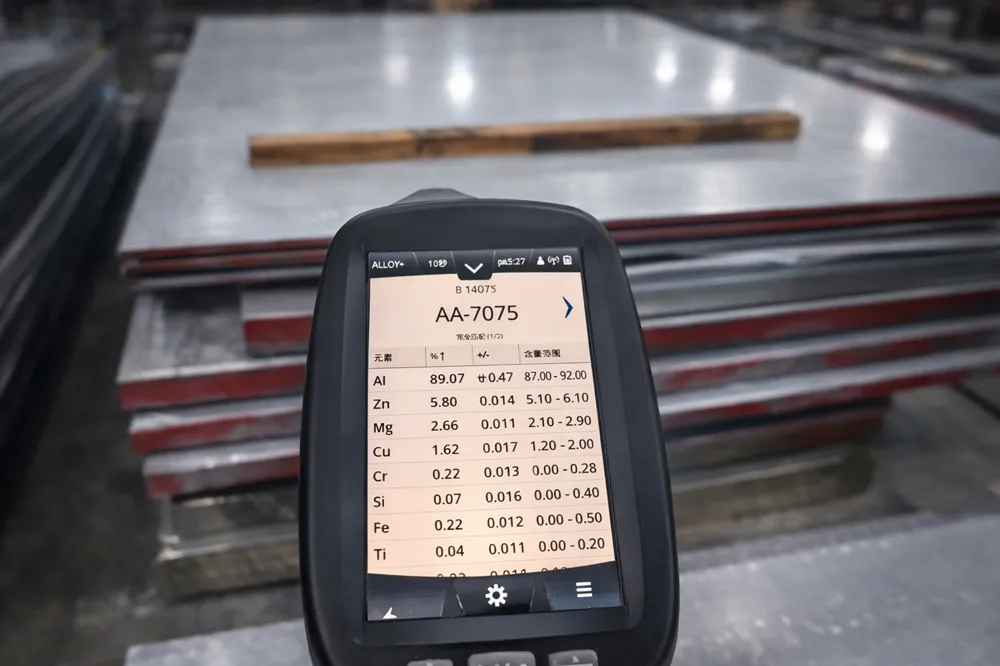
If 6061 is the workhorse, Aluminum 7075 is the high-performance specialist. With Zinc as its primary alloying element, its tensile strength rivals that of many steels. This makes it the standard for aerospace components, high-stress gears, and defense equipment. However, this strength comes with a trade-off: 7075 is effectively unweldable and costs significantly more. It is designed strictly for applications where high strength-to-weight ratios are non-negotiable.
Chemical Composition Table
The performance difference starts with the chemistry. Here is a breakdown of the major alloying elements (nominal weight %):
| Element | 6061 Aluminum | 7075 Aluminum | Effect on Material |
| Aluminum (Al) | 95.8 – 98.6% | 87.1 – 91.4% | Base metal |
| Zinc (Zn) | Max 0.25% | 5.1 – 6.1% | dramatically increases strength and hardness |
| Magnesium (Mg) | 0.8 – 1.2% | 2.1 – 2.9% | Increases strength and corrosion resistance |
| Silicon (Si) | 0.4 – 0.8% | Max 0.4% | improves formability and reduces melting point |
| Copper (Cu) | 0.15 – 0.4% | 1.2 – 2.0% | Improves strength but lowers corrosion resistance |
| Chromium (Cr) | 0.04 – 0.35% | 0.18 – 0.28% | Control of grain structure |
Detailed Performance Comparison: 6061 vs 7075
Choosing between these two isn’t just about picking the “stronger” metal. It is about balancing mechanical limits against your manufacturing budget. Let’s look at how these materials behave in production.
Mechanical Strength and Hardness
This is the first filter in the selection process. If your primary constraint is strength-to-weight ratio, the answer is 7075-T6 Aluminum.
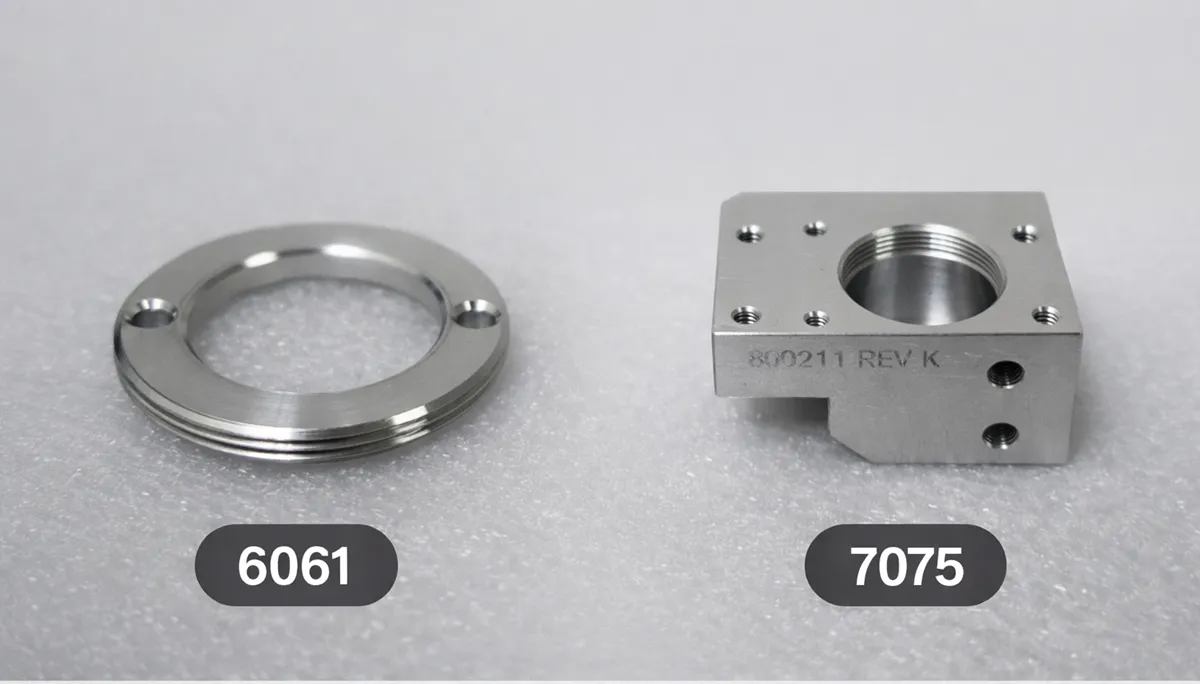
With a tensile strength nearly double that of 6061, 7075 is the “steel replacement” of the aluminum world. It allows engineers to design thinner, lighter components without risking failure. However, for the vast majority of CNC projects—brackets, panels, and housings. 7075 is overkill. 6061-T6 Aluminum provides sufficient rigidity for general structural applications. Unless you are building aerospace wing spars or high-impact gears, paying the premium for 7075 often yields no functional benefit.
Machinability and Weldability
The Reality of Chip Formation and Tool Wear While datasheets label both alloys as “machinable,” the operator experience tells a different story regarding chip formation and tool life.
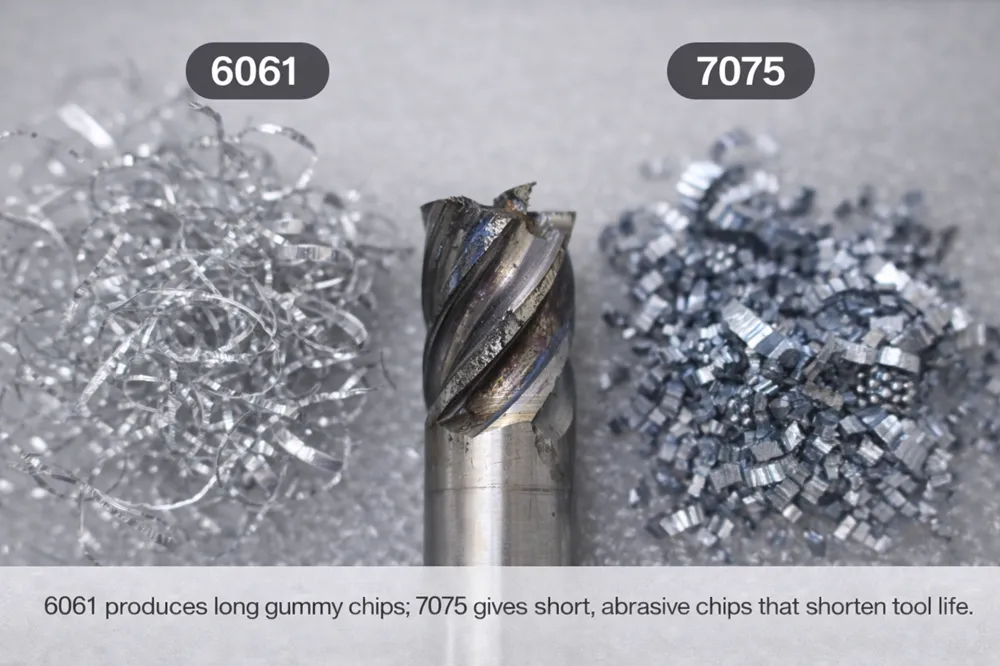
6061 Aluminum: The “Gummy” Factor The main challenge with 6061 is its ductility. During aggressive cuts, the material tends to stick to the cutting tool’s edge, a phenomenon known as Built-Up Edge (BUE). If the machinist doesn’t optimize the feeds, speeds, and coolant flow, this buildup effectively blurs the cutting edge, leading to a poor surface finish and dimensional inaccuracies. To get a mirror finish on 6061, shops often need to run distinct “finishing passes” with high-rpm skim cuts, which adds slightly to the cycle time.
7075 Aluminum: The Tool Killer 7075 behaves more like steel. It is harder and more brittle, allowing chips to break into small, manageable pieces immediately upon impact. This eliminates the “bird’s nest” of long metal spirals often seen with softer alloys and typically results in a superior as-machined surface finish. However, this hardness comes at a price: Tool Life. The zinc content and high hardness of 7075 wear out carbide end mills significantly faster than 6061. For a prototype run of 5 parts, this is negligible. But for a production run of 10,000 units, the increased frequency of tool changes and machine downtime can inflate your operational costs unexpectedly. Knowing these differences helps you keep the core benefits of CNC machining in manufacturing, like speed and low cost.
Corrosion Resistance and Anodizing Potential
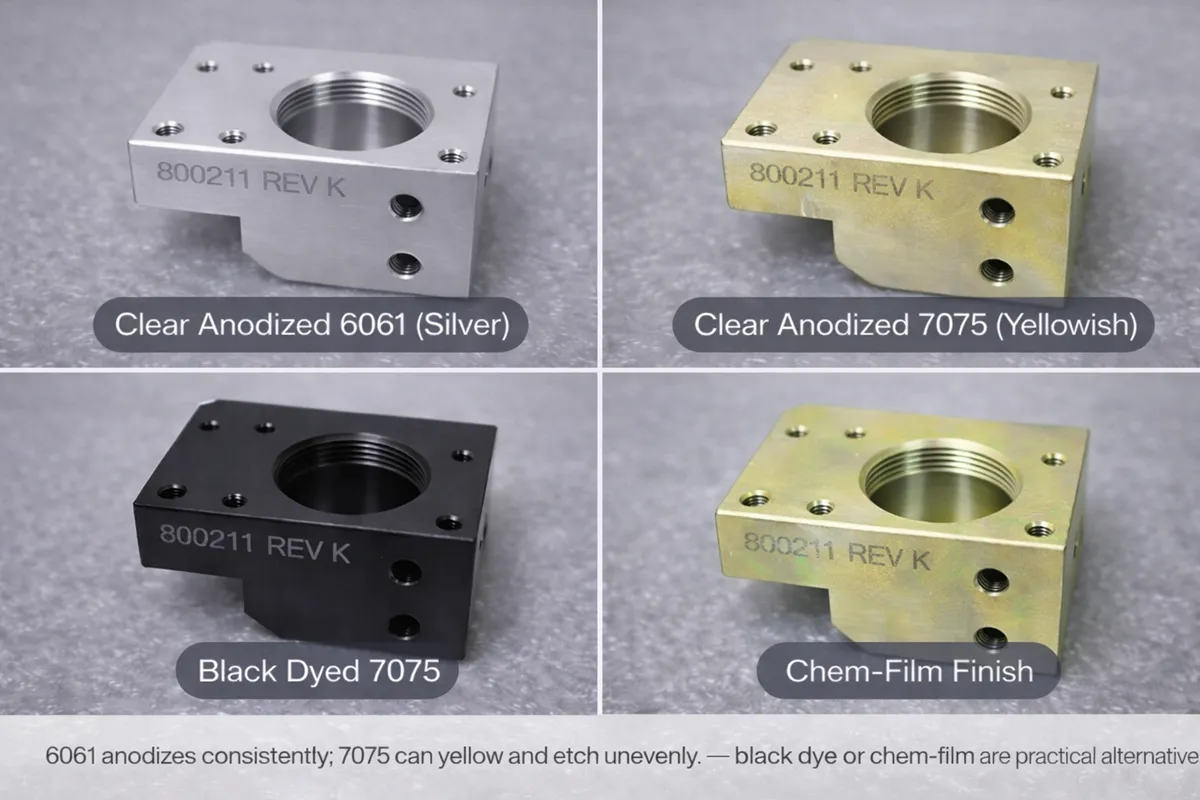
The “Cosmetic Risk” of Anodizing 7075 If your part requires a specific aesthetic look—especially a clear, bright, or consistent color match—this section is your most critical decision point.
6061 Aluminum is the “King of Anodizing.” Because of its balanced magnesium and silicon chemistry, it reacts evenly to the anodizing bath (sulfuric acid process). It produces a transparent, uniform oxide layer that accepts dyes perfectly. Whether you need “Apple-style” matte silver or vibrant red, 6061 delivers consistent results batch after batch.
7075 Aluminum, however, is notoriously difficult to anodize for cosmetic purposes. The high Zinc content interferes with the anodizing process.
- The Yellow Tint: When clear anodized (Type II), 7075 rarely looks silver. It often develops a yellowish, bronze, or muddy tint.
- Inconsistent Etching: The alloy’s microstructure can lead to uneven etching, resulting in visually distinct “grains” or shades within a single part.
If you absolutely need the strength of 7075 and a black cosmetic finish, it is manageable because black dye hides the yellowish undertone. But for clear or light colors, 7075 is a cosmetic gamble. For internal structural parts where looks don’t matter, simply specify a “Chemical Film” (Chem-film/Alodine) coating for corrosion protection instead of anodizing to save money.
Mechanical Properties Comparison
Directly comparing the T6 temper clearly highlights the trade-offs:
| Property | 6061-T6 Aluminum | 7075-T6 Aluminum | The Takeaway |
| Yield Strength | ~40,000 psi (276 MPa) | ~73,000 psi (503 MPa) | 7075 resists permanent bending almost 2x better. |
| Tensile Strength | ~45,000 psi (310 MPa) | ~83,000 psi (572 MPa) | 7075 takes significantly more force to break. |
| Hardness (Brinell) | 95 HB | 150 HB | 7075 is much harder and resistant to surface denting. |
| Elongation at Break | 12% | 11% | Both have similar ductility, but 6061 is slightly more formable. |
| Thermal Conductivity | 167 W/m-K | 130 W/m-K | 6061 dissipates heat more efficiently (better for heat sinks). |
Cost Analysis: Material vs. Machining Costs
Finally, the decision lands on the Total Cost of Ownership (TCO).
- Raw Material: Market rates fluctuate, but 7075 is consistently the premium option, costing 25% to 50% more than 6061 stock. For large-volume production runs, this price difference eats directly into margins.
- Processing Costs: The hidden costs matter. Choosing 7075 often implies mandatory post-processing (anodizing/painting) to prevent corrosion. Aluminum 6061 remains the economical champion—cheaper to buy, easier to weld, and resistant enough to be used “as-machined” in many contexts.
Only upgrade to 7075 if the mechanical load calculations demand it. For everything else, 6061 maximizes your profit margin.
When to Use 6061 or 7075 Aluminum?
Industry standards have segmented these materials into specific domains based on ROI and performance.
Automotive and General Industrial Applications
6061-T6 Aluminum is the “Swiss Army Knife” of manufacturing. It balances strength, cost, and formability perfectly.
- Automotive: Chassis components, brake pistons, and brackets where energy absorption (crash safety) is key.
- Industrial: Electronic enclosures, parts for industrial automation, custom fixtures, and marine fittings. 6061 is preferred here because it finishes well and supports complex welded assemblies without losing integrity.
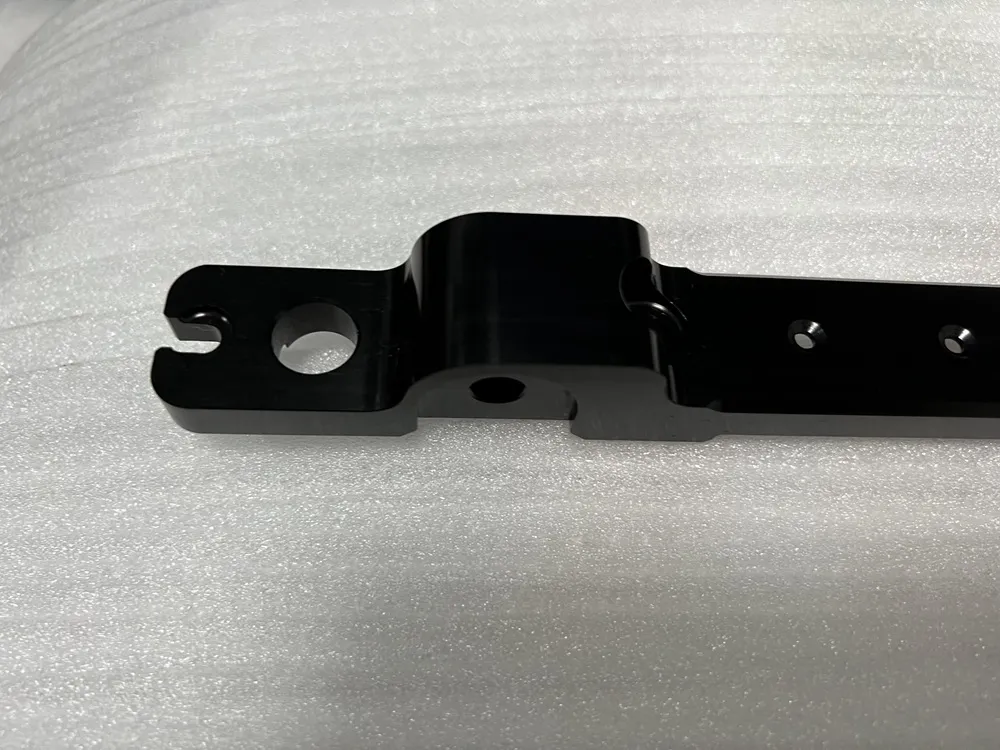
Aerospace and High Performance Applications
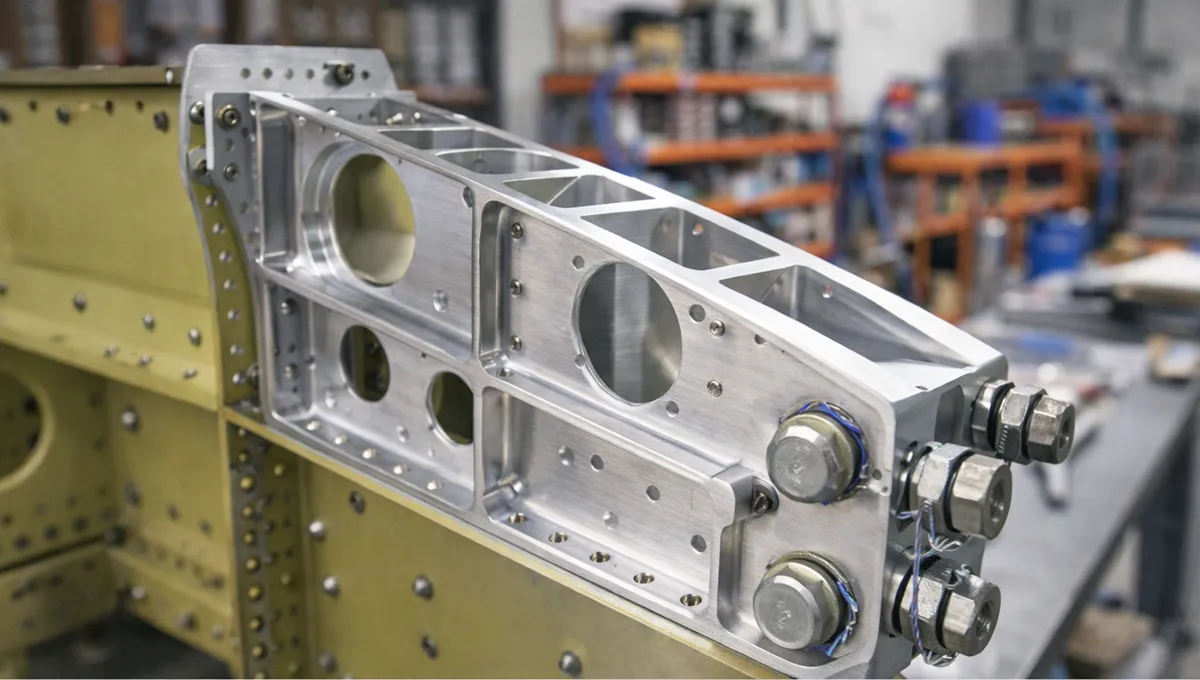
7075-T6 Aluminum is the material of choice when failure is not an option and weight savings are critical.
- Aerospace: High-stress components like wing spars, fuselage frames, and helicopter rotor fittings. Its high strength-to-weight ratio allows aircraft to be lighter and more fuel-efficient.
- Mold Making: As mentioned, it serves as an excellent material for high-strength blow molds and injection mold tools due to its hardness and thermal conductivity.
How to Choose the Right Alloy for Your Project?
Treat material selection as a commercial decision, not just a technical one. The most common pitfall in CNC manufacturing is over-engineering—paying a premium for 7075 Aluminum when the versatile 6061 would perform perfectly. As a general rule, start your design with 6061 to maximize weldability and cost-efficiency; only upgrade to 7075 if your stress analysis proves that the part will physically fail without the extra tensile strength.
Still debating between 6061 and 7075? Let Rollyu do the math for you. Upload your CAD file now for a free expert consultation. We ensure you get the durability you need without the unnecessary markup.
FAQ
Does 7075 Aluminum Warp More during Machining Than 6061?
Yes, 7075 Aluminum has higher internal stress. When large amounts of material are removed, it is more prone to bowing or twisting than 6061. For tight-tolerance parts, we recommend using stress-relieved 7075-T7351 or sticking to 6061 for better stability.
Is 7075 Aluminum Suitable for Injection Molds?
Yes, it is the standard for “soft tooling.” 7075 is significantly harder than 6061, allowing it to hold parting lines and details effectively for short-run production (up to 10,000 shots). 6061 is generally too soft for mold cavities.
Can 6061 Aluminum and 7075 Aluminum Withstand High Temperatures?
No, both perform poorly above 250°F (120°C). Despite 7075’s strength at room temperature, both alloys lose significant tensile integrity in high heat. If your application involves sustained heat exposure (like engine components), consider Steel or Titanium instead.