
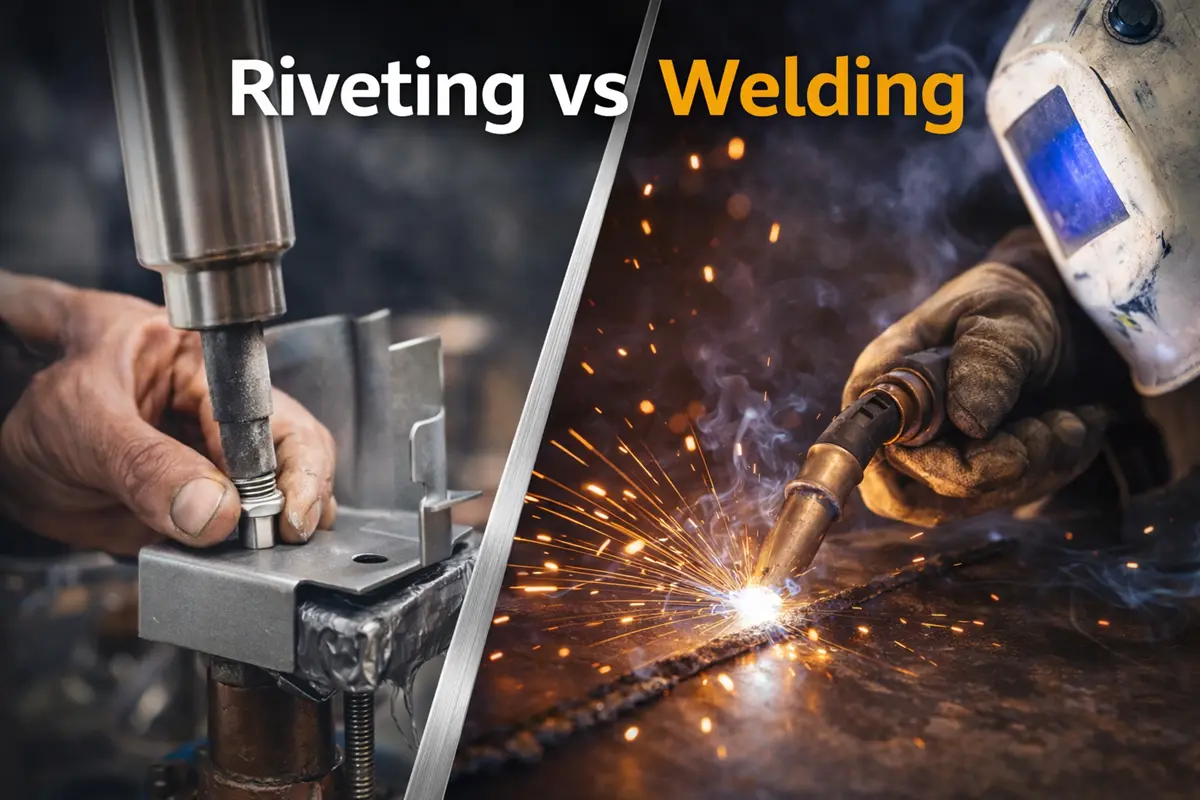

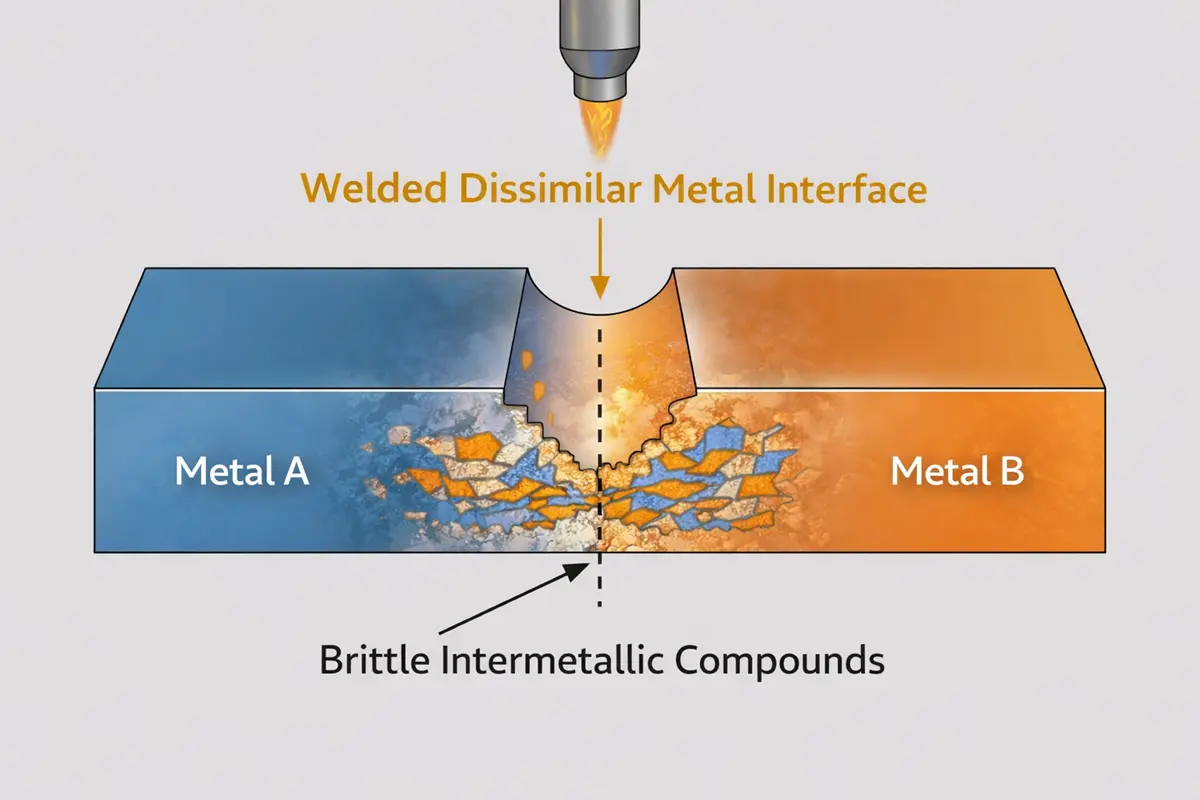
Welding dissimilar metals creates a heat problem right from the start. According to the AWS D1.2 Structural Welding Code, fusion welding dissimilar metals creates brittle intermetallic compounds (IMCs) that are prone to cracking. While welding works best for homogeneous metals, this risk makes riveting the practical choice for joining different materials. The choice is simple: prioritize a hermetic seal or avoid heat damage.
Riveting offers flexibility for high vibration parts, while welding delivers the rigid strength needed for heavy infrastructure. This guide compares their specific tradeoffs in cost, speed, and durability to help you make the right engineering decision.
What is Riveting?
Riveting is a cold joining process that connects workpieces using a metal fastener.A machine deforms the rivet tail to clamp the joint mechanically, which is the basic principle of how a rivet works. This creates a permanent bond while keeping the metal grain structure intact.
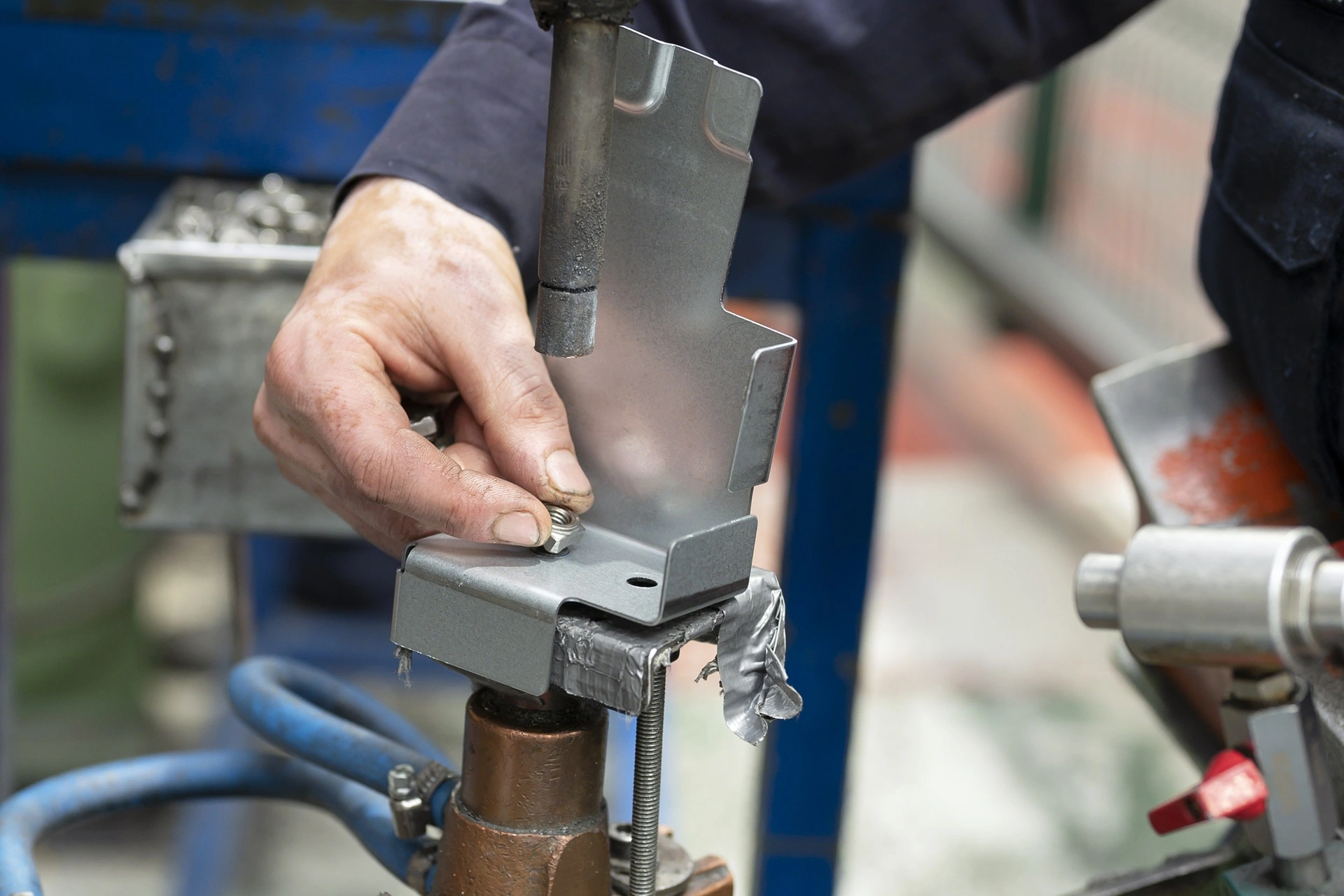
Common Rivet Types
Selection depends on installation access and load requirements.
- Solid Rivets: The standard for aircraft and bridges, they offer maximum shear strength.
- Blind (Pop) Rivets: Designed for one-sided access, ideal for enclosed electronics or HVAC.
- Semi-Tubular Rivets: Require less force to install, perfect for high-volume manufacturing like brake linings.
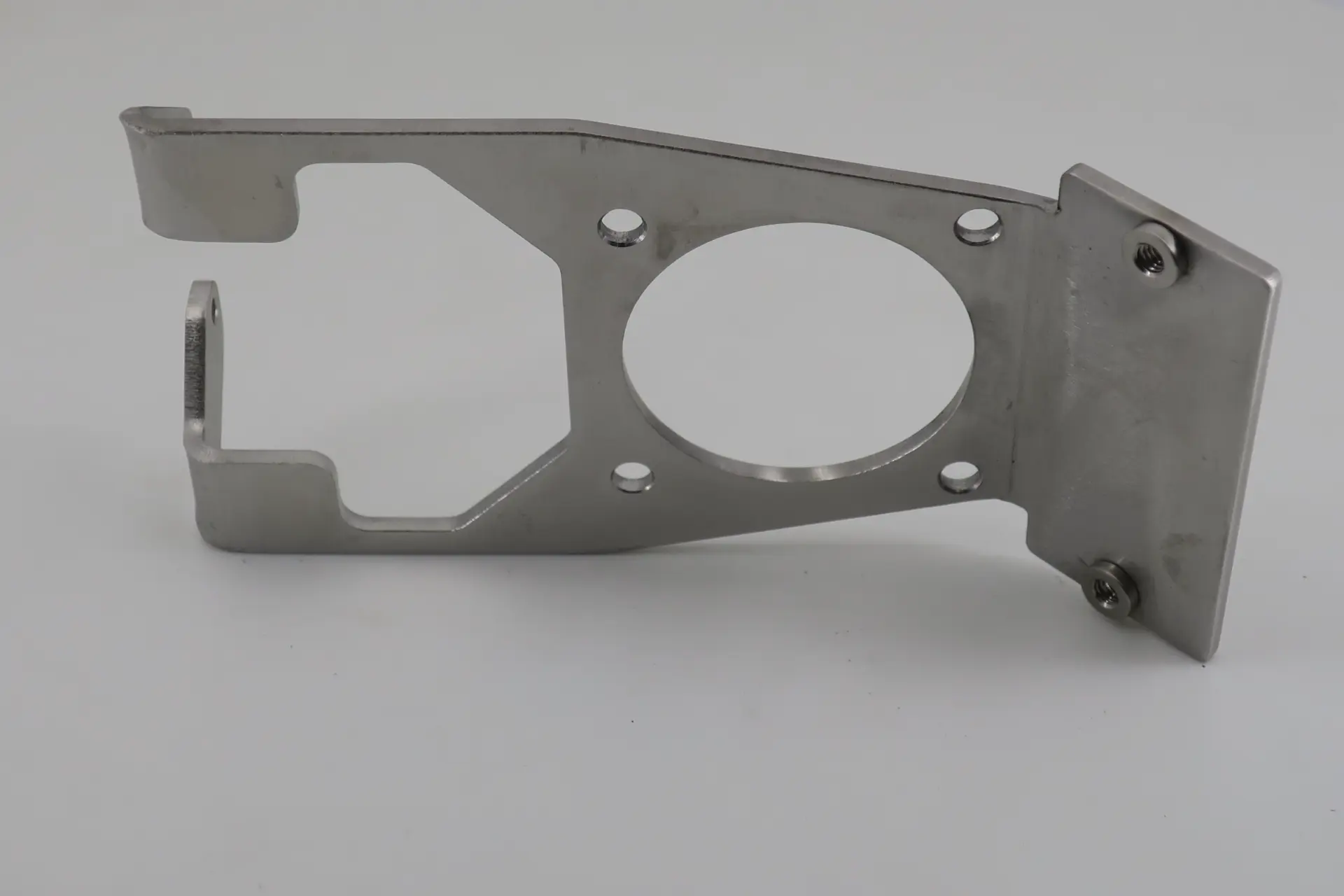
Key Benefits of Riveting
Manufacturers favor this fastening technique for three critical advantages driven by its cold process:
- Joins Dissimilar Materials: Safely bonds aluminum to steel or composites. This mechanical lock bypasses the chemical incompatibility that causes welded joints to crack.
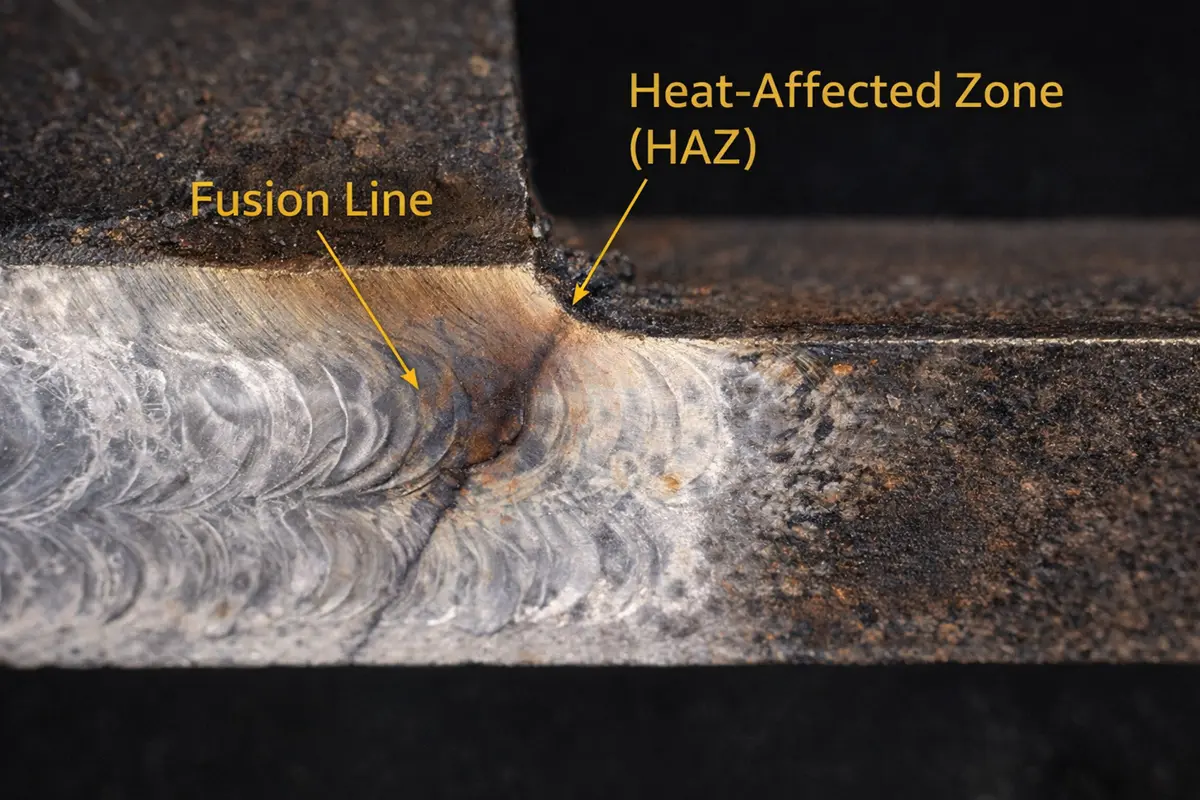
- Prevents Thermal Damage: Generates no heat, eliminating the Heat Affected Zone (HAZ). This ensures tempered metals avoid warping and retain their original hardness.
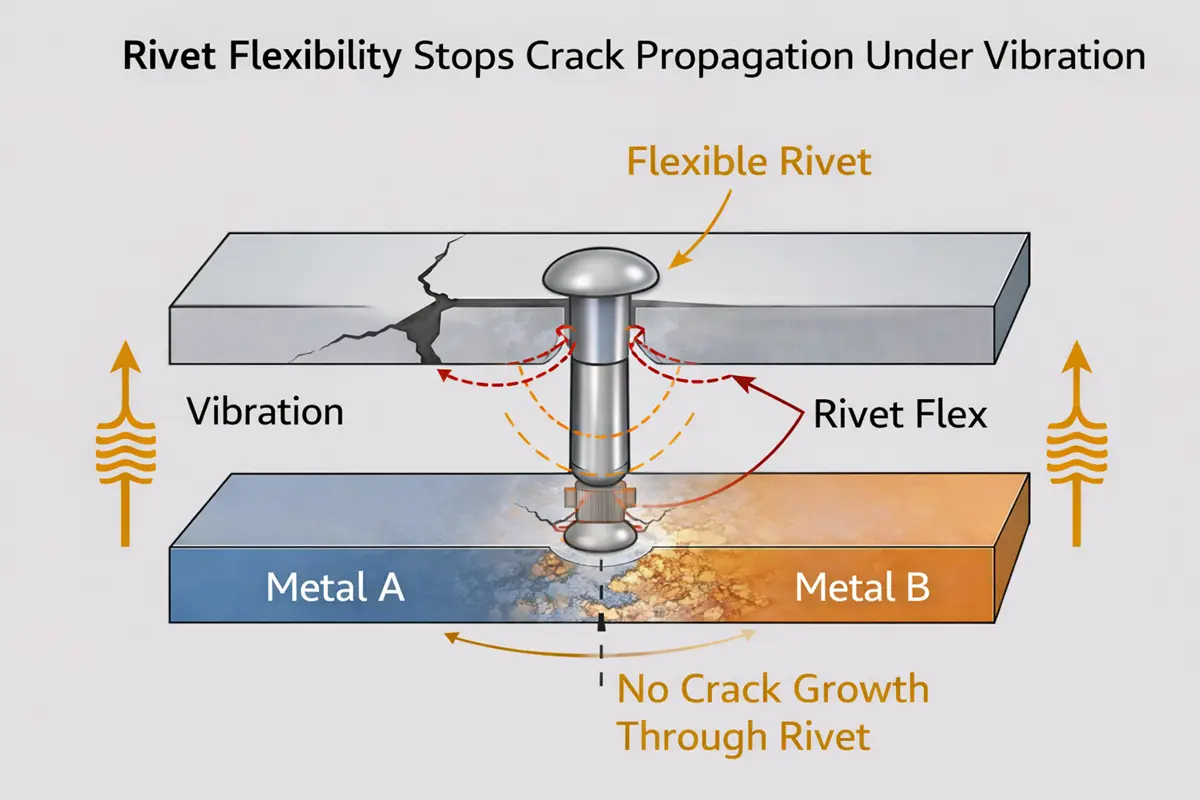
- Resists Vibration Fatigue: The microscopic flexibility of a rivet stops cracks from propagating under constant shaking, making it the preferred choice for aerospace structures.
What is Welding?
Welding is a thermal joining process creating a metallurgical bond. Base metals melt and mix at the interface. Once cooled, they fuse into a single continuous component. However, this high heat input often causes warpage, so controlling heat and sequence is key for preventing warpage in sheet metal welding.
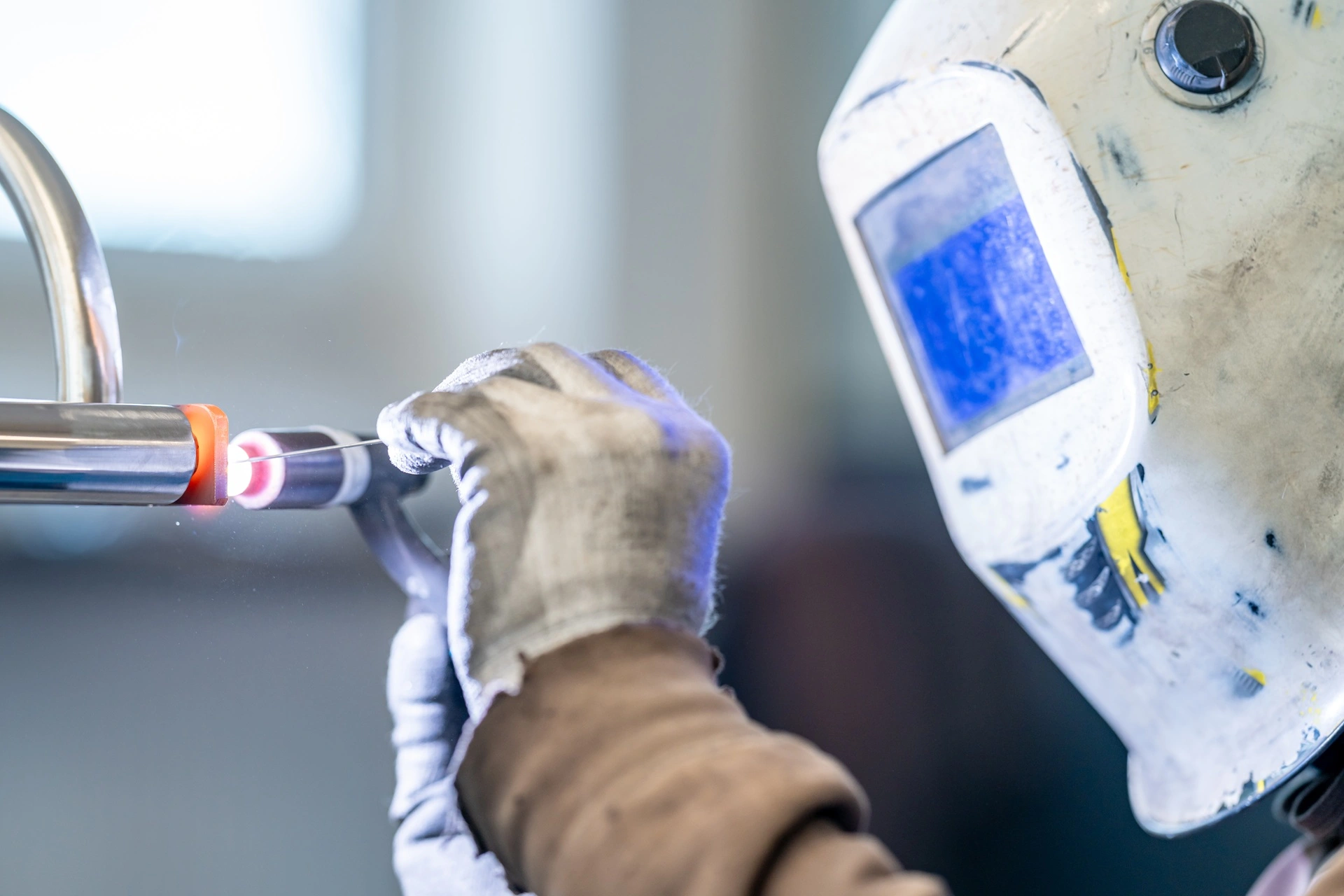
Common welding Types
Methods vary by material thickness and precision needs.
- MIG Welding: The “point and shoot” option for speed; dominant in construction and thick steel.
- TIG Welding: Offers high precision for thin metals like aluminum; standard for aerospace.
- Spot Welding: The fastest choice for sheet metal, serving as the backbone of auto assembly.
- Laser Welding: Delivers low heat and high speed, critical for medical devices and electronics.
Key Benefits of Welding
Fusion processes provide unique sealing and structural qualities:
- Creates Monolithic Bonds: Fusing parts into a single unit minimizes failure points. A properly welded joint often withstands higher tensile loads than the surrounding material.
- Guarantees Hermetic Sealing: The continuous fusion line creates a naturally airtight and watertight barrier, essential for pressure vessels and pipelines.
- Reduces Weight: Inherently lighter by removing the need for fasteners. Avoiding thousands of rivets significantly cuts material costs for massive structures like ships.
What’s the Difference Between Riveting and Welding?
The distinction between these joining methods is physics: riveting uses mechanical fasteners, while welding fuses materials through heat. Your decision depends on the specific stress load and material composition.
Structural Strength and Durability
Welding dominates static tensile strength. Fusing parts into one solid piece creates a bond that outperforms mechanical fasteners under pulling loads.
However, riveting creates safer joints for high-vibration environments. Rigid welded joints are prone to fatigue cracking under constant vibration. Rivets provide microscopic flexibility. This elasticity prevents stress fractures from propagating, making them the standard for aircraft wings and bridges.
Material Versatility and Compatibility
Riveting makes hybrid assemblies possible. It bypasses the physics problem of melting points, allowing you to clamp aluminum to steel or composites to metal.
Welding is generally restricted to similar materials. Fusion welding incompatible metals risks creating brittle microstructures that shatter under thermal stress, whereas rivets purely rely on mechanical clamping.
Production Cost and Efficiency
Welding is faster for production. Although robots demand heavy capital investment, they assemble parts in seconds without drilling.
Riveting lowers equipment costs but extends cycle times. The requirement to drill and align every hole creates a labor bottleneck, limiting the process to low-volume manufacturing.
Surface Finish and Aesthetics
Welding offers a seamless profile. Once ground and polished, the joint becomes virtually invisible, making it ideal for furniture and consumer electronics.
Riveting inherently interrupts the surface. Even “flush” countersunk rivets leave a visible outline. Most rivet heads sit above the surface, creating aerodynamic drag or visual breaks in the design.
Riveting vs Welding Comparison Table
The following table summarizes the key differences discussed above for quick reference.
| Feature | Riveting | Welding |
| Primary Strength | Vibration Resistance (Fatigue) | Tensile Strength (Static) |
| Material Match | Best for Dissimilar Metals | Best for Similar Metals |
| Heat Distortion | None | High (Creates HAZ) |
| Sealing | Requires Sealant | Naturally Airtight |
| Disassembly | Difficult (Drilling needed) | Permanent (Destructive) |
| Automation | Moderate Speed | High Speed (Spot/Laser) |
What Are the Key Applications of Riveting and Welding?
Industries prioritize different performance metrics, from flight safety to production speed.
Aerospace Structures
Riveting is the primary choice for airframes. Planes endure constant vibration and pressurization cycles. Rigid welds fatigue and crack under this stress.
Additionally, aviation uses heat-sensitive aluminum alloys. Riveting joins these parts without thermal damage, preserving the metal’s original strength.
Automotive Manufacturing
Welding dominates mass production. Spot welding robots, the cornerstones of industrial automation, assemble steel car bodies in seconds for cost-effective throughput.
However, riveting is key for EV lightweighting. It bonds the mixed aluminum and steel frames used to extend range, joining dissimilar metals where standard welding fails.
Medical Devices
Laser welding ensures sterility. Surgical instruments require smooth, gap-free surfaces where bacteria cannot hide. Welding seals the joint hermetically. Rivets are poor candidates here; their heads create crevices that trap contaminants and resist sterilization.
How to Choose Riveting and Welding for Your Project?
Your decision rests on three factors: material compatibility, sealing requirements, and vibration exposure.
Rivet for Dissimilar and Thin Metals
Choose riveting for mixed assemblies or delicate sheets. It safely bonds incompatible metals like aluminum to steel without causing brittle cracking. This cold process also prevents thermal distortion so thin gauges retain their original shape without warping.
Weld for Seamless Joint Integrity
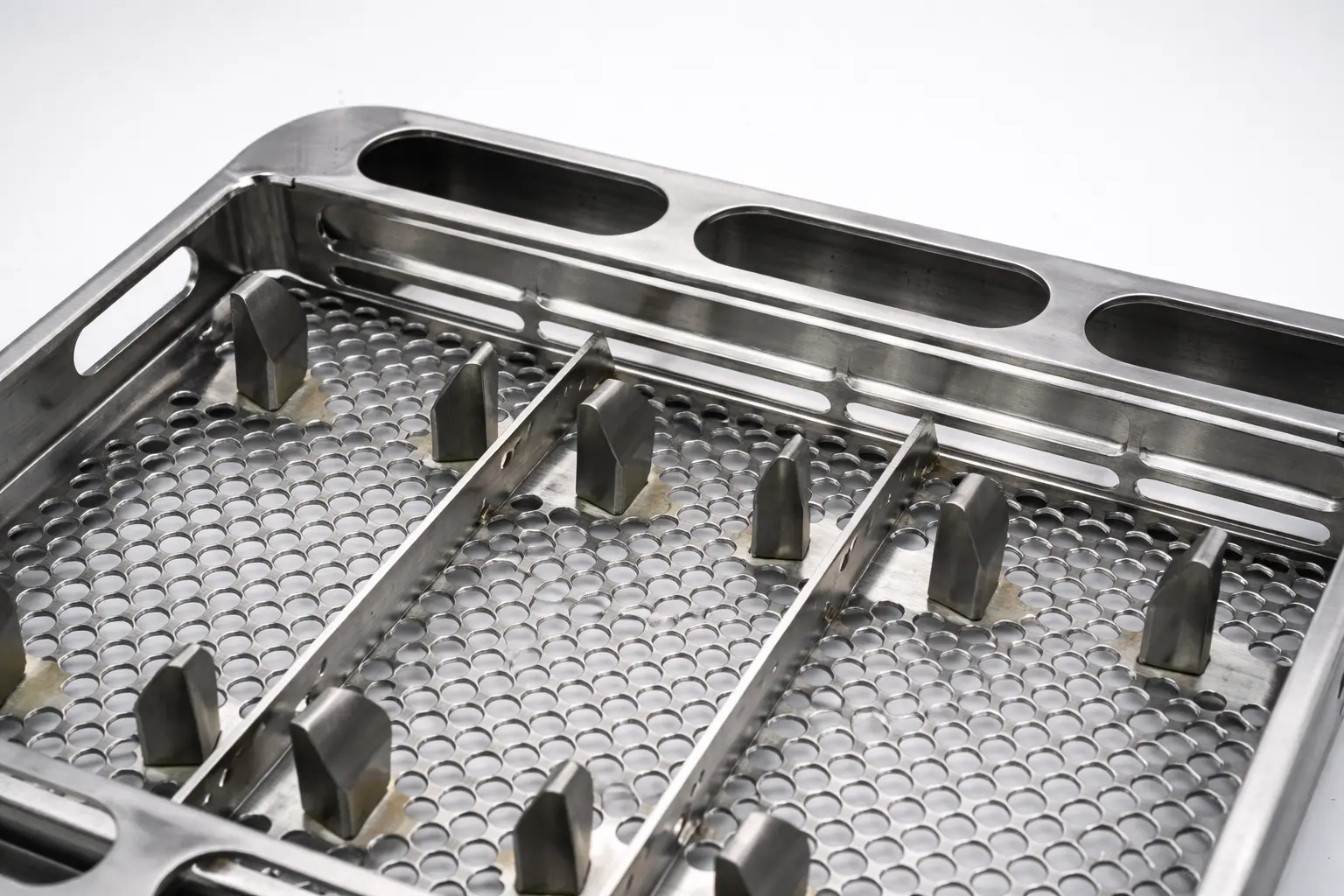
Prioritize welding for leak-proof performance. Fusion creates a monolithic bond that naturally blocks fluids, making it the standard for pressure vessels. To ensure this hermetic seal holds, Rollyu verifies integrity through functional leak testing.
Use Hybrid for Enhanced Durability
Adopt hybrid methods for extreme loads. Techniques such as weld bonding combine spot welds with structural adhesives to maximize joint stiffness. This hybrid approach dampens vibration and extends fatigue life far beyond what a single method can achieve alone.
FAQ
Is Welding Better than Riveting?
It depends on the stress type. Welding dominates static strength for rigid structures. Riveting wins in high-vibration environments, where it flexes instead of cracking.
What Are the Limitations of Riveting and Welding?
Riveting adds weight and drag. Heavy hardware and protruding heads disrupt the surface. Welding creates heat distortion. High thermal input warps thin sheets and cannot safely join dissimilar metals.
Why Do Rivets Loosen Over Time Compared to Welds?
Rivets rely on mechanical clamping. Over time, vibration stretches the fastener, creating play. Welds fuse the material. The joint becomes a single solid unit that physically cannot loosen.
Conclusion
Choosing the wrong joining method exposes your parts to heat warping or stress fractures. By applying expert DFM analysis, Rollyu refines your design to match exact specifications. To turn these optimized designs into reality, we provide custom sheet metal fabrication services and assembly support needed to guarantee flawless results.